
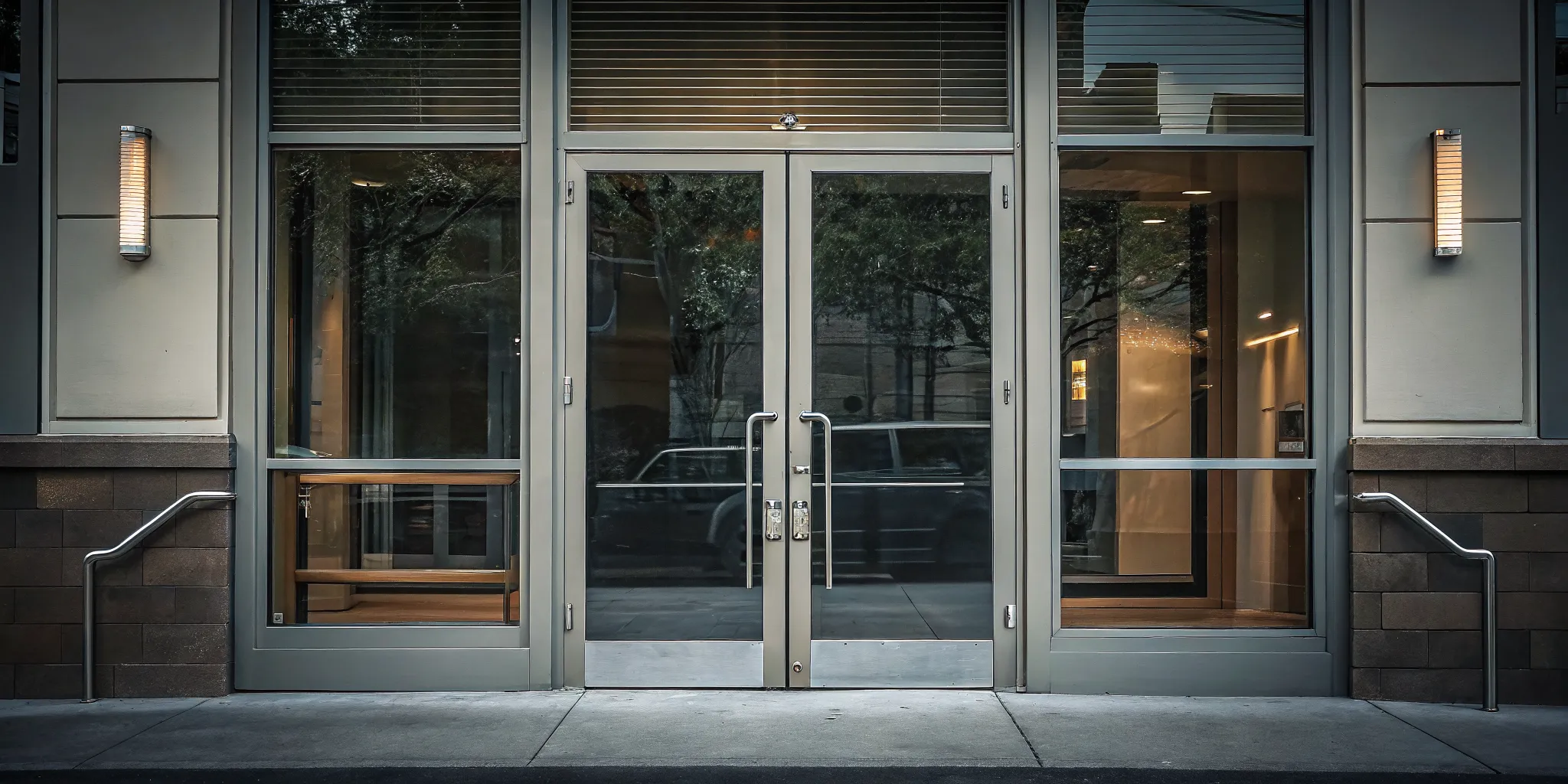
ADA compliant commercial doors are custom entry systems that allow people with disabilities to use public buildings without help. To meet these rules, a door must give at least 32 inches of clear width when it is open at 90 degrees. This rule ensures that people who use wheelchairs or walkers have enough space to pass through the frame safely. Beyond width, these doors must have low thresholds and handles that people can use with one hand without tight grasping. According to the ADA National Network, public buildings must be fully accessible to ensure everyone has equal access to services. Proper setup of these doors helps business owners avoid legal risks while making their properties safer for every visitor.
What makes ADA compliant commercial doors accessible?
To meet US laws, ADA compliant commercial doors must follow strict rules for size and ease of use. These rules help people with wheelchairs or walkers move through a building safely. At Cosello Construction, we use our 20 years of work to help owners in New Jersey and Pennsylvania stay up to code. A good entry system is not just about the door itself, but the space and tools around it.
Minimum width and clear space
One of the key rules is the size of the door opening. A door must give at least 32 inches of clear space when it is open at a 90-degree angle. This width lets most people using aids pass through without hitting the frame. Federal access guides show how to check this space. You check from the face of the door to the stop on the frame.
Also, the entryway must be easy to reach. In new buildings, at least 60% of public doors must be easy to use. This rule covers doors for shops, parking lots, and walkways.
Standard door tool rules
The tools people use to open a door must be easy to grip and turn. You should not have to twist your wrist or use a tight grasp to open a door. Lever handles or U-shaped pulls are the usual choice for store doors. These items should be placed at a height that people can reach while they sit.
Tools must also work with low force. If a door is too heavy to push, it can block people from entering. While force limits change, the goal is to make sure every person can enter without help. If your doors are hard to use, you may need commercial door accessibility repairs to fix the hinges or closers.
Required space for movement
Space around the door is just as key as the door itself. People need room to stop and turn as they reach for the handle. For a door that pulls open, the latch side needs at least 18 inches of clear space. This lets a person stand clear of the door as it swings toward them.
The ADA standards also call for 60 inches of deep space in front of the door. This room lets wheelchairs turn around. You must keep these zones clear of trash cans or signs to stay within the law.
How should clear width and maneuvering space be assessed?
Checking for code compliance starts with a tape measure and a clear path. To have ADA compliant commercial doors, you must first verify the clear opening. This space is not just the width of the door frame. Instead, you must measure the actual gap for a person to pass through when the door is open at a right angle.
Measuring the clear opening width
The clear opening is the space between the face of the door and the other side. Under the law, accessible doors should provide at least 32 inches of clear width. Any parts that stick out, like panic bars or door pulls, can reduce this width. If these items sit below 34 inches from the floor, they must not stick out more than four inches into the path. These rules ensure that a person in a wheelchair can pass without hitting their hands or gear.
When you check a door, always open it to exactly 90 degrees. Measuring from the wrong spot can lead to a failed test. Many old buildings have narrow doors that need commercial door accessibility repairs to meet current standards. Swapping out old hinges for swing-clear hinges is often a quick way to gain the needed inch or two of space.
Checking maneuvering clearances
Maneuvering space is the floor area on both sides of the door. A person must be able to reach the handle and swing the door open while staying in a stable spot. This space depends on the path of approach and if the door swings toward or away from the person. These zones must be flat and free of items like trash cans, plants, or heavy floor mats that could catch a wheel.
For a front approach on the pull side, the rules are very clear. You must have at least 18 inches of clearance beyond the latch side and 60 inches of depth. On the push side, the depth needs change based on if the door has a closer or a latch. Keeping these areas clear is a top task for property managers. Even a small piece of furniture in the wrong spot can turn a good door into a barrier.
Assessing vestibules and continuous routes
Entry halls and air locks create a double challenge. You must ensure there is enough room for a person to clear the first door before they start to open the second one. If the doors swing into the space, they must not overlap. There should be at least 48 inches of clear space beyond the arc of the first door. This allows a user to stop and turn as needed without getting trapped between the two sets of glass.
The route leading to the door must also be wide and stable. If you have security items like bollards, they must not block the way. Based on federal guides, security bollards at accessible entrances cannot block the path. Facility teams should walk these routes often. Look for cracks in the walk or loose rugs that could trip a guest or block a wheel. A safe, open path is a key part of building value and trust with your tenants.
Thresholds, hardware, and opening force at a glance
Planning for ADA compliant commercial doors means looking at every small detail. From the handle you grip to the floor beneath your feet, each part must follow strict rules. These laws make sure that everyone can enter and exit your building without help. Choosing the right parts also helps your doors last longer in busy areas.
Choosing easy-to-use door hardware
The best handles for a commercial door are levers or push-pull bars. These parts do not need a tight grip or a twist of the wrist to work. Staff and guests should be able to open the door with one hand or even a closed fist. If your building uses ADA compliant commercial doors, the hardware must be easy for anyone to use. This setup keeps your business open to all people while meeting local building codes.
Height also matters when you set up new handles. Most locks and bars should be between 34 and 48 inches from the floor. This range keeps them within reach for people in wheelchairs. If you use a handset with a cord at a closed entrance, the cord must be at least 29 inches long. These rules come from the U.S. Access Board standards for public buildings. Following these specs prevents legal issues and makes your space more friendly for users.
Thresholds and floor room
Thresholds are the small bumps on the floor where a door closes. For a door to be easy to use, these bumps must be very low. In most cases, they should not be more than half an inch high. High thresholds can trip people or block wheels. To help with drainage, some outdoor doors can have a slight slope, but it must stay within code limits. Low thresholds also provide a better seal against wind and rain.
You also need enough room to move around the door. A door must have at least 18 inches of clear space on the pull side near the latch. This area allows someone in a chair to reach the handle and pull the door open. You also need 60 inches of space straight out from the doorway to stay safe. These maneuvering clearance rules are key for any new building or remodel project in the tri-state area.
| Feature | Standard Hardware | ADA Compliant Option |
|---|---|---|
| Handle Type | Round knobs | Levers or push bars |
| Grip Needed | Tight twist and turn | No tight grip needed |
| Threshold Height | One inch or higher | Half an inch or less |
| Opening Force | Heavy pull or push | Five pounds of force |
| Clear Width | Varies by door size | 32 inches minimum |
Force is another big part for entry doors. An inside door should not need more than five pounds of force to open. While outdoor doors have more leeway due to wind, they should still be as light as they can be. Closers can help manage this force while making sure the door shuts fully every time. Good closers keep the heat in and the noise out without making the door too hard to push.
When do automatic door operators make sense?
Adding an automatic door operator is a smart move for many businesses. These tools help you meet the law while making it easier for people to enter your building. For some sites, having ADA compliant commercial doors is not just about rules. It is about giving every person a smooth and safe way to get inside. When manual doors are too heavy or hard to reach, an operator provides the needed help.
Improving site access
Low-energy operators are often the best fix for old doorways. If a door lacks the right space for a person in a wheelchair to move, a motor can bridge that gap. The Americans with Disabilities Act sets clear rules on how buildings must let people in. When a door does not meet the pull-side space rules, like having 18 inches of space past the latch, an operator can help you stay within the law.
These systems work well in busy spots. They keep the flow of people moving without making anyone struggle with a heavy latch. If you want to boost your property value, ADA compliant entryway solutions are a top choice. They show that your business cares about ease of use for everyone who visits.
Controls and safety gear
A good door system needs the right tools to start it. Most sites use wall buttons or sensors. You must place these buttons where anyone can reach them easily. If your site has a two-way talk system at the door, it must have both sound and light signals. This helps people who cannot hear or see well to know when the door is ready to use. Following these federal entrance guides keeps your site safe for all.
You also need to think about safety sensors. These sensors stop a door from closing if someone is still in the way. At Cosello Construction, we check every part of the door to make sure it works as one unit. Adding a motor to a broken or stuck door will not fix the real issue. You must ensure the door frame and hinges are in good shape before you add an operator.
Why a motor is not a total fix
An operator is a great tool, but it is not a magic fix for every problem. If the path to the door is too steep or blocked, a motor will not help. For example, security barriers like bollards cannot block the path to the door. You also need to check the clear width of the opening. A door must give at least 32 inches of clear space to be compliant with ADA standards. If your door is too narrow, a motor will not change that fact.
Always work with experts who know the local codes in NJ, PA, and DE. We look at the whole doorway, from the floor to the latch. This helps us find the best way to make your building open to all. If you need help with your site, you can look for hiring experts for ADA door installations to get the job done right.
Planning an accessible door upgrade in NJ or Philadelphia
Planning a door project in New Jersey or Philadelphia requires a look at many rules. You must think about more than just the actual door itself. Local laws and building codes often overlap with the Americans with Disabilities Act of 1990. These rules help all people enter and move through your site safely. When you plan an upgrade, you must look at how these laws work together to change your site.
Local codes and permits
When you start a project, you must check with your local town or city office. In New Jersey and Philadelphia, you often need a permit for ADA compliant commercial doors. The local code office will look at your plans to make sure they follow life safety rules. They also check for fire safety and proper exit routes. If your building is in an old area, you may face even more rules for the look of your storefront. This is common in older parts of Philadelphia like Old City or in historic NJ towns.
Landlords and property owners have a big job here. You must know who is in charge of each part of the work. Sometimes the tenant handles the inside doors while the owner fixes the main entry. You should read your lease to see who must pay for these changes. Both the owner and the tenant can face legal risks for any rules that are broken. It is also smart to get a permit before you start any work. This helps you avoid fines and keeps your building up to code.
Fire safety and egress
Accessible doors must also serve as safe exits during a fire. Fire codes may require specific door types that can hold back heat and smoke. In new builds, at least 60 percent of public entries must be accessible. This includes doors that serve parking lots and walking paths. You must ensure that your new door does not block the path people take to get out in an emergency. This path is often called the means of egress and must stay clear at all times.
You also need to check the clear width of the door. To meet the rules, doors must give at least 32 inches of clear space when they are open. This allows people in chairs to pass through without hitting the frame. Thresholds cannot be too high, or they will block wheels. For most doors, the threshold should be no more than half an inch high with a sloped edge.
Professional help and check
Planning these upgrades can be hard for property owners. You must balance the needs of your tenants with the strict laws of the state. It is wise to talk to a pro who knows the local area well. A local expert can help you find ADA compliant entryway solutions that fit your budget and stay within the law. They can also help you look at maneuvering space around the door. For example, some doors need at least 18 inches of clear space on the latch side to be safe.
Always check your plans with a project pro and the local building office before you buy any parts. These rules can change, and what works in one town might not work in another. A pro will know the latest code updates in your specific NJ or PA county. Taking the time to plan now will save you from costly errors later. It also shows your clients and tenants that you care about their safety and ease of use.
A practical upgrade process for property teams
Fixing your site to include ADA compliant commercial doors is a smart move. It helps all people enter your space with ease. This path also keeps you on the right side of the law.
Property teams should follow a clear plan to get the best results. A good plan saves time and money on your work. It also ensures that your building is open to all visitors.
Site check
Start by looking at your current doors. You need to find the ones that do not meet the rules. Walk through each hall and check every door.
Note how heavy each door feels to open. You should also look at the space near the door. If there is not enough room to turn a wheelchair, you may need to make a change.
The ADA sets clear goals for public sites. In new builds, at least 60% of public doors must be easy for all to use. This data from the U.S. Access Board helps make sure that all guests stay safe.
If you find a flaw, you must plan a fix soon. A team of hiring experts for ADA door setups can help you find these spots fast.
Pick and plan
Once you know your needs, pick the right parts. Not all doors are the same. You might need fire-rated doors or strong glass.
Make sure the new parts match your building style. It is also wise to check local rules in your state. A team that knows the codes in New Jersey and Pennsylvania will keep your work on track.
- Check current doors by listing each one and how it works now. Note the size, weight, and lock type for each spot.
- Find access gaps by measuring the width of your paths. Make sure you have at least 32 inches of clear space for people to walk through.
- Pick your style by choosing door types that fit your needs. You should pick ADA compliant commercial doors that are both strong and easy to use.
- Verify local codes by checking the building rules in your area. This step makes sure your new doors meet all legal safety needs.
- Set up and care for your doors with a pro team. Check the doors each year to keep them in top shape.
After the setup, keep a log of your checks. Doors that get a lot of use can shift over time. Quick checks help you find small faults before they lead to big costs.
This smart care keeps your halls safe for all. It also keeps your entryways in top form for many years.
Common accessibility upgrade mistakes to avoid
Many building owners start an upgrade by only swapping the door slab. This is a big risk for your budget. A new door slab alone rarely makes for ADA compliant commercial doors if the frame or clear width is wrong. You must ensure the opening gives at least 32 inches of clear passage when the door sits at a 90-degree angle, as noted by the ADA National Network. Ignoring the frame often leads to costly rework later.
Thinking only about the door
Accessibility does not stop at the door handle. You must also look at the route leading to the entry. A common error is ignoring the slope of the vestibule or the landing space. For a front pull-side approach, you need at least 18 inches of latch-side space to meet federal maneuvering space rules. If the landing is too small or too steep, even the best door will not pass a code review. You should check the full path before you buy any new parts.
Hardware and threshold issues
Choosing the wrong hardware can also block your project. Many people use locks or handles that need tight grasping or twisting to work. These parts fail the ADA test. You also need to watch out for high thresholds. A threshold that is too tall can stop a wheelchair or cause a trip. Keep thresholds low and use beveled edges to stay safe. Weatherproofing must not add too much force to the door, or it may become too heavy for some users to push open.
The trap of code approval
Just because a door gets a local building permit does not mean it meets all ADA rules. Local codes and federal laws can differ. You should not assume that one approval covers every need. Also, skip the urge to put off care for your closers. A door that slams or stays open can lose its compliance over time. Regular checks help keep your entry safe for everyone. Note that these tips are for general use and you should always consult with a local pro for your specific site.
Frequently Asked Questions
What is the minimum clear opening width for ADA compliant commercial doors?
According to the ADA National Network, compliant doors must provide at least 32 inches of clear width. You measure this gap from the door face to the other stop when the door is open at a 90-degree angle. This space allows people using a wheelchair or walking aid to pass through with ease. A wide enough door helps your site meet federal laws and stay open for all guests.
How much maneuvering clearance is required for ADA compliant doors?
When you walk up to the pull side of a door, the ADA standards require clear space for a person to turn. You must have at least 18 inches of room on the latch side. There must also be 60 inches of space moving away from the door. These rules help people in wheelchairs open the door and move through without hitting the wall or getting stuck.
What are the legal consequences of non-compliant commercial doors?
Sites built after 1992 must follow strict rules to avoid legal risks. Failing to keep ADA compliant commercial doors can lead to costly court cases, big fines, and slow work on your project. Breaking these rules can also hurt the good name of your firm. Working with an expert team like Cosello Construction makes sure your site meets every law and stays safe for all visitors.
What percentage of public entrances must be accessible?
For new builds, the U.S. Access Board says at least 60 percent of public doors must be accessible. This rule also covers doors for specific stores, parking lots, and walkways. Making sure these doors meet the code is a key part of building a business site. It helps you avoid legal trouble while giving fair access to everyone who visits your shop or office.
Ready to upgrade your property to meet ADA standards?
Leaving your commercial doors in their current state is a risk you cannot afford because every day your building fails to meet ADA standards is a day you might face costly fines or legal trouble. These outdated entries also make it hard for some people to enter your office. Which means you could be losing business right now instead of growing your brand in the local area. By starting your commercial door upgrades today. You protect your company from hidden costs and ensure a smooth flow of traffic for all visitors while making sure your building stays useful and safe for many years to come.
Ready to upgrade? Call (856) 317-1770 to schedule a commercial door consultation.