
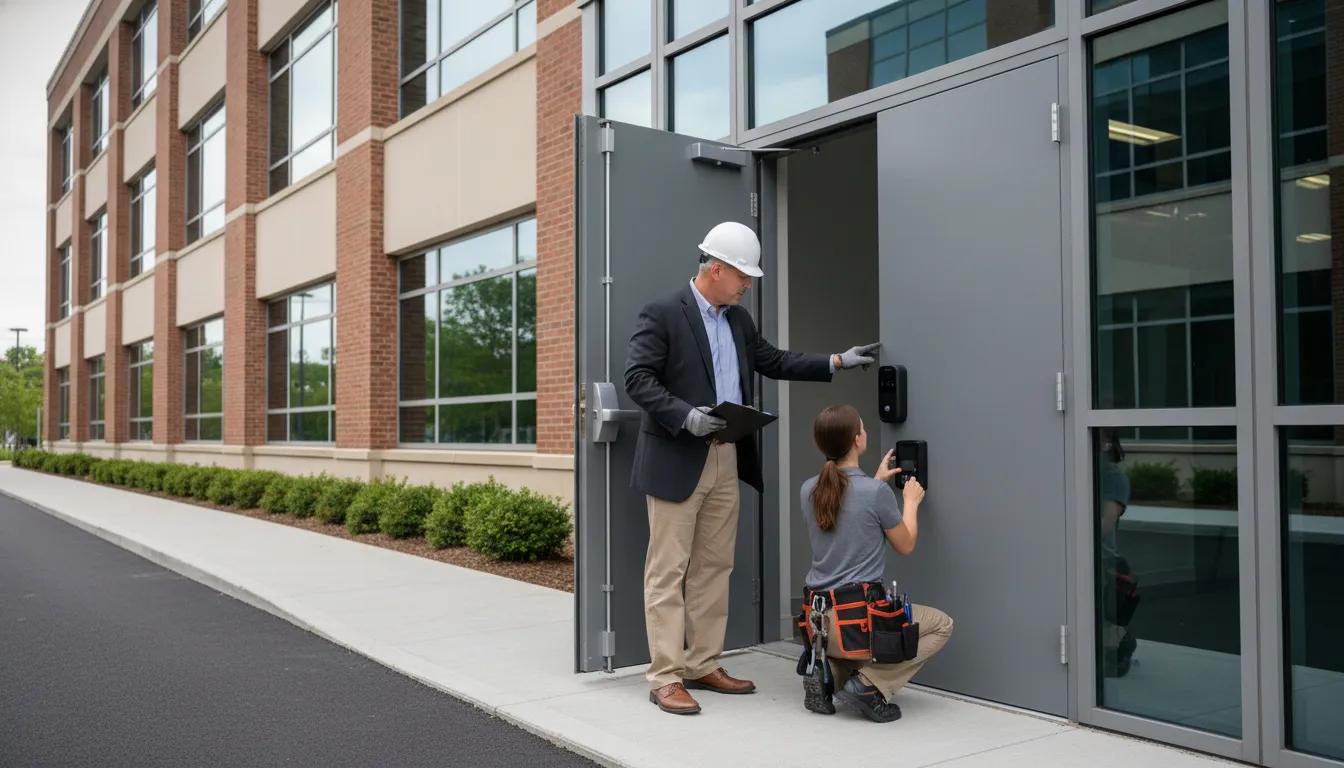
A failing rear entry or loose latch can put an entire property at risk. For South Jersey businesses, the right door upgrade protects operations and required safety performance.
Commercial security door upgrades South Jersey property managers choose should strengthen entry points without creating safety or access problems during daily use. A sound upgrade plan starts with reinforced door leaves, matching frames, durable locksets, closers, and hardware sized for daily traffic and weather exposure. In corridors, stairwells, and mechanical rooms, fire-rated openings require complete rated assemblies, because safety depends on the door, frame, closer, and latching hardware. For exterior or restricted entries, owners can weigh forced-entry resistance using ASTM F476, a test method for swinging door assemblies. The right scope protects people and inventory, supports inspections, and limits costly disruption for tenants, staff, and customers during a planned replacement.
The question is not simply whether to replace a worn door, but which upgrades protect your building, meet code needs, and fit daily operations. Next, Commercial security door upgrades South Jersey properties should prioritize identifies the first decisions that shape a safer, more reliable entrance plan. Here's how.
Commercial security door upgrades South Jersey properties should prioritize
For South Jersey property managers, a security door upgrade is not just a stronger door slab. It is a working opening: door, frame, hinges, lock, closer, latch, and an operating plan. If one part fails, the opening may not close, latch, or control access as planned.
First inspection questions
Start with openings that control after-hours access, deliveries, staff entry, or protected interior areas. Look for sagging doors, frame movement, worn hinges, loose strike plates, and failing closers. Note latches that need a push, poor lighting, and keys or codes shared without a clear record.
- Which doors do not close and latch on their own?
- Where are deliveries, vendors, or after-hours staff entering?
- Does each frame support the planned lock and hardware?
- Which openings may need a fire-rated assembly review?
That walk-through sets priorities before products are chosen. Managers can compare project needs with Cosello's commercial door installation services. The discussion can cover tenant, retail, office, or mixed-use openings.
A complete door upgrade
A secure opening must work as a system. A reinforced door with a weak frame, loose hinges, or poor latching leaves a clear weakness. Hardware should match access needs, such as keyed entry, staff entry, delivery use, or exit needs.
Closers and latches matter because a door that stays ajar cannot control entry. When forced-entry resistance is a goal, ask how the full assembly is tested. NIST lists ASTM F476 testing for swinging door security for this discussion.
Site operations and priorities
A South Jersey site may include a storefront entrance, office door, service opening, or multi-tenant entry. Each opening sees a different pattern of traffic and risk. Ask who needs entry, when access is allowed, and who manages keys, repairs, and emergency calls.
Before requesting proposals, photograph each affected opening and write down the concern in plain terms. Is the issue entry control, damaged material, unreliable latching, or business flow? Clear notes give installers a useful starting point and help building teams review options.
Document approved access, delivery hours, inspection findings, and any door that does not latch. Then group work by opening: frame repairs, hardware changes, closer adjustment, access control, or replacement. This keeps security work tied to daily use. It also helps new hardware avoid old problems.
Choose door material and frame strength together
A secure commercial opening is a working system, not just a thick door. The door leaf, frame, hinges, lock area, and closer must work together under daily use. For commercial security door upgrades in South Jersey, start with the opening and its use before selecting parts.
Door leaf and frame pairing
A steel or heavy-duty commercial door leaf can add strength at a busy entrance, rear service door, or stockroom access point. It still needs a frame that is secure at its anchors. Reinforcement should also support the latch and hinge areas. A strong leaf in a weak frame leaves a weak opening.
When forced-entry resistance is a concern, ask how the complete assembly is specified and tested. The ASTM F476 test method listed by NIST addresses security testing for swinging door assemblies. This does not mean every steel door meets that standard. Confirm the selected product and hardware.
Hinges and daily wear points
Hinges, lock reinforcements, closers, and strike areas take repeated force in a busy opening. Staff, carts, deliveries, and customers all add wear. Heavy-duty parts may suit high-use doors where loose hinges or worn latch points affect function. The goal is steady operation, with parts matched to traffic and access needs.
If a project includes a rated opening, material choices cannot be made in isolation. The required door leaf, frame, hinges, closer, and hardware must be addressed as an assembly. A review of commercial security door systems can help define the opening, use pattern, and upgrade scope.
| Upgrade focus. | Risk reduced. | When to consider it. |
|---|---|---|
| Steel or heavy-duty leaf. | Damage at the door face. | Rear entries or busy access points. |
| Reinforced frame and strike area. | Failure around latch points. | Openings with security concerns. |
| Heavy-duty hinges. | Sagging and poor alignment. | Doors with frequent daily use. |
| Matched closer and hardware. | Incomplete closing or latching. | Controlled or rated openings. |
Choosing the upgrade scope
Begin with the door's role: public entry, delivery route, staff access, or protected room. Then review wear, frame condition, latch alignment, hinge movement, and hardware needs. This approach keeps the upgrade focused on real weak points, not a single product label.
A property manager should confirm whether an opening has fire or other code duties before ordering replacement parts. Security improvements must not interfere with normal exit use or required door operation. Door selection and frame review belong in the same scope of work.
How should locks and access control work together?
A secure entrance works only when the door, lock, closer, and reader work as one assembly. Start with the door's daily job: controlled entry, safe exit, and reliable closing after each use. For commercial security door upgrades South Jersey managers should plan hardware and access control together.
Lock and latch performance
Choose locksets for the traffic, door material, and risk at each opening. An exterior staff entrance may need a different function than a storage room or public lobby door. Check that the latch seats each time the closer pulls the door shut. A reader cannot correct a loose strike, dragging leaf, or latch that fails to engage.
Plan security hardware as part of the opening, not as an add-on after installation. Where forced-entry resistance matters, ask what tested door and hardware assembly is proposed. ASTM F476 listed by NIST covers security test methods for swinging door assemblies.
Egress and system coordination
The exit side must remain simple to use during normal operations and an emergency. Do not let a badge reader, electric strike, or maglock plan overlook safe egress. Review closer speed, latch action, and exit hardware after the reader and power parts are installed. The door should close and latch after an approved entry, without staff pushing it shut.
Your door installer and security vendor should review each opening before equipment is ordered. The installer can confirm door, frame, closer, latch, and hardware fit. The security vendor can define reader placement, credential rules, release controls, and power needs.
When planning commercial security door installation services, require both parties to document their scope. Their final test should confirm reading, releasing, closing, latching, and safe exit.
Questions before turnover
Property managers need clear answers before issuing credentials or setting emergency procedures. Use these questions in the project review. A written plan helps the team manage access after turnover.
- Who approves, issues, and disables badges, keys, or mobile credentials?
- What happens if power, network connection, or the reader fails?
- Which doors must release or remain operable during an emergency?
- Who keeps mechanical override keys, and how is access logged?
- Who tests latch and closer operation after wiring or service work?
Set a schedule for credential reviews and door checks after turnover. If a closer, latch, or release stops working, arrange commercial door repair and maintenance before a security gap becomes routine. Keep records of faults, repairs, key changes, and access updates for each opening.
Balance security, visibility, and daily tenant traffic
A security door should protect the entry without making the building harder to use. For South Jersey offices, shops, and multifamily common areas, start with who uses each opening and when. Note visitor arrivals, staff access, package drop-offs, trash removal, and evening traffic before selecting door hardware.
Sightlines at active entries
At a staffed office or service counter, clear sightlines help the team see guests at the door. Where glazing suits the opening, choose its size and position with security, privacy, and natural light in mind. For a retail storefront, the new door should also fit the visible front of the business.
Forced-entry performance is not the same as an intimidating look. ASTM F476 is a test method for security performance of swinging door assemblies against forced entry. It is listed by NIST. When comparing commercial security door upgrades South Jersey properties may use, ask how the proposed assembly was tested.
Deliveries and after-hours access
Security plans fail in daily use when a secure entry blocks routine work. A multifamily manager may need resident access after hours and parcel access during the day. Safe egress must also remain part of the plan. An office may need vendor entry, while a shop needs smooth opening and closing routines.
Before approval, review the door at its busiest and quietest periods:
- Delivery routes, package holding areas, and any staff handoff.
- Credential use for tenants, employees, cleaners, and approved vendors.
- After-hours lighting, visibility, and who responds when access fails.
- Door swing, closer operation, thresholds, and paths used for daily movement.
This walk-through can uncover a door that is secure on paper but awkward during a normal shift. If an opening serves a rated corridor or stairwell, have the full assembly reviewed for that required use.
Appearance and ongoing operation
A useful upgrade blends security with the building's normal pattern of use. Match the finish and glazing plan to the facade. Then confirm that locks, closers, and access devices suit expected traffic. A heavy-use entrance should not rely on hardware chosen only for appearance.
Property managers can discuss door type, access needs, and disruption planning through Cosello's access-control-ready security door installation. Bring a simple traffic list for each opening. It helps keep the upgrade focused on protection, access, and a working front door.
When is it time to replace a commercial security door?
A security door may still open each day while its frame, lock, or closer is losing reliability. For managers considering commercial security door upgrades in South Jersey, start with a clear check of how the full opening works. A repair may solve one issue. Replacement becomes the sound choice when faults affect secure closing or keep returning.
A five-step door check
Inspect the opening as one system, not just the door panel. Security standards matter here: ASTM F476 test methods listed by NIST assess swinging door assemblies against forced entry.
Check alignment. Open and close the door from normal use points. Look for dragging, uneven clearance, a sagging leaf, or a door that must be lifted to close. Those signs can point to hinge, frame, or installation faults.
Test closing and latching. Let the door close without pushing it. The latch should enter the strike and hold each time. If staff must pull, slam, or relock it, the opening no longer supports routine secure use.
Inspect the frame and hardware. Look for cracks, spreading at the frame, loose hinges, damaged strikes, worn closers, or lock hardware that moves. A strong new lock does not correct a damaged frame around it.
Review repeated repairs. Note service calls, parts replaced, and complaints from staff or tenants. If the same alignment or latching fault returns, compare full replacement with another short-term repair.
Confirm fire-rated needs. If the opening is part of a rated barrier, do not swap one piece in isolation. A door professional should review the leaf, frame, hinges, closer, latch, and other hardware together before work begins.
Repair or replacement planning
A single adjustable hardware problem may support a repair. Damage across the frame, latch, and door leaf calls for a wider review. Cosello's commercial security door replacement options page outlines options for business openings in New Jersey, Pennsylvania, and Delaware.
Record what fails, where it fails, and whether the door still secures without extra force. For a South Jersey building review, request a commercial door consultation or call (856) 317-1770. This gives the installer the facts needed to discuss repair, replacement, and any rated assembly concerns.
Does your upgrade affect a fire-rated opening?
Start with the opening type
Some commercial security door upgrades in South Jersey begin with a basic question: is this opening part of a fire-rated assembly? Before changing a lock, closer, hinge, or door leaf, confirm what is installed and where the opening is located.
A fire-rated opening is not just a heavy door with a label. The door leaf, frame, hinges, closer, and hardware work as an assembly. Cosello's fire-rated door guidance notes that the full assembly must use rated components. A new part that seems stronger may not suit the existing opening.
Coordinate security and fire-rated parts
Security goals still matter. A manager may need stronger locking hardware, better control of employee entry, or more durable parts at a busy door. For swinging door assemblies, NIST lists ASTM F476 as a test method for security performance against forced entry.
That security reference does not decide whether a change is right for your fire-rated opening. It shows why product details matter when comparing options. A secure upgrade should be reviewed with the door type, frame, closer, latch action, existing labels, and daily traffic in view.
- Note the door location, such as a corridor, stair door, or service area.
- Record labels on the door, frame, and any existing listed hardware.
- List the change under review, such as a closer, lock, hinge, or full door replacement.
- Ask who will confirm compatible components before installation begins.
Define the installer's scope first
Before approving a quote, ask whether the installer will inspect the full opening or only replace one component. Clarify who will select hardware, confirm fit, adjust closing and latching, and document the completed work. This prevents a security plan from treating connected parts as separate purchases.
For managers comparing upgrades, Cosello's commercial door installation services provide a natural place to discuss the opening and the proposed scope. Bring photos of labels and hardware, plus notes on access needs and door traffic.
The right path depends on the opening already in the building and the parts being changed. A qualified review can help you plan work without assuming a product alone resolves fire-rated or security needs.
Questions to ask a commercial door installer
What will you inspect before pricing?
For commercial security door upgrades South Jersey property managers need a site review before comparing quotes. Ask the installer to inspect each opening, frame condition, swing, traffic pattern, loading area exposure, and current lock or card reader. A quote built from a photo may miss field conditions that change scope.
Ask for an opening-by-opening schedule. It should list the proposed door, frame, hinges, closer, lockset, panic hardware, threshold, weather seals, glass, and finish. When security is a goal, ask whether the door assembly has forced-entry test data. NIST lists ASTM F476 testing for swinging door assemblies.
How will safety and access systems fit the scope?
Security cannot interfere with safe exit or building use. Ask which openings need a fire-rated assembly, what rating applies, and whether the frame and hardware are part of that scope. Request clear notes for electric strikes, magnetic locks, door position switches, key cores, and any reader wiring.
- Who confirms access-control compatibility before products are ordered?
- Who provides power, low-voltage wiring, permits, and final system testing?
- What keys, credentials, or temporary entry plan will staff and tenants use during work?
- How will the installer record door labels, hardware models, and warranty details?
Property managers can also review Cosello's commercial security door installation services before requesting a bid. This helps the team name the door type, opening locations, and access needs during the first site visit.
What happens during and after installation?
Before signing a quote, ask for the work sequence and daily access plan. Confirm delivery timing, work hours, tenant notice needs, debris removal, and lock change timing. Ask who handles an opening that cannot be secured overnight. A clear schedule helps limit disruption at occupied properties.
Ask what you receive at closeout: approved scope, product data, key schedule, warranty terms, inspection notes, and maintenance guidance. Also ask how to report a sticking closer, damaged frame, or failed lock after the work is done. Door records make future repairs simpler to plan.
Bring your opening list, access-control notes, and target work hours to the first conversation. To request a site review or quote, use Cosello Construction's contact form or call (856) 317-1770.
Frequently Asked Questions
How much do commercial security door upgrades cost in South Jersey?
Commercial security door upgrade costs depend on the opening size, frame condition, door material, hardware, access control needs, and any required fire rating. A storefront entrance may require different work than a rear service door or common-area door. Property managers should request a site assessment and written scope that identifies the door assembly, hardware, compliance needs, installation timing, and maintenance expectations.
What types of commercial security doors are available in New Jersey?
Options include reinforced steel security doors, aluminum storefront door systems, fire-rated assemblies, and doors paired with commercial-grade locks or controlled entry hardware. The right type depends on traffic, visibility, exposure, egress, and code requirements. For openings where forced-entry resistance matters, ask whether the selected assembly is evaluated using recognized testing, such as ASTM F476 testing referenced by NIST.
Do I need a fire-rated door for my commercial building?
It depends on the location of the opening and the wall assembly around it. Fire-rated door assemblies are required in many commercial corridors, stairwells, mechanical rooms, and other rated separations. The door, frame, hinges, closer, and hardware must work as a rated assembly. Cosello's commercial door guidance notes that door ratings must match the fire-resistance requirements of the wall.
What are the best access control systems for commercial doors?
There is no single best access control system for every commercial property. Keypad, card, mobile credential, and managed electronic access systems each suit different staffing, audit, and visitor needs. The system must also work with the door, frame, lock, closer, and exit hardware. For an exterior security upgrade, begin with risk level, required access records, emergency egress, fire rating, and ongoing maintenance responsibilities.
How often should commercial security doors be serviced?
Commercial security doors should be inspected on a regular schedule and after damage, forced-entry attempts, or operational problems. High-traffic entrances may need checks more often than low-use doors. Inspections should cover alignment, latching, closers, hinges, seals, locks, access hardware, and visible labels on rated assemblies. Regular inspection and maintenance help doors remain functional and compliant, according to Cosello's commercial door guidance.
Ready to Secure Your South Jersey Property?
Delaying a commercial security door upgrade can leave aging entrances, weak hardware, and access concerns unresolved while daily use continues. Starting now gives your team time to review priorities, plan around tenants or business hours, and choose the right upgrade scope. With a clear plan, you can move from recurring door concerns toward dependable, controlled building access with less disruption.
Do not wait until a damaged entry or urgent security concern forces a rushed decision. A direct conversation can help identify which entry points should be assessed first and how an upgrade can fit your operating schedule. Ready to secure your property? Call (856) 317-1770 to request a commercial security door quote and discuss next steps for your South Jersey location.