

A fire door that will not close can turn a small defect into a life-safety failure. In New Jersey and Pennsylvania commercial buildings, missed labels, damaged hardware, and propped-open doors demand attention before the annual inspection.
Need help with a rated opening? Schedule a fire-rated door evaluation with Cosello Construction or call (856) 317-1770.
Fire rated door maintenance NJ is a plan to keep rated doors operable, unobstructed, labeled, and able to close and latch. In occupied commercial buildings, that work protects egress paths and supports inspection readiness year-round. Facility managers in New Jersey and Pennsylvania should check doors, frames, glazing, clearances, hinges, closers, latches, coordinators, seals, openings, and unsafe hold-open practices. NFPA 80 requires annual inspection and testing, with signed records retained for the authority having jurisdiction, according to University of Colorado guidance. Monthly walk-throughs help catch blocked paths, loose hardware, damaged surfaces, or latching failures early. Log each finding by door location, then track repair dates and records. Defects affecting operation need qualified repair without delay and local authority review.
The questions are simple: what should your team inspect, how often should it document findings, and when should a defect trigger professional repair? Use the Fire rated door maintenance NJ checklist for facilities to build a repeatable routine for occupied properties. Here's how.
Fire rated door maintenance NJ checklist for facilities
For fire rated door maintenance NJ facilities can manage, start with a clear log for each opening. Staff can spot visible changes during routine rounds. They should not alter a rated assembly or treat a quick check as a formal inspection.
Routine observation log
Assign each fire door an asset number and location, such as stairwell A or mechanical room 2. Use the same checklist during routine rounds in NJ and nearby PA facilities. Log the date, issue, photo reference, and person notified.
Confirm the door is not blocked, wedged open, or held by an unapproved item.
Open and release the door. Note whether it closes and latches without staff pulling it shut.
Look for loose hardware, damaged seals, cracked vision panels, or damage to the door and frame.
Check that the rating label is present and readable. Do not paint over it or remove it.
Record any concern. Place a repair request at once when door operation may be affected.
Annual inspection and service roles
A routine walk-through supports upkeep, but it does not replace a qualified inspection. NFPA 80 guidance calls for inspection and testing at least once each year. Keep a signed written record for the AHJ, as stated in this fire door maintenance reference.
Facilities staff can keep logs and flag changes between inspection dates. Arrange qualified service to test the full assembly and document findings for the local authority. Review installed units against fire-rated door installation for altered openings needs in altered areas.
Repair follow-up records
Do not drill, trim, patch, or change closer hardware as an informal maintenance fix. Rated doors rely on listed parts working as an assembly. When a defect may affect operation, the reference above states that repair should not be delayed.
Track the issue from first report through completed service. Keep the work order, inspection report, repair date, and follow-up check together. For damage or failed hardware, request reliable commercial door repair services. Confirm local AHJ needs before closing the record.
How often should fire-rated doors be inspected?
Fire-rated door assemblies should receive a formal inspection and test at least once each year. Section 5.2.1 of NFPA 80 calls for a signed written record. Keep it for AHJ review, as summarized in this University of Colorado fire door maintenance guide.
Annual inspection baseline
Annual inspection is the baseline for a facility maintenance schedule. It gives property teams a set point for checking each rated door assembly, documenting results, and planning needed work. A door may still need attention before the annual date if staff see an operating problem.
Keep the inspection record with the building's life-safety documents. The record should identify the inspected opening, date, findings, and follow-up work. It should be signed and available if the local Authority Having Jurisdiction (AHJ) requests it during review.
Walkthroughs between inspections
A formal annual inspection should not be the only time staff notice a fire-rated door. Periodic walkthroughs can help a facility team spot visible issues between inspection dates. These checks do not replace the annual inspection or any process required by the AHJ.
- Look for a door that is propped open or cannot close freely.
- Note damaged hardware, loose parts, or signs of impact.
- Report a closer that does not return the door to its closed position.
- Record the location, issue, date found, and action requested.
If an issue could affect operation, do not wait for the next annual inspection to address it. NFPA 80 guidance calls for such defects to be corrected without delay. Property teams can arrange reliable commercial door repair services for doors that need review or repair.
Records and local AHJ review
For fire rated door maintenance in NJ or PA, use annual inspection as the planning baseline. Then confirm record format, inspection scope, and any local requirements with the AHJ for the building. Requirements can depend on the site and the reviewing authority.
- Formal inspection: Schedule at least once each year.
- Between visits: Log visible damage or closing problems during walkthroughs.
- Documentation: Keep signed inspection records and repair notes together.
- Local review: Check the plan with the AHJ before relying on it.
When inspection notes point to replacement work, review the rated opening as an assembly. Cosello's fire-rated door replacement and installation services page describes service for commercial properties across the region.
What should a fire door maintenance check cover?
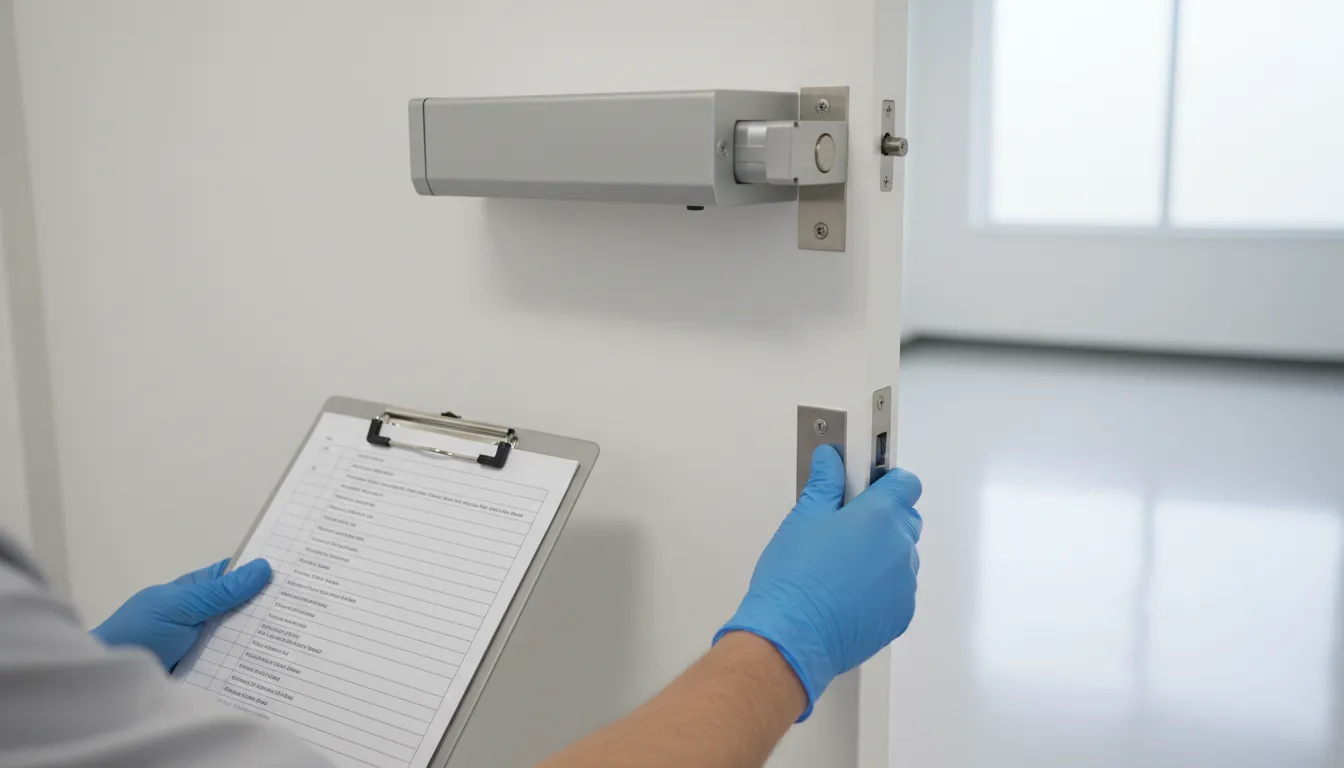
A useful fire door maintenance NJ check follows the full door assembly, not just the door face. A facility manager should inspect what is visible, operate the door, and record anything that affects closing or latching. NFPA 80 guidance calls for inspection and testing of fire door assemblies at least annually. Signed records should be kept for the AHJ, according to this fire door maintenance guidance.
Door, frame, and label condition
Start with the door leaf and frame. Look for holes, cracks, impact damage, corrosion, loose parts, or unapproved changes. Check that the fire door label is present, visible, and readable. If the label is painted over or missing, record it for review rather than guessing the assembly rating.
Check the vision panel, if one is installed, along with its surrounding trim. Cracked glass, chipped edges, or loose glazing beads need attention. Review gasketing or edge seals where the listed assembly uses them. They should remain in place, secured, and free of tears or material that blocks door movement.
Closing and latching operation
Open the door and let it close through its normal travel. Hinges should be secure, aligned, and free of damage that causes drag or sag. The closer should bring the door fully closed without a hand push. The latch should engage each time, and no wedge or stored item should hold the opening open.
| Check area. | Visible result. | Repair flag. |
|---|---|---|
| Door and frame. | Surfaces are sound. | Hole, crack, or loose part. |
| Label. | Present and readable. | Missing or painted label. |
| Closer and latch. | Door closes and latches. | Incomplete close or latch. |
| Glass and seals. | Secure and intact. | Damage or torn seal. |
A failed closer or latch is not a small hardware issue on a rated opening. The same guidance states that defects which interfere with operation should be corrected without delay. If repairs call for rated hardware or replacement work, schedule reliable commercial door repair services. Do not make an undocumented change.
Clearance records and follow-up
Clearances deserve their own line on the inspection record. Measure the gaps at the head, jambs, meeting edges, and bottom, as applicable to that opening. Do not decide pass or fail from appearance alone. Compare the measured gaps with listed assembly requirements and the direction of the local authority having jurisdiction.
Keep a record for each opening: location, label status, damage, operating test, gap readings, and the repair action needed. Photos help track wear at busy corridors, stairwells, or service areas. This gives the facility team a clear repair list and a trail for the next inspection.
When does a fire-rated door need repair or replacement?
A fire-rated opening needs attention when any part no longer works as an assembly. This includes the door, frame, closer, latch, hinges, glazing, seals, and label. For fire rated door maintenance NJ facilities can document issues early, then arrange the right repair or replacement review.
Closing and latching failures
A door that will not close fully or latch on its own needs prompt assessment. The issue may be a worn closer, damaged latch, loose hinge, obstruction, or shifted frame. NFPA 80 maintenance guidance states that defects interfering with operation should be corrected without delay.
Repeated rubbing, binding, or uneven clearances also call for attention. A quick adjustment may not solve movement in the frame or hardware wear. If the same gap or alignment issue returns, a qualified technician should inspect the full opening.
Damage, labels, and alterations
Physical damage can change the repair decision. Look for holes, cracks, bent frame sections, loose hardware, cracked glazing, or damaged glazing beads. A missing or unreadable fire label also needs review, since the rating must be confirmed during inspection.
- Arrange repair review when the closer, latch, hinge, seal, or minor alignment issue can be corrected using suitable components.
- Request replacement review when damage affects the door leaf, frame, rated glazing, or reliable operation of the assembly.
- Stop and seek expert review after field cuts, drilled holes, added hardware, or unapproved changes to glazing.
Do not treat a rated opening like a standard interior door. A repair that changes listed parts or construction can create a compliance issue. Cosello's reliable commercial door repair services can assess damaged commercial openings and define needed work.
Repair, replacement, and AHJ review
A professional assessment should separate a serviceable defect from an opening that needs replacement. The technician should inspect operation, labeling, frame condition, glazing, hardware, and signs of prior alteration. Keep findings with inspection and service records for the building.
When the rating, accepted repair method, or local requirement is unclear, coordinate with the Authority Having Jurisdiction (AHJ). The AHJ can confirm the accepted path for the property. For a new rated assembly, review professional fire-rated door installation options before work begins.
How do NJ and PA property managers document maintenance?
A door-by-door record
For fire rated door maintenance in NJ and nearby Pennsylvania properties, start with one record for each assembly. Give every door a clear asset ID and location, such as Building A, stairwell 2, level 3. Match that ID to the door, frame, label, hardware, closer, and any glazing.
Record each inspection date, the name of the person who checked the door, and the condition found. NFPA 80 guidance calls for fire door assemblies to be inspected and tested at least annually. It also calls for a signed written record kept for the authority having jurisdiction (AHJ), as explained in this fire door maintenance guidance.
What belongs in the maintenance log?
A useful log shows what was observed, what work was ordered, and what work was finished. Note issues in plain terms: a door that will not close, damaged hardware, a blocked opening, or a missing label. Add photos or report references to the property file when they help show the condition.
- Asset ID and door location.
- Inspection date, inspector, and result.
- Issue found and work order number.
- Repair date and completed work.
- Follow-up check and any AHJ direction.
If a defect could affect door operation, the cited NFPA 80 guidance states it should be corrected without delay. Use the log to track the issue from discovery through repair and recheck. For work on rated openings, reliable commercial door repair services can support a clear repair record.
Inspection-ready coordination
NJ and PA managers should keep records by property and by opening, not in scattered emails. File inspection reports, service invoices, photos, replacement component records, and follow-up notes under the same asset ID. This gives a building professional a clear history before a planned review or repair.
Local requirements can vary by jurisdiction and building conditions. Before changing a rated assembly, coordinate with a qualified door professional and the local AHJ when needed. A manager can also connect inspection findings with professional fire-rated door installation records when an assembly needs replacement rather than routine upkeep.
Who should handle fire door corrections and service?
Fire rated door maintenance in NJ should be handled by a specialist who knows labeled door assemblies. A fire door is not just a slab and hinges. The frame, closer, latch, seals, glazing, hardware, and label must work together as one opening.
Qualified review before corrections
A qualified specialist should inspect a failed opening before work is ordered. NFPA 80 guidance says fire doors should stay operable. Defects that affect operation should be corrected without delay. The University of Colorado summarizes these fire door maintenance duties for building teams.
Field changes need the same care. Cutting a vision opening or drilling new holes can affect the rated assembly. So can changing listed hardware or replacing a damaged part with the wrong product. A specialist checks labels, door and frame condition, closer action, latch action, clearances, and installed hardware.
That review separates a service correction from a door that no longer suits the opening. Adjustment or listed replacement hardware may solve an operability issue. An altered opening, damaged assembly, or unsuitable door may need fire-rated door installation instead.
Before service starts, the building team should keep the latest inspection record and note changes since that inspection. This gives the specialist a clear history of the opening. It also keeps the repair discussion tied to observed conditions, not guesswork.
Repair or replacement support in NJ and PA
Cosello evaluates commercial openings for NJ and PA building teams. A site review can show whether repair, listed parts, or replacement work is the sound next step. Cosello's fire-rated door services support maintenance needs without treating every finding as a replacement project.
Repair may be practical when listed parts can restore normal operation and the opening is otherwise sound. Replacement may fit when damage or past changes leave the existing assembly unsuitable for its location. Any recommendation should be checked against the local authority's requirements.
Facility teams should share the door location, label details, inspection findings, and photos when asking for service. They should also note problems such as a door that will not close or latch. This helps the specialist plan the first visit and bring likely parts.
For help with a correction or planned replacement, use Cosello's contact page or call (856) 317-1770. The local authority having jurisdiction makes the final compliance decision.
Frequently Asked Questions
How often should fire-rated doors be inspected in New Jersey?
Commercial fire door assemblies should be inspected and tested at least once each year. According to the NFPA 80 maintenance guidance, a signed written record should be kept for review by the authority having jurisdiction. Facility managers should also perform routine visual checks between annual inspections, especially after impact damage or hardware problems.
Who can perform certified fire-rated door maintenance in NJ?
A facility manager can note visible issues, but repairs and inspection documentation should be handled by a qualified fire door professional. The professional should understand labeled assemblies, listed hardware, closers, latching, glazing, and local authority requirements. For NJ or PA buildings, confirm what credentials and records the local authority having jurisdiction requires before scheduling inspection or repairs.
What are the common signs that a fire-rated door needs repair?
Arrange evaluation when a door does not close and latch fully, rubs, has loose hardware, or has damaged seals. Missing or unreadable labels, holes, cracks, and chipped fire-rated glazing also require attention. Fire Testing Solutions states that labels must remain visible and legible, and glazing must be intact with secure beads.
Can a fire door stay open while a hold-open device is being repaired?
No. During repairs to a hold-open device, its associated fire door should remain closed but operable, according to the NFPA 80 maintenance guidance. The door must still open for normal passage and close properly afterward. Facility staff should keep the opening clear and document the repair for the building's life-safety records.
Ready to schedule your fire-rated door evaluation?
Small door issues can become costly repairs, inspection delays, and avoidable safety concerns when routine maintenance keeps sliding down the facility schedule. Starting now gives your team enough time to identify worn hardware, clearance problems, or closing issues before they disrupt daily building operations. A planned review also helps you organize practical repair priorities and budget decisions without a last-minute rush or an emergency response.
Ready to schedule a fire-rated door maintenance evaluation for your New Jersey or Pennsylvania property? Review our commercial fire-rated door installation services if the opening may need replacement, then call (856) 317-1770 to schedule an on-site evaluation and discuss the doors that need attention. Bring your door list, recent inspection notes, and known trouble spots so the conversation starts with clear next steps.