

Adding a legal bedroom to your basement requires a code-compliant path for emergency rescue and escape. The typical egress window well installation cost in the Tri-State area falls between $2,500 and $5,000 for a fully permitted project.
The average egress window well installation cost typically ranges from $2,500 to $5,000 per window for professional labor and high-quality materials. Basic window well replacements might start as low as $1,800, while complex excavations that require structural foundation work or advanced drainage systems can reach $7,000 or more. According to data from Egress Pros, total project costs for professional installers frequently settle near the $4,000 mark when including the window unit and final safety hardware. In South Jersey and Philadelphia, your final price depends on excavation depth, soil conditions, and chosen materials like reinforced steel or custom concrete.
Ready to move forward? Call (856) 317-1770 to schedule a free on-site estimate for your egress window well installation today.
Homeowners often start their project by asking about the basic components and legal requirements for these safety exits. Understanding the purpose and code requirements is the first step toward a safer, more valuable home. The path begins with a look at how these systems work and why they matter for every South Jersey basement conversion.
What Is an Egress Window Well and Do You Need One?
An egress window well is an excavated structure installed against the exterior of a basement window below grade. Its primary function is to create a safe, unobstructed path for emergency exit in the event of a fire or other hazard. If you plan to use your basement as a bedroom, home office, or rental unit, local building codes require this safety feature. The well transforms what would otherwise be a dark, confined space into a habitable room with natural light and a legal means of escape.
Components of an Egress Well System
A properly installed egress well includes several critical components working together. The well wall itself, which prevents soil and water from pressing against the window glass, is typically fabricated from corrugated steel, fiberglass, or poured concrete. A gravel base with a perforated drain pipe directs groundwater away from the foundation, preventing hydrostatic pressure from forcing water through basement walls. Many installations also include a window well cover to keep out rain, snow, leaves, and debris while remaining openable from the inside for emergency egress.
These systems are governed by the International Residential Code (IRC) and the International Building Code (IBC). Per IBC Chapter 10 means of egress standards, every sleeping room in a basement must have a compliant secondary exit. The well must project at least 36 inches from the foundation wall and be at least 36 inches wide. For wells deeper than 44 inches below grade, a permanently affixed ladder or steps is required to ensure all occupants can climb out safely.
Window Size Requirements
The egress window itself must meet strict dimensional standards under IRC Section R310. The net clear opening must be at least 5.7 square feet, with a minimum width of 20 inches and a minimum height of 24 inches. The sill height cannot exceed 44 inches from the finished floor, ensuring that even young children can reach the opening. The window must also operate without keys, tools, or special knowledge , a simple push or slide mechanism that any family member can use under stress. When these dimensions are combined with a properly sized well. The result is an opening large enough for a fully equipped firefighter to enter and for occupants to exit quickly.
Understanding these requirements helps you evaluate egress window installation cost more accurately, since different window configurations and well sizes carry different material and labor price points.
Types of Egress Window Wells: Which Material Is Right for Your Home?
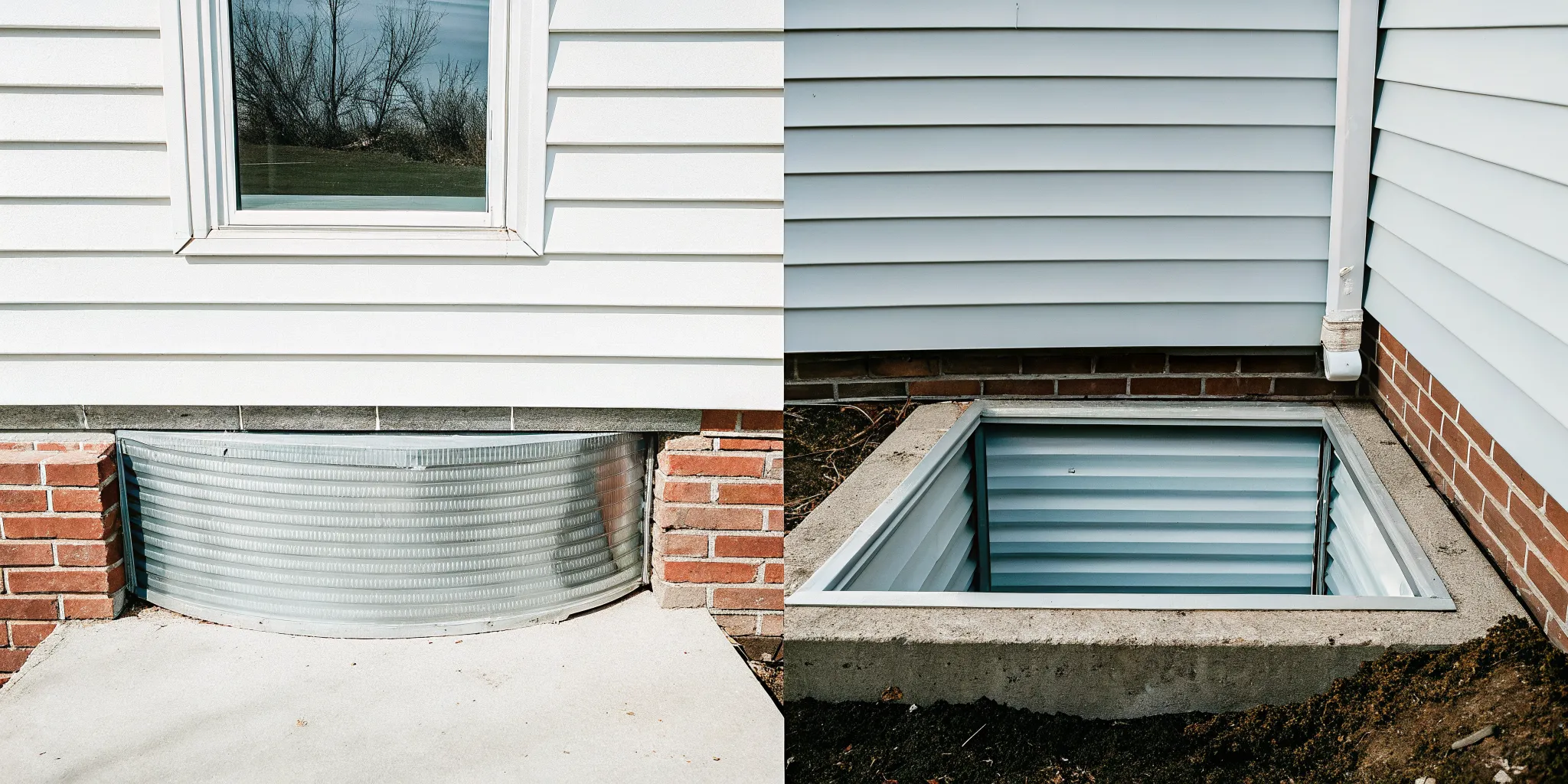
Choosing the right well material is one of the most consequential decisions in any basement egress project. This choice directly affects the total egress window well installation cost, long-term durability, and maintenance requirements. Each material offers distinct advantages depending on your soil conditions, budget, and aesthetic preferences. Explore our brands page to see the window manufacturers we work with. Below is a detailed comparison of the most common options available to South Jersey homeowners.
| Material | Cost Range | Durability | Pros | Cons |
|---|---|---|---|---|
| Galvanized Steel | $800 - $1,800 | High | Excellent structural strength, resists soil pressure, widely available, straightforward installation | Prone to rust over time if the galvanized coating is scratched; may require periodic painting in coastal or high-moisture areas |
| Fiberglass | $1,000 - $2,200 | Moderate to High | Rust-proof and rot-proof, lightweight, seamless finish, excellent for high-moisture soil conditions | Higher upfront cost than steel, can crack under extreme impact or heavy soil pressure if not properly backfilled |
| Polyethylene (Plastic) | $700 - $1,000 | Low to Moderate | Most affordable option, lightweight, easy to transport and install, UV-resistant grades available | Less durable than steel or concrete, can warp or crack over time under heavy soil loads, shorter lifespan |
| Poured Concrete / Stone | $1,500 - $2,800 | Maximum | Highest structural integrity, fully customizable to any size or shape, premium appearance, lasts decades with minimal maintenance | Highest cost, longest installation time (requires curing), heaviest material, limited to sites with equipment access |
Steel vs. Fiberglass vs. Concrete: What South Jersey Homeowners Should Know
The heavy clay soil prevalent throughout Camden, Burlington, and Gloucester counties exerts significant lateral pressure on underground structures. In our experience installing egress systems across the Tri-State area, galvanized steel and fiberglass wells offer the best balance of strength and value for standard residential applications. Steel provides superior resistance to soil pressure at a moderate price point, as long as the protective coating remains intact. Fiberglass eliminates corrosion concerns entirely, making it ideal for properties with persistently wet soil or high water tables.
Custom concrete wells are the gold standard for deep excavations exceeding 48 inches or for homeowners who want a seamless architectural appearance integrated with stone or brick landscaping features. However, the higher material cost and extended installation timeline mean concrete wells are typically chosen for higher-end renovations or situations where standard prefabricated dimensions will not work. Whichever material you select, ensure the well includes a proper drainage outlet connected to your home's foundation drainage system. We recommend reviewing our egress and basement window installation guide for additional details on integrating these systems.
How Much Does Egress Window Well Installation Cost?
Understanding the full cost picture helps you budget realistically and avoid surprises. The total egress window installation cost typically falls between $2,600 and $5,800 per unit for a complete, permitted installation. Most South Jersey homeowners pay approximately $4,000 for a professionally installed system that includes excavation, the window well, the egress window unit, drainage components, and permit fees. Below is a step-by-step breakdown of where your investment goes.
- Excavation: $1,500 - $3,000. This is the largest single line item. The crew must dig a pit deep and wide enough to accommodate the well while maintaining a stable slope that prevents soil collapse. Heavy clay soil, rocky ground, or limited equipment access can increase this cost significantly.
- Window Well Unit: $100 - $2,800. The well itself varies widely in price based on material and size. Plastic wells are the least expensive but offer the shortest service life. Steel and fiberglass represent the mid-range, while custom concrete or stone wells command the premium tier.
- Egress Window: $100 - $1,000+. A standard casement or sliding egress window from a reputable manufacturer like Andersen provides reliable operation and energy efficiency. Upgrading to improved glass coatings, reinforced frames, or larger sizes increases the cost but can improve thermal performance and resale value.
- Professional Labor: $900 - $1,500. Skilled labor accounts for roughly half the total project cost. This covers foundation cutting with diamond-blade saws, precise framing, weatherproof sealing, and final trim work. Cosello Construction's in-house technicians bring 10 to 20 years of experience to every installation, ensuring the structural cut is executed correctly the first time.
- Permits and Inspections: $50 - $200. A building permit is required in every municipality we serve. Our team handles the application process, coordinates the required inspections, and ensures all work meets local code before closing out the permit.
- Window Well Cover: $70 - $700. A durable cover prevents debris accumulation and protects children and pets from accidental falls. Heavy-duty polycarbonate covers can support adult weight and are highly recommended for ground-level installations.
What Drives Cost Variability in the Tri-State Area?
Several site-specific factors can push egress window well installation cost toward the upper end of the range. Foundations poured with high-strength concrete require more time and specialized cutting equipment. Properties with limited side-yard access may require hand excavation rather than machine digging, adding labor hours. Underground utility lines, tree roots, or abandoned oil tanks can necessitate rerouting or additional approvals. Homes with existing water intrusion problems may require upgraded drainage systems beyond the standard gravel-and-pipe configuration. And if you are replacing an old, undersized well, the removal and disposal of the existing unit adds a modest but real cost.
Cosello Construction serves homeowners throughout the Cherry Hill area and beyond. We always provide a transparent, itemized quote during the free initial site visit. This visit allows our estimator to assess your specific foundation type, soil conditions. So the final price reflects the actual scope of work, not a guess based on averages. Contact our team to schedule your assessment.
Window Well Drainage and Waterproofing: What Keeps Your Basement Dry?
A well-installed egress window is only as good as the drainage system behind it. In a region where clay-heavy soil and seasonal downpours are the norm. Inadequate drainage is the leading cause of post-installation problems: flooded basements, mold growth, foundation cracks, and failed window seals. A comprehensive drainage and waterproofing strategy is not optional; it is a fundamental component of any code-compliant egress installation.
Essential Drainage Components
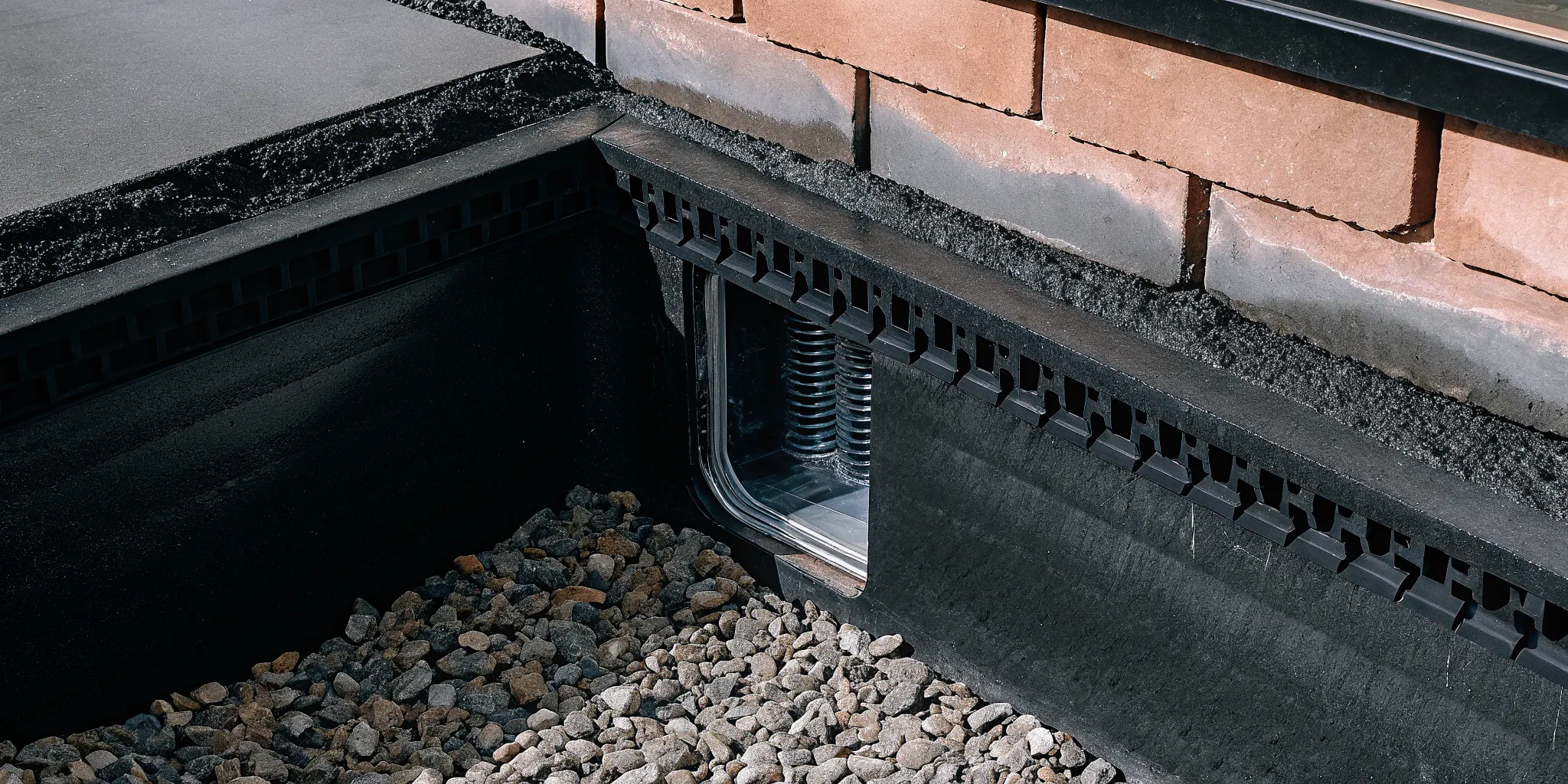
A properly designed drainage system includes several layers. The excavation is backfilled with 6 to 12 inches of washed gravel at the base, which acts as a reservoir and filter. A perforated PVC drain pipe. Wrapped in filter fabric to prevent sediment clogging is embedded in the gravel and routed to a sump pump, French drain, or daylight outlet. This pipe collects groundwater that seeps into the well and directs it away from the foundation before it can reach the window. A waterproof membrane is applied to the exposed foundation wall behind the well to block capillary moisture migration through the concrete. Without these measures, even a perfectly sealed window will eventually leak under the hydrostatic pressure created by water-saturated soil.
Window Well Covers and Maintenance
A heavy-duty polycarbonate cover is the final line of defense. Covers prevent rainwater, melting snow, fallen leaves, and pests from accumulating inside the well, which can clog the drainage system and create standing water. They also eliminate the safety hazard of an open pit in your yard. Covers must remain openable from the inside without tools, consistent with egress code requirements. We recommend inspecting the drainage gravel and pipe annually, especially after heavy storms, to ensure the system has not become blocked by sediment or root intrusion. For more information on maintaining your basement upgrades, see our professional window replacement resource page.
Egress Window Well Installation in South Jersey and Philadelphia
Cosello Construction has served homeowners and property managers across the Tri-State area since 2003. Our service radius covers a 40-mile range extending from Cherry Hill, New Jersey, through Camden. Burlington, and Gloucester counties, as well as Philadelphia and surrounding communities in Pennsylvania and Delaware. Every municipality in this region enforces its own interpretation of the IRC and IBC egress requirements, which is why local expertise matters.
Local Code and Soil Considerations
The combination of strict building codes and challenging soil conditions makes professional installation particularly important in this region. The egress window must provide a net clear opening of at least 5.7 square feet with a minimum width of 20 inches and height of 24 inches. The window well must extend at least 36 inches from the foundation and be wide enough to allow full operation of the window. Wells deeper than 44 inches require a permanently installed ladder or steps that do not obstruct the window opening.
South Jersey's characteristic clay soil presents two distinct challenges: it expands significantly when wet. Exerting lateral pressure on well walls, and it drains slowly, prolonging water contact with the well structure. Our standard installation protocol includes a gravel drainage base, perforated pipe routed to the site's drainage system, and waterproof membrane application on the exposed foundation wall. These measures are designed specifically for the soil conditions our team encounters daily.
Why Choose Cosello Construction for Your Egress Project
As a family-owned contracting firm with over 20 years of experience, we bring a level of consistency and accountability that subcontractor-dependent operations cannot match. All installations are performed by our in-house technicians, who average 10 to 20 years of experience. We are an Andersen Certified Contractor, which means our team has completed manufacturer-specific training on window integration and weather sealing. Every project is backed by a comprehensive two-year labor warranty. We handle the permit application, coordinate municipal inspections, and ensure the final installation is fully code-compliant before we consider the job complete. For a closer look at our work, visit our project gallery and see why homeowners throughout the region trust us with their basement renovations. You can also read our story to learn more about our family-owned legacy since 2003.
Ready to Schedule Your South Jersey Egress Window Well Estimate?
Delaying your egress window well project leaves your basement vulnerable to water damage and keeps you from using that space to its full potential. A properly installed egress system gives you a dry, safe, legally habitable basement with a clear emergency exit and abundant natural light. Our team completes most installations within two weeks, and every project is backed by our two-year labor warranty.
Call (856) 317-1770 or visit our contact page to schedule your free on-site estimate today. We will assess your foundation, discuss your options, and provide a transparent, detailed quote with no obligation. Your safer, brighter basement starts with a single phone call.