
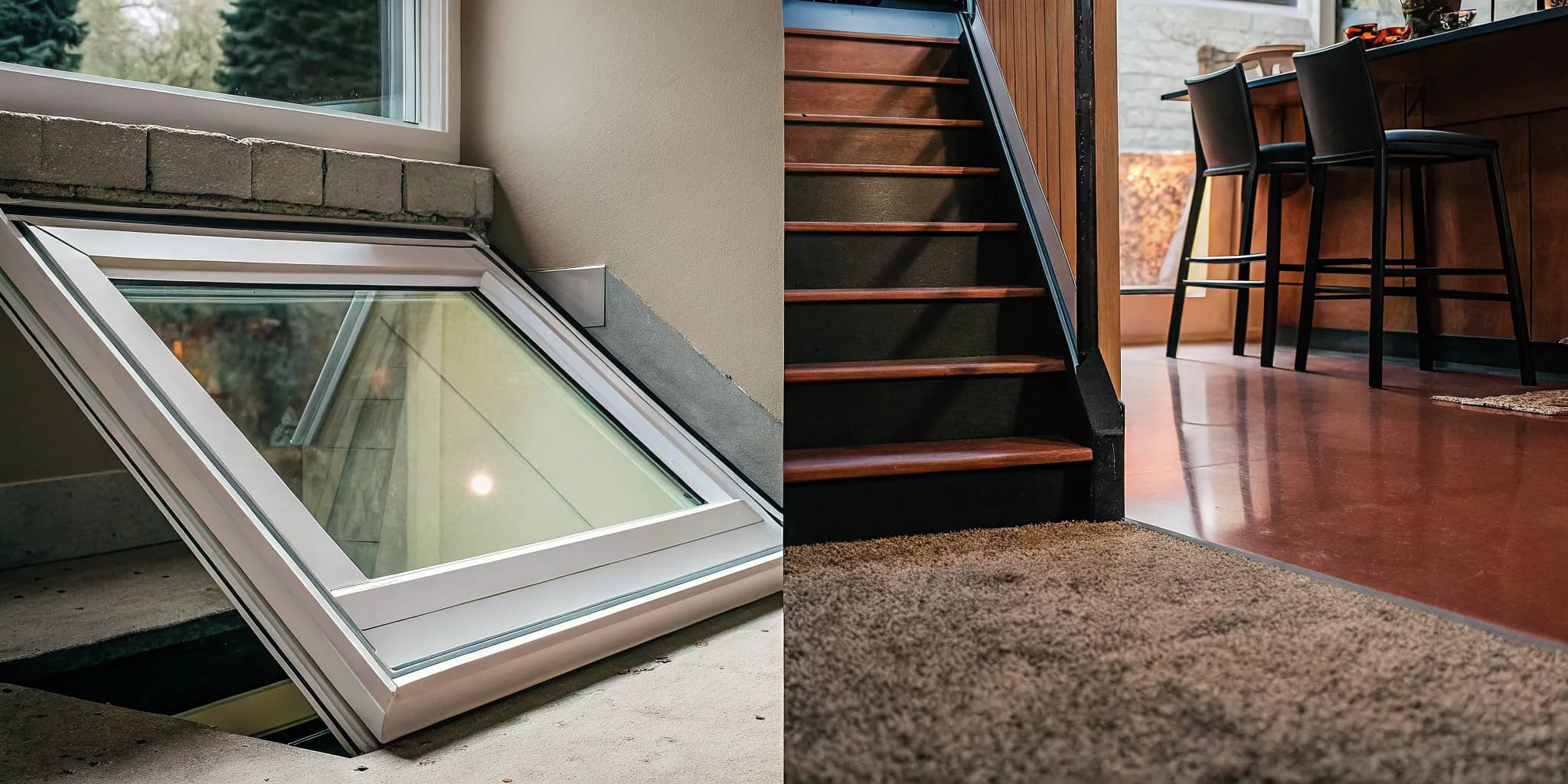
A single non-compliant basement window can block a family's only escape route during a fast-moving house fire. New Jersey building codes set specific sizes for egress windows to ensure every finished basement has a safe, clear exit.
Need professional egress window installation? Contact Cosello Construction today for a free estimate, or call us at (856) 317-1770.
Egress window requirements nj require that every basement sleeping room and living space must have at least one working emergency escape opening. According to New Jersey code, these windows must have a clear opening of 5.7 square feet. Ground-floor windows only need 5.0 square feet. The opening must be at least 24 inches high and 20 inches wide so a person can climb out easily. The bottom of the window sill cannot be more than 44 inches above the floor. If the window is below the ground, you must install a window well with enough space. You also need a fixed ladder if the hole is deeper than 44 inches. These rules keep your home safe and give you a way out during an emergency.
Egress Window Requirements NJ: What are egress windows and why does NJ require them?
An egress window is a large, easy to open window. It serves as a safe way out during an emergency. It must be big enough for a person to crawl through. It must also be low enough to the floor to reach in a hurry. In New Jersey, these windows are a legal safety rule for any room used for sleeping. This includes all finished basement rooms. The goal is to give your family a path out if fire or smoke blocks your stairs. It also lets rescue teams get inside your home fast.
The NJ Uniform Construction Code
The state sets these rules through the NJ Uniform Construction Code. This law ensures that every home meets the same safety standards. When you add a bedroom to a basement, you must install a proper escape path. Using a pro for your egress window installation helps you follow these state laws. This keeps your home legal and protects your family during a fire, as explained in our detailed Egress and Basement Window Installation: The Complete South Jersey Guide.
Safety and rescue access
Fire safety is the main reason for these laws. If a fire starts near the stairs, a basement can become a trap. A code-compliant window gives you a second path to the outside. It also provides a clear entry for firefighters. Without a large enough opening, they may not be able to reach you with their gear. In New Jersey, making sure your windows meet the residential subcode is a vital step for any owner.
Adding home value
These windows also help you get the most out of your home. To list a basement room as a legal bedroom in New Jersey, it must have an egress window. This change can raise your home value. It also makes your living space feel much better. These large windows bring in fresh air and light. This makes a dark basement feel like a main room. If you also need window replacement for your home, adding egress windows is a smart way to start.
New Jersey IRC minimum size requirements for egress windows
Every home in New Jersey must follow strict safety rules for basement exits, and these egress window requirements nj laws come from the International Residential Code. New Jersey uses the NJ Uniform Construction Code to enforce these safety marks. The goal is simple: you must make sure people can get out and rescuers can get in during a fire. If you finish a basement or add a bedroom, you must meet these marks to pass a check.
Net clear opening area standards
The most vital term in the code is "net clear opening." This means the actual path you can use when the window is wide open. It does not include the frame or any part of the window that blocks the way. In most parts of the home, New Jersey needs a net clear opening of 5.7 square feet.
This size makes sure that a firefighter in full gear can enter the room from the outside. There is one small change for windows on the "grade floor," which is any level at the ground height. Since these windows are close to the dirt, the code allows for a smaller opening of 5.0 square feet. For more help with your job, you can look into expert egress window installation to make sure your home meets these goals.
Height and width minimums
Hitting the total square footage is not enough. The window must also meet height and width marks. The clear opening height must be at least 24 inches. At the same time, the clear opening width must be at least 20 inches.
These rules stop people from using thin or short windows that would be hard to crawl through. Keep in mind that if you use the smallest width and height together, you will not reach the 5.7 square foot goal. A window that is 20 inches wide and 24 inches tall only gives 3.3 square feet of space.
You will need to pick a larger size for at least one side to stay legal. You can learn more about window replacement to find the best fit for your room.
Ease of use and access
An egress window is only helpful if it opens fast. The New Jersey building code says that these windows must open without keys or special tools. If a fire starts, you should not have to hunt for a key.
The window must also have a sill height of no more than 44 inches from the floor. This height makes sure that most people can climb out without help. These laws are part of the larger New Jersey building codes that protect you. Always work with a pro to make sure your new windows follow every local law.
| Rule Type | Grade Floor Windows | Standard/Upper Floor Windows |
|---|---|---|
| Net Clear Opening Area. | 5.0 square feet. | 5.7 square feet. |
| Minimum Opening Height. | 24 inches. | 24 inches. |
| Minimum Opening Width. | 20 inches. | 20 inches. |
| Max Sill Height from Floor. | 44 inches. | 44 inches. |
| Operational Rule. | No tools or keys. | No tools or keys. |
Egress window placement rules: height, sill, and well depth
When you plan a basement project in the Tri-State area, safety codes are the most vital part of the job. New Jersey adopts the International Residential Code to set high safety standards for basement living spaces. These egress window requirements nj make sure that you and your family can get out fast during a fire. They also give firefighters a way to enter the home with their gear on. Proper placement involves precise math for the height, sill, and well depth to meet state law.
Maximum sill height limits
The first rule for any basement escape route is the height of the window sill. State code says the bottom of the window opening must be no more than 44 inches from the floor. This floor must be the finished floor, not the raw slab. This low height lets a child or a senior climb out without needing a stool or a chair. If the sill is too high, the room does not count as a legal living space.
You must measure from the top of the floor to the lowest part of the clear opening. Many homeowners forget that the window frame itself takes up space. If you install the unit too high, you might fail your local building check. At Cosello Construction, we check these points before we cut into your foundation. Our team makes sure your window replacement meets every local rule to keep your home safe and legal.
Window well size and projection
If your egress window is below the ground level, you need a window well. This well must be large enough for a person to stand in and climb out of. The area of the well must be at least 9 square feet. It must also have a width and a length of at least 36 inches. This space gives you enough room to move even if you are in a hurry or carrying a pet.
The well must also allow the window to open all the way. A casement window that swings out should not hit the wall of the well. You must keep this area clear of snow or large plants at all times. To stop water from entering your home, the well needs a drain. This drain should lead to a bed of stone or a sump pit. We use strong, tough parts for our wells to prevent soil from caving in or water from pooling near your glass.
Safety ladders and steps
Safety rules change if the window well is deeper than 44 inches. When the well is this deep, the law says you must have a way to climb out. You must install a ladder or steps that are firmly fixed to the well wall. These steps cannot be blocked by the window when it is open. They must also be sturdy enough to hold a grown adult in full gear.
Ladders must have rungs that are at least 12 inches wide. The rungs must not stick out more than 6 inches into the well space. This keeps the path clear for you to climb up to the yard. The ladder must be close to the window so you can reach it easily. We use top grade ladders that meet all NFPA 80 and IBC standards. This gives you peace of mind knowing your basement meets every safety code in the state.
Choosing the right egress window style for your NJ basement
When you plan to finish a basement in New Jersey, picking the right window style is key. You must choose a model that meets the egress window requirements in NJ. These rules come from the New Jersey Uniform Construction Code. The window must have enough space for a person to crawl through. It also needs to let a first responder enter the room. This means the window must hit the 5.7 square foot net clear opening rule. Your final choice will depend on your wall space and the size of your well.
Casement windows for maximum opening
Casement windows are a top pick for most egress window installation projects. These windows hinge on one side and swing out like a door. Since the whole sash moves out of the way, you get a large opening in a small frame. This helps you meet the code without a giant hole in your wall. At Cosello Construction, we often use Andersen windows. Their casement units are tough and easy to use. These work best in deep wells where the sash has room to swing open.
Sliding and awning window options
A sliding window is a great choice if you have a wide basement wall. These windows have two sashes where one slides over the other. They do not swing out, so they work well in shallow wells. But since only half the window opens at once, the whole frame must be quite large. You will need a width of about 48 to 60 inches to make sure the open side is big enough. We check every site to see if a slider fits your layout.
Awning windows hinge at the top and open from the bottom. They are good for letting in fresh air while keeping out rain. However, they can be hard to use for exits. The glass sash can block your path if the window is too low in the well. You must make sure the window opens far enough to meet the 24-inch height rule. Most owners pick these for small rooms or a specific look. We always verify the exit size before we start any work on these styles.
Proper installation and drainage
In New Jersey, wet basements are a common worry. A new window hole can let in water if the drainage is poor. Every egress window needs a good well with a drain that leads away from the home. We use high-quality seals to keep your basement dry and warm. Our team has more than 20 years in the field. We stand by our work with a 2-year labor warranty. This keeps your home safe through every storm.
- Casement windows provide the largest exit area in tight spots.
- Sliding windows save space inside the window well.
- Expert drainage prevents basement floods and mold.
- High-quality seals help lower your energy bills.
Permit requirements for egress window installation in NJ
Installing an egress window in New Jersey is a big job that changes your home. Because this work needs a cut in the base of the house, you must get a building permit. New Jersey uses the Uniform Construction Code to make sure all work is safe. This check keeps your home strong and keeps your family safe in a fire.
Why you need a permit
Most egress window installation jobs need structural changes. Workers must dig out soil and cut through thick walls. These changes can change how your house holds weight. A permit makes sure a local boss looks at the plans to stop wall breaks or leaks. If you skip this step, you may pay fines or have a hard time when you sell your home.
The permit step also shows that the window size is right. The law says the open space must be at least 5.7 square feet. This gap is big enough for a person to crawl through and for a fire crew to get in. Good window replacement with a permit proves your basement is a legal room for living.
The permit application process
Getting a permit for your project follows a set of steps in most NJ towns. This path keeps the work on track and makes sure the job follows the state building rules.
- Make your site plan. You need to show where the new window goes and how it fits the basement floor plan.
- Turn in the technical forms. You will need the building forms and maybe a fire form based on your town rules.
- Pay the permit fee. Your local town office sets these costs based on the size of the home work.
- Wait for the plan check. A town boss will check your drawings to see if they follow NJ egress requirements for size.
- Book the final check. Once the work is done, a town inspector must visit your home to sign off on the job.
Final check and safety
The final check is the last part of the permit path. The inspector will measure the height of the window sill to make sure it is no more than 44 inches off the floor. They also check the window well and ladder if the window is below the ground. This check proves that your basement meets the safety rules for a bedroom.
What happens if your basement egress window is not code compliant?
Safety is the key part of home building. Basement egress windows give you a clear path to get out during a fire. If your window does not meet the egress window requirements nj people must follow, the risks are high. You might think a small window is enough. But local laws state otherwise. A window that is too small or too high can trap you in a room when time is short. It also blocks fire crews from entering the home to help you.
Safety risks in a fire
The main job of an egress window is to save lives. In New Jersey, the Uniform Construction Code sets strict rules for these exits. These rules make sure that an adult can fit through the opening with ease. If the window is too small, a person might get stuck. If the sill is too high off the floor, a child may not reach it. These errors turn a basement room into a trap. Keeping your home safe means following every rule for size and height.
You must also think about rescue crews. Fire crews carry heavy gear and air tanks. They need a wide opening to crawl into your basement. A window that is not legal makes their job much harder. It slows down their work when they need to find people in the smoke. Using a pro for your window replacement makes sure the opening is large enough for safety crews to use.
Legal status of your basement
A basement room without a legal exit cannot be a bedroom. This is a common issue for people who finish a basement without a permit. You might have a bed and a closet. But the law does not see it as a living space. This limit affects how you use your home. You cannot legally house a guest in that room. If you do, you are breaking local fire codes. This can lead to fines from the town if they find out.
This lack of status also hurts your home value. When you sell, you want to list every room to get the best price. But a real estate agent cannot list a non-legal room as a bedroom. This means you lose out on a lot of money. Buyers want a home that is safe and legal. They will see the lack of a proper egress window as a big flaw. They may ask for a price cut or walk away from the deal.
Resale and insurance issues
Home inspectors are very good at finding code issues. They will measure the sill height and the opening of your windows. If the window fails to meet the code, it will be in their report. Most buyers will not buy a house with a safety failure. You may have to pay for a fast egress window installation to save the sale. Doing this last minute is often more costly than doing it right from the start.
Insurance firms also care about these rules. If a fire or injury happens in a non-legal basement, they might deny your claim. They could say the room was not a legal living space. This leaves you to pay for repairs or medical bills on your own. You could also face a lawsuit if a guest gets hurt in that room. Choosing a pro like Cosello Construction helps you avoid these big risks. We know the local rules and make sure your home is safe and fully covered.
Frequently Asked Questions
What are the size rules for an egress window in NJ?
In New Jersey, an egress window must have a clear open space of at least 5.7 square feet. The window space must also be at least 24 inches high and 20 inches wide to meet the state code. Based on EgressUSA, these rules follow the 2021 home building codes. These sizes help people exit a room fast if there is a fire. This keeps you and your loved ones safe in your home.
Does a basement bedroom in New Jersey need an egress window?
Yes, any basement room used for sleeping in New Jersey must have at least one egress window. The state building code needs this to provide a safe way out during a fire. If you finish your basement and add a bedroom, you must put in a window that meets the size rules. Without a proper exit, the room is not a legal bedroom. This rule helps keep all homes safe for living.
What is the highest sill height for an egress window in NJ?
In New Jersey, the highest sill height for an egress window is 44 inches from the floor. This rule makes sure that most people can reach and climb through the window fast during a fire. If the window is too high, it may not be a safe exit. Based on EgressUSA, this 44-inch limit is a key part of the 2021 building codes used in the state.
Do I need a permit to install an egress window in NJ?
Yes, you need a permit to install an egress window in New Jersey. Since this work involves cutting into your home walls, local towns want to make sure the work is safe. A permit also makes sure the new window meets all state fire and safety codes. You should check with your town building office before you start the work. Getting a permit helps avoid fines and keeps your home up to code with state laws.
Ready to make your basement safe and code-compliant?
Delaying your egress window project leaves your family at risk and often leads to failed home checks that cost you much more money later. Acting now ensures you meet all NJ fire rules before next season so you can use your new basement room without any worry at all. You will gain a legal living space that adds real value while keeping your loved ones safe and sound today and for many years to come.
Ready to schedule a free egress window consultation and estimate? Call (856) 317-1770 to talk to a skilled NJ contractor who can help you plan your new basement safety project and get the job done right for you today.