
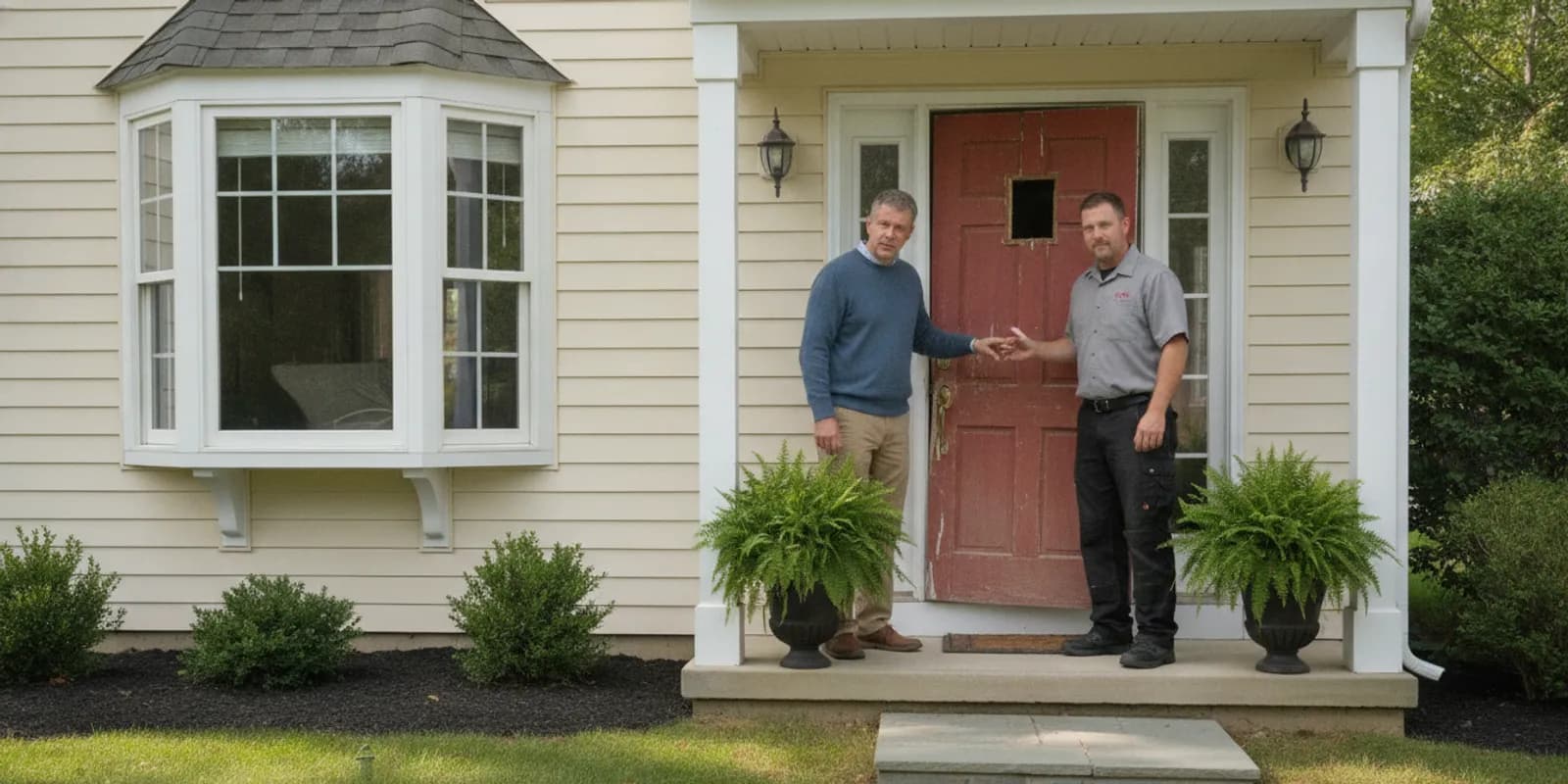
When a door is badly damaged, will not secure, or can no longer close reliably, the next step is not always an immediate like-for-like replacement. A sound emergency door replacement plan starts by making the property safe, recording what failed, and deciding whether the opening needs a temporary measure, a replacement door, or a broader frame assessment. This checklist helps South Jersey and Philadelphia property owners prepare for that decision.
Request a free in-home estimate
What should you do first when planning emergency door replacement?
Start with people and access, not product selection. If a door is hanging loose, has sharp broken material, or cannot be closed, keep people away from the immediate hazard. Do not force a damaged slab, frame, glass panel, lock, or closer. For an urgent threat to personal safety, contact the appropriate emergency service. A replacement contractor is not a substitute for emergency responders.
If the opening needs to be secured before an assessment, use a safe temporary measure only if it can be done without creating another hazard or blocking a required exit. Avoid improvised fasteners or coverings that could trap occupants, obstruct access, or damage the surrounding structure. If you are unsure whether the opening can be secured safely, ask a qualified professional or the relevant local authority for direction.
For a home, note whether the failed unit is the main entry, a side door, a patio door, or a door between the home and an attached garage. The use and location affect the questions an installer should ask. For a shared or commercial building, tell the responsible property manager and avoid changing a fire-rated or controlled-access door until the appropriate professional has reviewed the situation. Requirements can vary with the building and the door’s role.
Which details should you record before arranging an assessment?
A short, accurate record helps an installer understand the problem and decide what needs an on-site look. Write down when the issue began and what happened. For example, note whether the door was struck, exposed to water, forced, or simply became difficult to operate over time. Do not guess at a cause if you do not know it.
- Door location and use: Identify the entry, patio, side, or other opening and how people use it.
- What changed: Describe whether the door will not latch, drags, swings unexpectedly, has visible damage, or no longer closes.
- Visible condition: Note damage to the slab, glass, hinges, lock area, threshold, trim, or surrounding wall.
- Security and access concerns: Explain whether the property can be secured and whether residents need a temporary way to enter or exit.
- Previous work: Share any known recent installation, adjustment, or water-related issue that may be relevant.
- Photos from a safe position: Take wide and close views in good light. Do not touch broken glass or move an unstable door to get a better picture.
Keep the notes factual. “The latch no longer meets the strike plate” is more useful than “the frame is ruined” if you have not confirmed the frame condition. A professional should determine whether the problem is limited to the door or also involves the frame, threshold, hardware, or adjacent construction.
Is the door itself the problem, or does the opening need attention?
A damaged door slab can look like the whole opening has failed, but a replacement decision depends on more than the visible panel. A door that rubs, will not latch, or leaves a gap may have a problem with the slab, hinges, frame, threshold, hardware, or the way those parts meet. Water exposure or impact can also leave damage that is not obvious from one side.
Do not try to diagnose the structure by pushing or pulling on a loose unit. Instead, point out the symptoms and let the installer check how the door moves and closes. The assessment should distinguish what is visibly damaged from what needs closer inspection. If a repair appears possible, ask what it would address and what conditions would still remain. If replacement is recommended, ask what part of the assembly is included.
Door type matters, too. A front entry door, a sliding patio door, and a door with glass or a special function are not interchangeable choices. For a home entry, a front entry door replacement page can help you consider the relevant product path. For a large glazed opening to a yard or deck, review the options for sliding patio door replacement. The assessment should still confirm what fits the existing opening and the home.
When does a temporary measure make sense before emergency door replacement?
A temporary measure may be appropriate when the immediate concern can be managed safely while you arrange an assessment. It is not a permanent answer if the door cannot secure the property, moves unpredictably, or has damage that affects safe operation. Likewise, replacement should not be assumed solely because one component looks worn. The decision depends on the condition of the full assembly and what the owner needs from the opening.
| Situation | What to do next | What the assessment should clarify |
|---|---|---|
| Door is stable and closes, but operation has changed | Record the symptoms and arrange a professional evaluation. | Whether the issue is limited to an adjustable component or involves the door or frame. |
| Door is visibly damaged but the opening can be kept safe | Keep people clear of hazards, take safe photos, and request an assessment. | Which components are damaged and whether a replacement unit will fit the existing opening. |
| Door cannot be secured or is unstable | Prioritize occupant safety and contact an appropriate professional promptly; use no unsafe makeshift fix. | How to manage the opening safely and what work is needed before normal use. |
| Door is part of a shared, controlled, or fire-rated area | Notify the responsible building contact and avoid changing the unit without review. | Which building, access, or rating requirements apply and who must approve the scope. |
This comparison is a planning aid, not a remote diagnosis. A photograph or phone description cannot establish that a door is safe to use or that the frame is sound. For broader consumer product-safety information, consult the U.S. Consumer Product Safety Commission; questions about a specific building or opening should go to a qualified local professional or the relevant authority.
What should an installer assess at the property?
An on-site assessment should start with the opening and the conditions that affect the proposed scope. Ask the installer to explain what they can see, what they could not verify, and what assumptions are included in the recommendation. You do not need to diagnose the cause yourself to ask for a clear explanation.
- Door and frame condition: What visible damage is present? Does the frame appear suitable for the proposed replacement, or does it need further evaluation?
- Opening and fit: What measurements and site conditions determine the replacement size and configuration?
- Operation: How should the replacement open, close, latch, and work with the intended access?
- Glazing and hardware: Which glass, lock, hinge, handle, or other components are included in the proposed scope?
- Water and adjacent surfaces: Is there evidence that the surrounding trim or wall needs attention beyond the door installation?
- Access and preparation: What should occupants move, protect, or keep clear before the work?
- Scope boundaries: What is included, what is excluded, and what could change if concealed conditions are found?
If the opening is part of a multi-unit or nonresidential building, make sure the person arranging the work identifies the door’s function and any building-specific requirements. Cosello’s residential offering is focused on homeowners; for commercial or shared-building needs, confirm that the proposed contractor and scope fit the property before proceeding. For a home, the residential door replacement service information can help frame a conversation about the applicable door type.
Which replacement priorities should you settle first?
Before choosing a style or finish, separate the urgent need from the preferences you can take time to compare. The immediate need may be a door that closes and secures the opening. Other priorities may include matching the home, controlling daylight or privacy through glass, ease of daily operation, or coordinating the appearance with nearby windows. Tell the installer which needs matter most so the proposed options respond to the actual use of the door.
Consider the following points during the discussion:
- Function: Explain who uses the door, how often it is used, and whether the opening needs to serve a particular route through the home.
- Style: Note whether you want a similar look or are considering a different panel design, finish, or amount of glass.
- Privacy and daylight: If you are considering glass, ask how the specific options differ and which choices suit the door’s location.
- Hardware: Identify the lock and handle preferences you want priced as part of the proposed unit, rather than assuming they are included.
- Maintenance expectations: Ask what care the selected material and finish require, and compare the answer for the options under consideration.
- Opening condition: Ask whether the existing frame and surrounding area affect which options can be considered.
There may be tradeoffs between the appearance you prefer, the configuration that fits, and the amount of work needed at the opening. Avoid selecting a door from a photo or product label alone. Confirm the size, configuration, material, glazing, and hardware in the written proposal. If you are looking at the financial side, Cosello’s guide to factors that can change a door installation estimate offers a related planning resource; the on-site assessment still determines the scope for your property.
How can you compare replacement recommendations fairly?
Compare proposals by what they include, not only by the door’s appearance or the total at the bottom. A useful written estimate should identify the door type and configuration, the work planned at the opening, the included hardware or glazing, and any stated assumptions. If two proposals use different terms, ask each provider to explain them in plain language before comparing.
Use these questions to make the comparison practical:
- Does each proposal describe the same scope? Check whether both include the slab or full unit, frame work if needed, removal, installation, and handling of the surrounding area.
- What is excluded? Ask about work that may be outside the door installation, including hidden damage discovered after work begins.
- What product and options are specified? Confirm material, style, finish, glass, and hardware selections rather than relying on a general label.
- What is the expected sequence? Ask what happens before the scheduled work, how access is managed, and what the crew needs from the household.
- What warranty applies? Separate product coverage from labor coverage, and ask where the written terms can be reviewed.
- How will changes be handled? Ask how additional work is explained and approved if site conditions differ from what was visible during the estimate.
There is no reliable way to state an exact replacement cost without reviewing the door and site conditions. Size, configuration, material, glass, hardware, and the condition of the opening can all affect the scope. Request a written, itemized explanation and compare like with like instead of relying on a price for a different door or installation situation.
Cosello Construction offers free in-home estimates and financing is available. The company describes a 2-year labor warranty. Review the exact written estimate and warranty terms for your project, and ask what is covered before approving work. You can also review available financing information as you consider how to plan the project.
How should you prepare for the estimate and replacement?
Before the visit, clear a safe path to the door from both sides if possible. Keep children and pets away from damaged areas, and do not remove hardware or trim in an attempt to make the assessment easier. Make sure the person meeting the installer can describe what happened and can discuss the door’s normal use.
Have these details ready:
- Your notes and safe photos of the damage.
- The door’s location and any access needs for residents.
- Known information about previous work or recurring operating problems.
- Questions about the proposed product, installation scope, exclusions, and warranty.
- Any building or property-management instructions that may affect access or approval.
During the estimate, ask the installer to walk through the recommendation and identify any uncertainty. If replacement is advised, confirm how the proposed unit relates to the existing opening and what work is included. If a limited repair or adjustment is suggested instead, ask what symptoms it is expected to address and what would warrant another evaluation. The aim is to understand the options, not to agree to work before the scope is clear.
Cosello is an Andersen Certified Contractor and has more than 20 years of experience, according to the company profile. Those credentials and experience are useful context, but the written project scope remains the best way to understand what a particular estimate covers. See the company background and door and window brand information for more context.
When should you contact a qualified installer?
Contact a qualified installer when the door no longer works as intended, visible damage may affect the opening, or you need to decide whether replacement is more appropriate than a limited fix. Get help promptly if the door cannot be secured or appears unstable, while keeping occupants away from the hazard. If there is immediate danger, contact emergency services first.
For a residential project in the South Jersey or Philadelphia area, bring the information you have and ask for an in-home assessment rather than trying to determine replacement dimensions from a photograph. A specialist can review the door, frame, and opening in context, explain the likely scope, and identify questions that need further review. To see whether the property is within the company’s area, check the service-area information.
Arrange a door replacement estimate
Frequently asked questions
Does a damaged door always need to be replaced?
No. The visible symptom does not prove whether the slab, a component, or the larger opening is the cause. Have a qualified installer assess the condition and explain whether a focused repair, adjustment, or replacement addresses the problem.
Can I measure the opening before requesting an estimate?
You can share rough notes if you already have them, but do not rely on them to order a replacement or settle the scope. The installer should verify the relevant measurements and site conditions during an assessment.
What if my door will not lock tonight?
Keep people away from any unstable or sharp damaged parts. Do not use a makeshift fix that could create a safety risk or block an exit. Contact an appropriate professional for guidance on securing the opening, and contact emergency services if anyone is in immediate danger.
What should I ask about a fire-rated or shared-building door?
Tell the responsible property contact what failed, and ask which qualified professional and local authority should review the scope. Do not assume that an ordinary residential replacement is suitable for a door with a building-specific fire, access, or other function.
What is the practical next step?
Make the area safe, record what changed, and arrange an on-site assessment if the door cannot operate or secure the property reliably. Ask for a clear explanation of the door, frame, and installation scope before choosing a replacement. A careful assessment helps you make the next decision based on the actual opening rather than guesswork.