
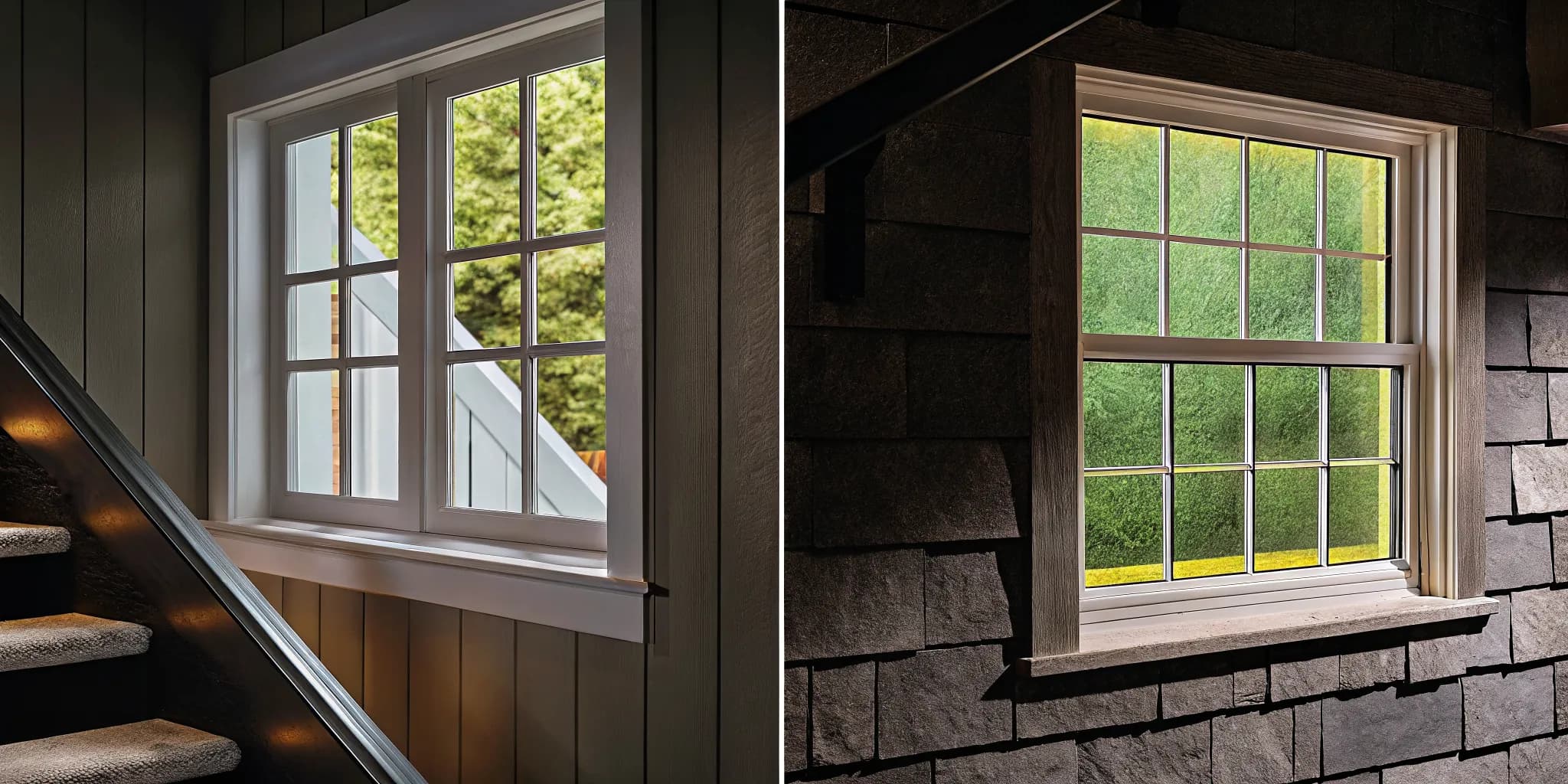
Basement windows in South Jersey homes must balance great airflow with required safety code rules. Deciding between a side-hinged or vertically sliding unit impacts both emergency access and daily comfort. Cosello Construction helps property owners make these choices with over twenty years of local expertise.
Casement vs double hung basement windows offer distinct benefits depending on whether you need to meet safety codes or want easy cleaning. Casement windows are the preferred choice for basements because the entire sash swings open. This design provides the largest clear opening to meet IRC Section R310, which needs at least 5.7 square feet of clear space. Double-hung windows feature two vertically sliding sashes that offer flexible airflow options. However, only half the frame area counts toward the safety opening because the sashes overlap. This means a double-hung unit must be much larger than a casement window to reach the same legal safety standards. For detailed code rules, view the egress window installation guide for South Jersey homes to ensure your project stays safe.
Understanding how these two window styles work is the first step toward a successful basement project. While looks matter, how each window opens sets its performance and safety in a lower-level space.
Casement Vs Double Hung Basement Windows: What Are Casement Basement Windows?
A casement window is a side-hinged unit that swings out to open. Unlike windows that you slide up or down, these units use a crank to move the sash. This design lets the window reach a full 90-degree angle, which is a big help for basement rooms. Since the sash moves fully out of the way, you get a clear view and more air flow. There are no center rails or bars in the middle to block your sight.
Cosello Construction often suggests these units for professional casement window installation because they are so easy to use. The crank handle sits at the base of the frame. This makes it simple to reach even if the window is high on a wall or behind a basement counter. This ease of use is one reason why many people pick them when they weigh casement vs double hung basement windows for a home project.
Maximum Opening for Egress Safety
In a basement, safety is the first goal. New Jersey building codes set strict sizes for basement windows to serve as exit paths. Casement windows are the top pick for this job because the whole sash swings open. This gives you the largest clear path within a small frame. While other styles only open halfway, a casement unit gives you a full path for a safe exit during an emergency.
Better Views and Natural Light
Basements can often feel dark or small. Since casement windows do not have a rail in the center, they let in more light than sliding styles. The single pane of glass offers a clean look. This helps a basement feel like a main room of the house. This clear view is a key point as you plan your space. Picking the right style can help you make the best egress window choice for both looks and use.
Easy Use in Tight Spaces
Many basement windows sit in spots that are hard to reach. They may be over a work bench or a sink. Lifting a heavy window sash in these areas can be hard. A crank handle lets you open and close the window with very little work. This makes casement units a great fit for tight corners or high spots. You can get fresh air without the strain of a sliding window. This is very helpful for many homes in South Jersey.
What Are Double-Hung Basement Windows?
Double-hung windows are a common choice for many South Jersey homes because of their classic look and helpful features. These units have two sashes that slide up and down. Both the top and bottom parts can open, which sets them apart from single-hung units. For homeowners, double-hung window installation services from Cosello Construction provide a familiar style that matches the windows on the upper floors of the house.
How These Windows Work
In a double-hung unit, the two sashes slide in tracks within the frame. Most new versions of these windows also have tilt-in sashes. This part allows you to swing the glass inward so you can clean the outside of the window from inside your basement. This is a big help for windows below ground level that are hard to reach from the yard. Both sashes stay inside the frame when open, so they do not take up room in your window well.
Air Flow and Ventilation
Many people choose this style for the flexible air flow it gives. You can open just the bottom sash to let in a cool breeze. You can also lower the top sash to let warm air near the ceiling move out. Opening both sashes at the same time helps move fresh air through your basement. This natural air flow helps keep lower levels from feeling damp or stale during the humid South Jersey summer months.
Egress Rules and Size Needs
While these windows look good, they have limits when used as fire exits. Only half of the total frame area counts as an open space because one sash always blocks the other. To meet the International Residential Code (IRC) Section R310 rule of 5.7 square feet for a clear opening, these units must be large. You often need a window at least 48 inches wide by 48 inches tall to hit that goal. This makes them much larger than the units used when choosing the right egress window for your basement where space is tight. Cosello Construction can help you check your wall to see if this unit will fit.
Casement vs Double-Hung: Ventilation, Security, and Egress Compared
Choosing between casement and double-hung designs for your basement depends on how you plan to use the space. While both styles offer modern glass options and strong frames, they function differently in tight basement settings. Casement windows swing open like a door, while double-hung units slide up and down within the frame.
| Feature | Casement Windows | Double-Hung Windows |
|---|---|---|
| Egress Opening | 100% of frame area | 50% of frame area |
| Air Flow | Catches side breezes | Top and bottom convection |
| Locking System | Multipoint hook locks | Meeting rail sash locks |
| Frame Size | Smaller for code | Needs larger opening |
Air flow and home comfort
Ventilation is a major factor when picking windows for a finished basement. Casement windows provide maximum air flow because the entire sash opens to act as a scoop. This design catches side breezes and directs them into your home. It is a top choice for rooms that need a lot of fresh air quickly.
Double-hung windows offer a different way to move air. You can open both the top and bottom sashes to create convection. Warm air escapes through the top while cool air enters at the bottom. This helps keep the air fresh without a strong draft. You can learn more in this complete guide to casement vs double-hung windows for NJ homes from Cosello Construction.
Safety and secure locks
Basement security is a high priority for many homeowners in South Jersey. Casement windows use hook-shaped locks that are built into the frame. When you close the crank, the multipoint system pulls the sash tight against the house. This makes it very hard for anyone to pry the window open from the outside.
Double-hung windows use a standard sash lock at the meeting rail where the two sashes touch. While these locks are strong, the window seal is not as tight as a casement. Casement windows have a natural edge in efficiency because wind pressure pushes the sash into the frame to improve the seal. High-quality double-hung units still perform well in the local climate zone when built with premium glass.
Meeting egress code rules
The biggest difference between these styles is how they meet IRC Section R310 for safety. Casement windows are the best choice for egress because the entire sash swings open. A small unit measuring 24 by 36 inches can often meet the required 5.7 square feet of clear opening. This allows you to stay safe without cutting a massive hole in your foundation.
Double-hung windows only provide 50 percent of the frame area for an exit because one sash always blocks the other. To reach the 5.7 square foot mark, you often need a much larger frame that is at least 48 inches wide. For most basement projects, Cosello Construction finds that casement windows offer a more practical way to meet code in smaller spaces.
Which Window Type Meets NJ Egress Code Requirements?
Every basement in New Jersey must follow strict safety rules for emergency exits. The International Residential Code (IRC) Section R310 sets the standards for these openings. In New Jersey, an egress window must have a net clear opening of at least 5.7 square feet. This area must be wide and tall enough for a person or a firefighter in gear to pass through easily. You can find full details on these rules in this egress window installation guide for South Jersey.
Basement window size and height rules
Meeting the 5.7 square foot rule is only the first step for local homeowners. The window must also have a clear height of at least 24 inches and a clear width of at least 20 inches. Furthermore, the sill cannot be more than 44 inches off the floor. These specific measures ensure the exit is easy to reach and use during a fire. If you are not sure which style fits these rules, check our tips on choosing the right egress window style for your basement.
Why casement windows win for egress
When you compare casement vs double hung basement windows, casement units are often the best choice for small spaces. A casement window opens like a door, which means the entire sash area counts toward the exit space. In contrast, a double-hung window has two sashes that slide over each other. This means only half the window area stays open. To hit the 5.7 square foot target, a double-hung window needs a much larger frame than a casement unit. A small 24 by 36 inch casement window can often meet NJ code on its own. These rules are tracked by standard groups like the International Code Council.
Safety rules for window wells
If your basement window is below ground level, you will also need a window well. New Jersey code says the well must be at least 36 inches wide and project 36 inches from the wall. The horizontal area must be at least 9 square feet. If the well is deeper than 44 inches, you must install a permanent ladder. Remember that you must get a building permit before you cut into any foundation wall in New Jersey. Cosello Construction can help you manage these permits and install windows that keep your family safe.
Which Option Is Right for Your South Jersey Home?
Choosing the best window for your basement depends on how you use the space. A basement bedroom or home office has different needs than a simple storage room. If you must meet local fire safety laws, casement windows are the most popular choice for basement egress because the entire sash swings open. This provides the largest path for a safe exit during an emergency. You can read more in this egress window installation guide for South Jersey homes to see how these windows fit into your safety plan.
When to choose casement windows
Casement windows are ideal when you need the most air flow and a modern look. Since they swing open 90 degrees, they act like a scoop to catch side breezes and pull fresh air into your basement. They are also perfect for spots that are hard to reach, like above a laundry sink or workbench. The simple crank handle is much easier to use than lifting a heavy sash. For those who want to save on bills, these windows press tight against the frame to stop drafts. Learn more about choosing the right egress window for your specific basement layout.
When to choose double-hung windows
Double-hung windows are a classic choice that works well in many South Jersey homes. They are a great fit if your basement windows sit high on the wall. The sashes on modern units tilt in, so you can clean the glass from inside without a ladder. This is a big help for windows that are hard to reach from the yard. They also work best if you want to use a window AC unit in the summer. Both styles offer great value when you get window replacement services from Cosello Construction.
Trust the local experts
Cosello Construction has served the South Jersey and Philadelphia area for more than 20 years. As an Andersen Certified Contractor, Cosello Construction provides top-quality units that meet strict Department of Energy standards for local climates. You get a 2-year labor warranty on every job to ensure your new windows work well for years. Most projects are done in just two weeks, so you can enjoy your new space soon. Contact Cosello Construction at (856) 317-1770 to plan your basement window project today.
Ready to choose the best windows for your South Jersey basement?
Leaving poor windows in your basement can cause more than just a cold draft and higher heating bills each month. Old frames often let in moisture that leads to mold growth and wood rot that ruins your home. Every day you wait is another day of safety risks if your windows do not meet local fire codes. Cosello Construction helps you find the right windows so you can enjoy a safe and dry space within just two weeks. The Cosello Construction team handles everything from the first call to the final cleanup so you can rest easy today.
Ready to schedule a free window consultation? Call (856) 317-1770 to talk to a local contractor today.