
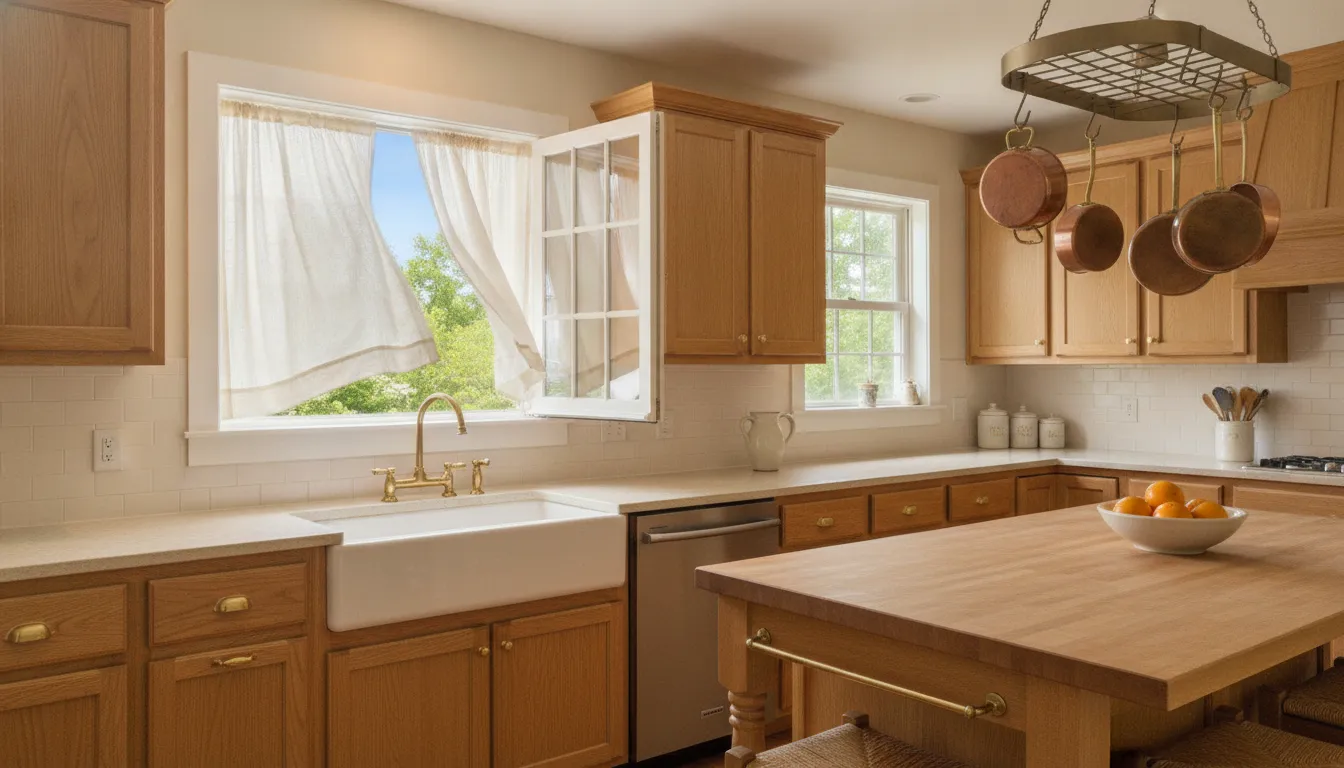
A kitchen window has to do more than fill an opening. It should be easy to operate when you are reaching over a sink, provide useful ventilation during cooking, and fit the wall without creating clearance problems outside. Those practical details make casement windows worth a closer look for many South Jersey homes.
For homeowners considering casement window replacement south jersey, the right choice starts with the opening itself. Measure each window and inspect the frame and rough opening. Confirm that the outward-opening sash has room to operate. Then compare glass, frame, grille, and hardware options against the kitchen's needs.
A casement window is side-hinged and opens with a crank, so the operating method can be more convenient than lifting a sash above a counter. The full opening can also support ventilation and an unobstructed view, but product specifications and installation conditions still matter. Start by considering how the window will function in the room, then evaluate the fit and options that support that use.
Why Casement Windows Work Well in South Jersey Kitchens
Kitchen windows need to work around sinks, counters, faucets, and cabinets. A casement window can be a practical fit because its sash is side-hinged and opens outward with a crank. Instead of lifting a window from a reach that may be blocked by the sink or counter, you turn the handle from a more accessible position. That arrangement can make everyday operation simpler, especially when the window is above a busy work area.
The opening style also supports kitchen ventilation. When the sash opens, much of the window area can be available for airflow rather than relying on a partially raised section. That can be useful when you want to clear cooking heat, steam, or odors. Actual airflow depends on the room layout, wind, the window size, and other openings in the home. So the window should be evaluated as part of the kitchen rather than treated as a guaranteed ventilation solution.
Clear views without a center rail
Casement windows typically provide an unobstructed glass area without a center rail dividing the view. In a kitchen, that can bring more visual connection to a yard, patio, or street while you prepare food or clean up. The side-hinged design also keeps the operating motion out of the interior workspace. For homeowners comparing styles, Cosello's casement window installation options provide a useful starting point for reviewing this configuration.
Check the space outside the window
Because the sash opens outward, exterior clearance matters. A contractor should consider nearby walls, porches, landscaping, walkways, shutters, and other windows before confirming the configuration. The opening also needs to be assessed for its existing frame, trim, and rough-opening condition. That review helps determine whether a casement is suitable for the location and whether the replacement can operate fully after installation.
When Is Casement Window Replacement the Right Choice?
Replacement usually deserves a closer look when a casement window is affecting daily use, comfort, or the condition of the opening. A draft near the frame, a crank that is difficult to turn, condensation trapped between panes, a deteriorated frame, or outdated single-pane glass can all justify an assessment. These signs do not prove that replacement is the only answer. They indicate that the window, hardware, glass, or surrounding opening should be evaluated together.
Start with the problem, not just the style
A difficult crank may point to worn hardware, a sash that is out of alignment, or pressure caused by a problem in the frame. Moisture between panes can indicate a failed insulated-glass seal, while visible deterioration around the frame may involve trim, the rough opening, or concealed water damage. In some cases, a repair may address the issue. In others, replacing the unit provides a more practical path, especially when several components are aging at the same time.
Single-pane glass is another reason to compare replacement options, but performance depends on the specific unit selected and the quality of installation. Avoid assuming that every new window delivers the same result. Glass package, frame, opening condition, and weathersealing all matter.
What a replacement assessment should cover
A useful assessment begins with measurements of each opening rather than relying on a standard size. The installer should inspect the existing frame and trim, then check the rough opening for signs of water damage, rot, or other conditions that could affect fit. This step helps separate a straightforward window upgrade from a project that requires repairs before the new unit can be installed.
For South Jersey homeowners, the goal is a clear recommendation based on the actual window and opening, not a guaranteed diagnosis from a symptom alone. Review the casement window installation options and ask what can be repaired, what should be replaced, and which conditions could change the scope before ordering.
What to Choose Before Ordering Replacement Casement Windows
The right casement window starts with the opening, not a catalog photo. Each opening should be measured separately, with the existing frame, trim, and rough opening inspected for conditions that could affect the replacement. A kitchen window above a sink may need a configuration that preserves comfortable crank access. An opening near a walkway or porch also requires careful attention to the sash's outward clearance.
Next, confirm the size and configuration. Decide whether you are matching the existing layout or changing the number, width, or arrangement of operating and fixed units. Then review the choices that affect the finished appearance and daily use:
- Glass: Compare the available pane, coating, and performance options for the selected product line.
- Frame material and color: Coordinate the frame with the home's exterior, interior trim, and maintenance expectations.
- Grilles: Choose whether you want divided-light styling, a simpler appearance, or a pattern that matches nearby windows.
- Hardware: Confirm the crank and lock style, finish, placement, and reach, especially for a window over a counter.
Low-E glass and argon fill may be available with some Andersen casement options. Treat them as product specifications to verify, not assumed features of every unit. Ask which options are available for the exact size and configuration. Review the unit's documented U-factor and solar heat gain coefficient for the installation climate rather than choosing by a general label alone.
| Decision | Kitchen planning question |
|---|---|
| Operation | Can the crank be reached comfortably over the sink or counter? |
| Clearance | Does the outward-opening sash clear nearby walls, porches, landscaping, and walkways? |
| Glass | Which documented glass and coating options fit the selected unit and climate? |
| Installation | Does the written scope include opening preparation, flashing, sealing, trim, and final operation testing? |
For a clearer look at how coatings, glass packages, and other choices fit into a replacement plan, review these energy-efficient window upgrades. The final selection should balance fit, ventilation, appearance, operation, and the specifications of the actual unit that will be installed.
How Casement Window Replacement Works
A well-planned replacement follows a defined sequence, but the details depend on the existing opening, selected product, access, and any concealed damage. The goal is not simply to place a new unit in the wall. The opening must be assessed, prepared, sealed, finished, and checked so the casement operates as intended.
- Consultation and measurements. The project begins with a review of the room, the current window, and your goals for ventilation, appearance, and operation. Each opening is measured individually. The frame, trim, and rough opening are also inspected for moisture damage, rot, or other conditions that could affect the replacement.
- Product selection. After the measurements are confirmed, you choose the window size and configuration along with the glass, frame material, color, grilles, and hardware. If you are considering Low-E glass or argon fill, confirm the specifications for the exact unit rather than assuming every product has the same features. You can review casement window installation options before discussing the choices with your contractor.
- Careful removal and opening preparation. The existing window is removed with care to limit damage to surrounding finishes. The jamb and rough opening are cleaned, and damaged areas are repaired as needed. Any required flashing work should be addressed before the replacement is dry-fitted.
- Shimming, insulation, flashing, and weathersealing. The new unit is positioned, leveled, and supported with shims according to the manufacturer's requirements. The installer secures it as specified, then insulates and seals the gaps around the rough opening. Flashing and exterior weathersealing help manage water and air movement, but the appropriate materials and method depend on the opening and product.
- Trim and cleanup. Interior or exterior trim is finished around the new window, with attention to the surrounding wall and existing finishes. The work area is cleaned so you can see the completed installation and identify any finish questions before the crew leaves.
- Final crank and lock check. The sash is opened and closed through its full operating range. The crank, locking hardware, alignment, and seals are checked during the final walkthrough. This last review is an important part of the process because a replacement window should be functional, properly fitted, and ready for normal use.
How Long Does Casement Window Replacement Take?
Window replacement has two separate timelines: the planning period before installation and the time the crew spends at your home. For a standard residential project, planning and ordering may take about two weeks overall, while on-site installation commonly takes one to two days. These are approximate planning ranges, not a promised schedule. Product availability, project size, and the condition of each opening can change the timing.
Custom casement windows may require additional time for measurements, configuration, manufacturing, and delivery. The process can also take longer when a project includes several rooms, trim repairs, or changes beyond a straightforward replacement. A contractor should confirm the scope before giving you a useful project window.
Weather and site access matter as well. Rain, high winds, or other unsafe conditions may delay exterior work. Limited access to a window, furniture that must be moved, or a difficult upper-floor location can affect daily progress. Before scheduling, discuss how the crew will reach each opening and protect the surrounding room.
Hidden damage is another reason the initial estimate may change. Once an old unit is removed, the rough opening may reveal water damage, rot, or other repairs that were not visible during the first inspection. Those issues should be evaluated and addressed before the new window is sealed and finished.
A complete installation includes more than removing the old sash. Measurement, opening preparation, installation, insulation, flashing, weathersealing, trim, cleanup, and a final crank and lock check all belong in the plan. Review the casement window installation options and ask for a written scope that identifies what is included, what could affect timing, and when the final walkthrough will occur.
Choosing a Casement Window Replacement Contractor in South Jersey
The right contractor should do more than take a quick measurement and recommend a window style. Use the first conversation to determine whether the company understands your home's openings, the way the room is used, and the installation details that affect long-term operation.
What to ask during the assessment
- How will you measure the opening? The contractor should measure each opening and inspect the existing frame, trim, and rough opening before ordering. Ask how hidden damage, uneven framing, or a change from an older window will be handled.
- Which product fits the room? A useful recommendation should account for the window's size, configuration, glass, frame, color, grilles, and hardware. For kitchen locations, discuss crank access over the sink or counter and how the outward-opening sash will clear nearby features.
- What does installation include? Confirm that the scope covers careful removal, opening preparation, flashing, insulation, weathersealing, trim, cleanup, and a final crank-and-lock check. The installer should explain what is included rather than leaving these details to assumption.
- How will communication work? Ask who will coordinate measurements, product selection, scheduling, changes, and the final walkthrough. You should receive a clear written scope, including any work that depends on the condition of the opening.
- What warranty applies? Separate the installation labor warranty from the manufacturer's product warranty. Product coverage can vary by brand and series. Cosello Construction lists a 2-year labor warranty for its installations.
Local experience can also matter when access, exterior conditions, and the home's existing construction vary from one project to the next. Cosello Construction is family-owned, founded in 2003, and serves South Jersey and the wider NJ, PA, and DE region. The company is also an Andersen Certified Contractor. These credentials do not replace a project-specific assessment, but they give homeowners useful points to verify when comparing contractors.
Before choosing a contractor for casement window replacement south jersey homeowners can trust, request an opening assessment and a written scope rather than comparing only a headline price. You can contact Cosello for an assessment and discuss the existing windows, room requirements, product options, and installation plan.
Frequently Asked Questions
Are casement windows a good fit over a kitchen sink?
They can be. Casement windows are side-hinged and operated with a crank, so they are practical where reaching over a sink or counter makes a sliding sash inconvenient. The sash opens outward, providing a broad ventilation opening and an unobstructed view. Your installer should still confirm that the exterior opening will have enough clearance from walls, walkways, landscaping, and other obstructions.
How do I know if my kitchen casement windows need replacement?
Look for recurring drafts, a crank that is difficult to operate, condensation between panes, a deteriorated frame, or outdated single-pane glass. These signs do not identify the cause by themselves. A proper assessment should measure each opening and inspect the frame, trim, and rough opening before deciding whether replacement or a targeted repair is appropriate.
What glass options should I consider for replacement windows?
Start with the window's size and configuration, then compare glass, frame, color, grille, and hardware options. Low-E glass and argon may be available in some Andersen configurations, but the exact features depend on the selected unit. Ask for the window's performance specifications and consider products suited to the home's climate rather than choosing glass by label alone.
How long does casement window replacement take?
The schedule depends on the number of windows, opening conditions, product availability, access, and the work required after removal. Installation includes measurement, removal, opening preparation, fitting, insulation, weathersealing, trim work, cleanup, and a final operation check. Treat any timeline as a planning estimate, not a fixed promise, until the project is assessed.
Contact Us to Plan Your Casement Window Replacement
A careful assessment can help you confirm the opening measurements, operating clearances, glass options, and installation details for your kitchen. To get started, contact Cosello through the Contact Us form to request a casement window replacement assessment for your South Jersey home.