
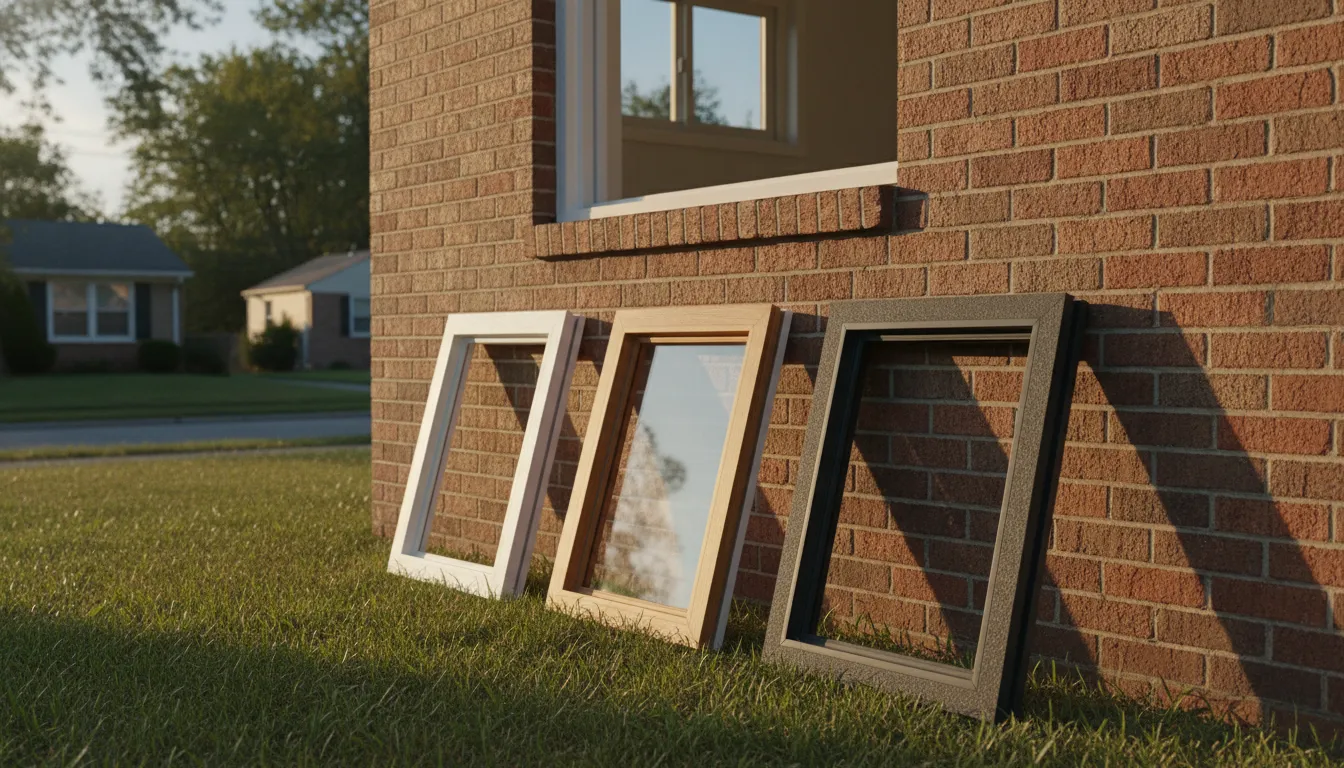
A home window replacement starts with the frame, not the glass package and not the brand logo on the quote. Vinyl, wood, fiberglass, and composite each change the upkeep, the way the sash handles hot summers and cold snaps, and whether the exterior matches the house. The glass can be similar across those frames. The frame is the part you live with every time you wash, paint, or open the window.
For most South Jersey and Philadelphia-area houses, the useful comparison is a shortlist, not a single winner. Vinyl is the everyday low-maintenance frame. Wood is what older and more formal rooms still ask for. Fiberglass is the stable, paintable option when the opening is large or the exterior will be painted. Composite, including Andersen Fibrex material on the 100 Series, sits between vinyl's easy care and a more solid feel. Cosello Construction installs these as an Andersen Certified Contractor and also carries ProVia, so the material can follow the room.
Use the sections below to sort the four frames, then hand the narrower questions to the pages that already answer them: a vinyl-versus-wood verdict, project cost, glass ratings, or insert versus full-frame installation.
Request a quote and ask for a frame-by-frame comparison on your openings.
What a frame changes in a home window replacement
The frame is the structure around the glass. It holds the sash, carries the weatherstripping, and meets the existing opening. Two quotes can list the same Low-E glass and still feel different five years later. The frames expand, fade, and need paint at different rates.
Four differences show up on almost every whole-house project:
- Upkeep. Vinyl and composite are built so the color is part of the material. Wood, and many fiberglass exteriors, are finished surfaces you may repaint.
- Movement. Vinyl expands and contracts more than fiberglass or composite. On a tall or wide unit, that movement is why some vinyl lines need reinforcement.
- Look. Wood and fiberglass can take a painted or stained profile that matches colonial and traditional trim. Vinyl and composite read cleaner and more contemporary unless the profile is carefully chosen.
- Weight and strength. Stronger frames can hold larger glass with a narrower sightline. Andersen describes Fibrex material as twice as strong as vinyl. That is why the 100 Series can use it on bigger combinations without a bulky frame.
ENERGY STAR certified windows use these same frame families: vinyl, wood (often clad), fiberglass, and composite, plus aluminum with a thermal break in other applications. The U.S. Environmental Protection Agency certifies the tested unit, not the material name. A vinyl window and a wood window can both qualify when the National Fenestration Rating Council label meets the climate-zone criteria. The EPA lists those frame types on its ENERGY STAR window criteria page.
New Jersey falls in ENERGY STAR's Northern zone. On the NFRC temporary label, read U-factor first, then solar heat gain coefficient. U-factor is heat loss through the whole unit. Lower is better in a heating climate. Solar heat gain is how much sun energy comes through the glass. That number is a glass decision. Cosello's energy-efficient windows page covers it. It is not a reason to throw out a frame material.
Installation still decides whether the rated unit performs. A well-built frame will draft if it is measured wrong, left unsealed, or forced into a rotten opening. Frame choice and opening condition are separate questions. If the old frame is soft, out of square, or buried in failing trim, the install method matters as much as the material. The full-frame versus insert guide covers that choice.
Vinyl, wood, fiberglass, and composite compared
These four materials cover nearly every residential quote Cosello writes in South Jersey, Philadelphia, and nearby Delaware. Aluminum shows up on commercial storefronts more than on houses, so it is left off this shortlist.
| Frame | Best fit | Upkeep | Watch-out |
|---|---|---|---|
| Vinyl. | Whole-house replacements where easy care and price lead. | Wash only. Color is through the material. | Dark colors and very wide units need a line built for heat and span. |
| Wood. | Historic, colonial, and formal rooms that need a painted or stained interior. | Exterior paint or a clad exterior. Interior may need finish care. | Bare wood outside in a South Jersey rain season is a maintenance project. |
| Fiberglass. | Large openings and painted exteriors that should stay stable. | Low upkeep. Many lines can be painted. | Usually a higher price tier than standard vinyl. |
| Composite, including Fibrex. | A stronger, low-maintenance alternative to all-vinyl frames. | No painting on Fibrex. Andersen says it resists rot, fade, and peel. | Color and profile follow the series, not a custom millwork shop. |
Vinyl
Vinyl is the default on a lot of home window replacement projects. It does not need paint, and the price stays predictable across a whole house. Hollow chambers, and sometimes foam, slow heat moving through the frame. The EPA notes that wide vinyl sills are often reinforced with metal or wood so the span stays straight.
The limit is heat and size. A dark exterior in full sun asks more of vinyl than a white double-hung on a shaded wall. A very wide picture unit does too. That is a product-line question, not a reason to avoid vinyl everywhere. If the choice is already vinyl or wood only, use the vinyl versus wood comparison.
Wood
Wood is what older Cherry Hill, Haddonfield, and Philadelphia houses often need so the interior trim still matches the room. It insulates well and can be stained or painted. Bare exterior wood in this climate means a repaint cycle. Most wood windows Cosello installs are clad. Aluminum or vinyl covers the outside, and wood stays on the interior.
Clad wood is its own product path, with its own profiles and glass options. The wood window installation page sorts species, cladding, and where a wood interior is worth it. The rule here is simple. Choose wood when a vinyl or composite interior would look wrong in the room, not because wood is automatically warmer.
Fiberglass
Fiberglass frames are glass fibers set in a resin. They move less than vinyl when the temperature swings. That helps on tall casements and wide units. Many can be painted to match trim. The EPA describes them as strong, durable, and good insulators, hollow or foam-filled depending on the line.
Fiberglass usually costs more than a standard vinyl unit of the same size. It earns that gap when you want a painted exterior, a large sash, or a frame that skips the repaint cycle of bare wood. It is not automatically the efficiency winner. Check the NFRC label on the quoted unit.
Composite
Composite frames blend wood fiber with a polymer. The result is stiffer than vinyl and does not ask for exterior paint. Andersen's Fibrex material is a wood-fiber and thermoplastic composite used on the 100 Series. It is the composite Cosello installs most often. Andersen states that Fibrex is twice as strong as vinyl. It will not fade, flake, blister, or peel, it resists rot, and it does not need painting. It is also sold as a replacement insert when the old frame is still sound.
Composite is not a custom wood window. Colors and profiles come from the series. If the project is really an Andersen-versus-ProVia brand decision, that comparison already lives on the Andersen versus ProVia guide. Use composite here when the question is material: stronger than vinyl, less upkeep than wood.
How to shortlist frames room by room
A whole house rarely needs one material in every opening. Cosello measures each opening and can mix series when the architecture asks for it. A practical pass looks like this:
- Sort the openings by exposure. South- and west-facing walls, and any dark exterior color, put more heat on the frame. Ask whether the vinyl line is rated for that color and span before you reject vinyl.
- Mark the rooms that have to look like the house. Street-facing colonial windows, stained interiors, and historic trim point toward wood or a paintable fiberglass. Bedrooms, basements, and side walls usually do not.
- Flag the large units. Picture windows, wide sliders' flanking units, and tall casements over a sink favor fiberglass or composite when the vinyl quote adds bulky reinforcement.
- Decide who will maintain the exterior. If no one in the house will repaint sashes, drop bare exterior wood. Clad wood, vinyl, fiberglass, and Fibrex all avoid that job in different ways.
- Keep the glass decision separate. After the frame shortlist is two materials, compare Low-E and gas fill on those quotes. Do not let a glass upgrade disguise a frame you do not want to live with.
Style still matters after material. A double-hung and a casement can share a frame and feel completely different to operate. The types of windows page covers operation. Material does not pick the style for you.
Older homes add one more filter. Say so before the quote if the opening is out of square, the sash is painted shut, or the trim is part of a historic facade. A composite insert can be right for a sound frame. A full-frame wood or fiberglass unit can be right when the old frame is the problem. Those are install questions. They should not be buried inside a material brochure.
What South Jersey weather asks of the frame
Cosello works a service area centered on Cherry Hill, across South Jersey, Philadelphia, and nearby northern Delaware. Summers are humid and winters bring freeze-thaw cycles. A lot of 1940s-to-1980s openings were never perfectly square.
That weather does not outlaw any of the four materials. It does punish the wrong finish:
- Bare exterior wood needs a maintained coating. Skip it on elevations nobody repaints.
- Dark vinyl needs a product rated for heat. A white vinyl unit and a black vinyl unit are not the same specification.
- Fiberglass and Fibrex composite move less when temperatures swing. That helps on wide openings that see afternoon sun.
- Any frame fails early if the sill is soft. Rotted wood under a new vinyl insert is a carpentry problem, not a vinyl problem.
Coastal towns in the same service area add salt air. The finish should not depend on a repaint every few seasons. The installer should replace damaged substrate instead of covering it. Cosello's technicians each have 10 to 20 years in the field. The company backs installation with a 2-year labor warranty. The product warranty is separate and follows the series you buy.
None of this replaces the local planning guide. If you are still deciding whether the house is ready for replacement at all, start with residential window replacement in South Jersey. This article assumes you are replacing and need the frame shortlist.
What to compare on the quote
Once two frames are still in play, the quote should make the same facts visible on both. Ask for these lines in writing:
- Frame material and series name, not just "vinyl" or "composite."
- Exterior and interior color, and whether the exterior can be painted later.
- NFRC U-factor and solar heat gain for the exact unit, and whether it is ENERGY STAR certified for the Northern zone.
- Insert or full-frame installation, and whether rotten sill or trim is included.
- Who warrants the product and who warrants the labor. Cosello's labor warranty is 2 years. The product warranty belongs to the manufacturer.
- Lead time. A special-order wood interior or an unusual color can add weeks. Standard vinyl usually does not.
Price belongs on that quote, not in a generic range. Whole-house numbers move with size, count, glass, and the condition of the opening. The home window replacement cost guide walks through those drivers. Financing for qualified projects is on the financing page. Incentive questions belong on the New Jersey window tax credits article, not in a materials comparison.
A useful quote visit is a measurement, not a showroom script. Bring the room list from the shortlist above. Note which openings face the afternoon sun, and say which rooms cannot look like vinyl. Cosello will match Andersen and ProVia options to that list. That includes Fibrex composite on the 100 Series when a low-maintenance frame needs more stiffness than standard vinyl.
Request a quote once you know which rooms need wood, fiberglass, vinyl, or composite.
Frequently asked questions
What is the best material for a home window replacement?
There is no single best material. Vinyl fits most low-maintenance whole-house projects. Wood fits rooms that need a painted or stained interior. Fiberglass fits large or painted openings. Composite, such as Andersen Fibrex, fits people who want more strength than vinyl without exterior painting. Match the frame to the room, then compare NFRC labels.
Is vinyl or fiberglass better for South Jersey homes?
Vinyl is usually the better budget and upkeep choice for standard openings. Fiberglass is the better choice when the unit is large, the exterior will be painted, or you want less expansion in heat. Both can meet Northern-zone ENERGY STAR criteria when the tested window qualifies. The label, not the material name, decides efficiency.
Do I have to use the same frame on every window?
No. Many houses mix materials. Street-facing and formal rooms can take wood or fiberglass while bedrooms and side walls take vinyl or composite. The frames should still share a color and a similar profile so the exterior reads as one project.
Does the frame material decide energy savings?
Only in part. Frame material changes how heat moves through the sash and how stable the unit stays. Glass, gas fill, U-factor, and air sealing decide most of the comfort difference. Read the NFRC label on each quote and use Cosello's energy-efficient windows page for the glass side of that choice.
Can composite windows go into an existing frame?
Often, yes. Andersen's 100 Series Fibrex windows are available as replacement inserts when the existing frame is solid, square, and free of rot. If the old frame is soft or the trim has failed, a full-frame installation is the better path. That call happens at measurement, not from a photo of the sash.
Get a material shortlist for your openings
Bring the room list, not a brand preference. Note which windows face the afternoon sun, which rooms need wood or a painted look, and which ones only need to be easy to live with. Cosello Construction will measure the openings and price vinyl, wood, fiberglass, and Fibrex composite where each one fits. The quote separates the product warranty from the 2-year labor warranty.
When you are ready, review home window replacement options on the main site or request a quote and ask for a frame-by-frame comparison on your openings.