
Full Frame vs Insert Window Replacement: What South Jersey Homeowners Should Know
If you are comparing full frame vs insert window replacement, the right answer depends less on the window style and more on what is happening around the existing frame. A newer home with square, dry, well-maintained frames may be a good candidate for insert replacement. An older South Jersey home with soft sills, water damage, air leaks, or out-of-square openings usually needs a full-frame approach so the problem is corrected instead of covered up.
Planning a window project? Learn more about Cosello Construction's window replacement services or contact us for a free consultation.
Both methods can deliver a better-looking, more comfortable home when they are used in the right situation. The trouble starts when a window is installed as an insert even though the existing frame can no longer support a tight, weather-resistant installation. This guide explains the difference, when each option makes sense, how professional measurement protects the final result, and what Cosello Construction checks before recommending one method over the other.
What Is Insert Window Replacement?
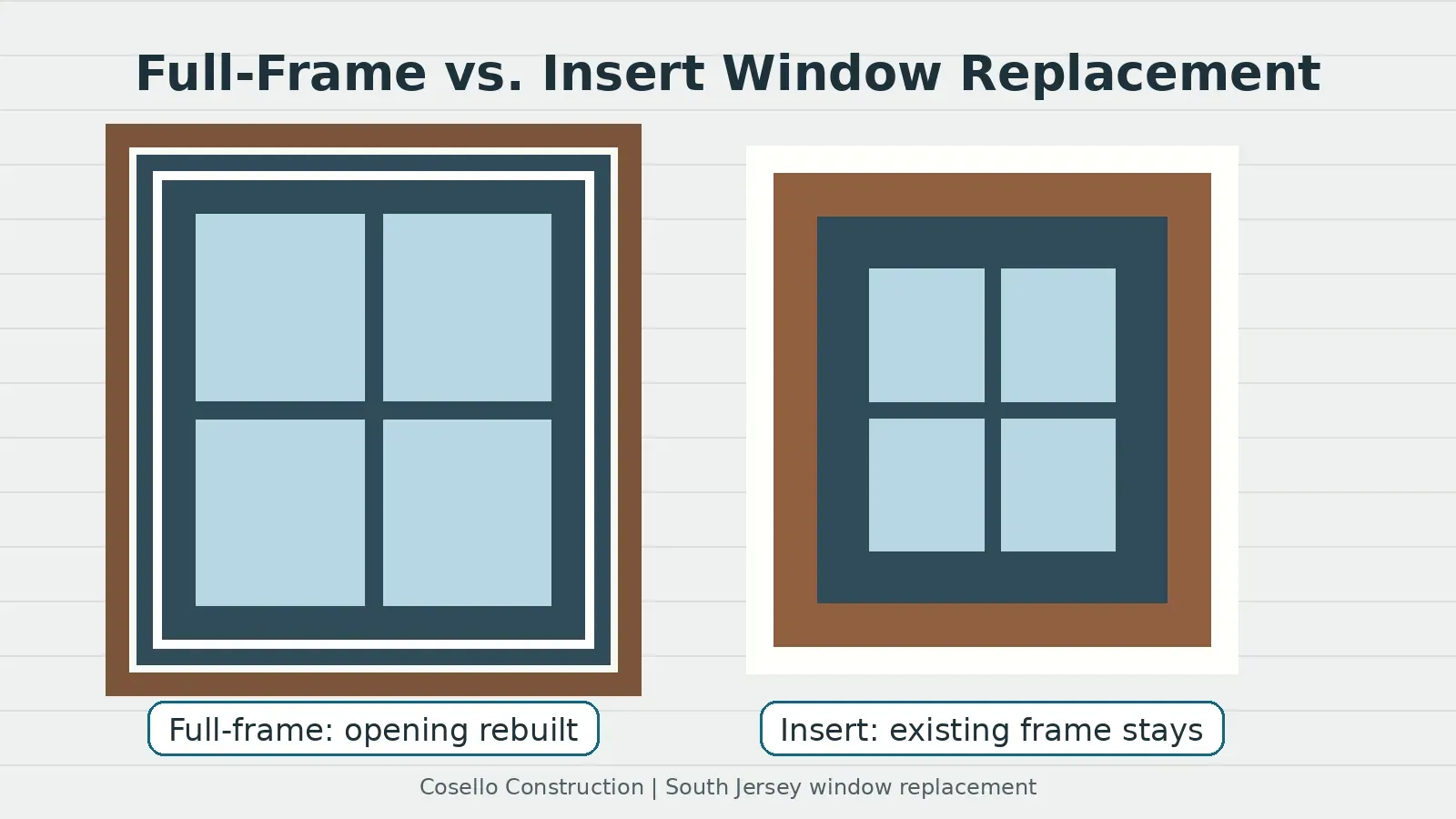
Insert window replacement, also called pocket replacement, keeps the existing window frame in place. The installer removes the old sash, operating hardware, and stops as needed, then fits the new replacement window inside the existing frame opening.
This method can work well when the current frame is structurally sound, square, properly sealed, and free from rot or water damage. Because the surrounding frame, interior trim, exterior trim, siding, brick, or stucco are usually left mostly undisturbed, insert replacement is often faster and less disruptive than full-frame work.
For a homeowner, the main appeal is simple: the project may take less time, involve less finish work, and preserve existing trim details. That can be especially attractive in homes where interior casing or exterior materials are in good condition and worth keeping.
However, insert replacement is not a shortcut for a failing opening. The new unit depends on the old frame for support and weather protection. If that frame is warped, rotted, poorly insulated, or out of square, the new window may inherit those problems. It can also reduce the visible glass area slightly because the new unit sits inside the old frame.
What Is Full-Frame Window Replacement?
Full-frame window replacement removes the existing window down to the rough opening. Instead of placing a new unit inside the old frame, the installer removes the sash, frame, trim components as needed, and any deteriorated materials that should not remain behind the new window.
This method allows the crew to inspect the entire opening. If there is hidden water damage, soft wood, poor insulation, failed flashing, or movement in the opening, those issues can be corrected before the new window is installed. The new window is then set, squared, fastened, insulated, sealed, and finished so the whole assembly works together.
Full-frame replacement is typically the better choice when the existing frame is damaged, the opening is out of square, the homeowner wants to change the size or style of the window, or the project calls for the best long-term weather protection. It can also restore more glass area than an insert in some situations because the old frame is not left in place around the new unit.
The tradeoff is that full-frame work is more involved. It may require interior or exterior trim work, additional carpentry, and more time at each opening. For older homes in Camden County, Burlington County, Gloucester County, and nearby South Jersey communities, that extra work is often what protects the investment.
Full Frame vs Insert Window Replacement: Quick Comparison
| Factor | Insert Replacement | Full-Frame Replacement | | --- | --- | --- | | Existing frame | Stays in place | Removed down to the rough opening | | Best for | Sound, square, dry frames | Rot, water damage, poor fit, or style changes | | Disruption | Usually less disruptive | More finish work may be needed | | Glass area | Can reduce visible glass slightly | Can preserve or improve glass area depending on product | | Energy performance | Good when the old frame is sound and well sealed | Strong option when air leaks or frame issues exist | | Project scope | Faster, narrower scope | More complete opening repair and replacement |
The best method is not always the most aggressive one. If the existing frame is in excellent condition, an insert can be a practical option. If the frame has failed, full-frame replacement prevents the new window from being installed into an old problem.
When Insert Replacement Makes Sense
Insert replacement is most appropriate when the existing window frame has already proven it can support a clean installation. During an assessment, the frame should be dry, solid, square, and stable. The sill should not be soft. The trim should not show signs of staining or swelling. The opening should allow the replacement unit to sit level, plumb, and properly sealed.
It can be a good fit when you are replacing older but well-maintained windows with similar styles. For example, a homeowner may want new double hung windows in the same openings to improve operation, cleaning, and comfort without changing the surrounding trim.
Insert replacement can also make sense when preserving existing finishes is a high priority. Some homes have interior casing, exterior cladding, masonry, or siding details that the homeowner wants to keep intact. If those materials are in good shape and the frame passes inspection, an insert can reduce disturbance around the opening.
The key phrase is "passes inspection." A quick visual glance is not enough. Measurements, square checks, sill condition, moisture clues, and existing seal performance all matter. A properly installed insert still needs a reliable frame around it.
When Full-Frame Replacement Is the Better Choice
Full-frame replacement is usually the better choice when there are signs that the existing frame is no longer doing its job. South Jersey homes deal with humid summers, wind-driven rain, freeze-thaw cycles, and seasonal expansion and contraction. Over time, those conditions can expose weak points around older windows.
Choose full-frame replacement when you see or suspect:
-
Soft, rotted, or crumbling wood around the sill or jambs
-
Water stains, peeling paint, or swelling near the window
-
Drafts that seem to come from around the frame, not just the sash
-
Windows that no longer sit square in the opening
-
Previous caulk-heavy repairs that keep failing
-
Visible gaps between the frame and surrounding materials
-
A desire to change the window size, shape, or operating style
Full-frame replacement is also useful when switching to a different window style. If you are considering casement windows for better ventilation or a clearer view, the opening may need a more complete installation plan than a basic insert allows.
For many older homes, full-frame work gives the installer a chance to correct the hidden details that make or break performance: flashing, insulation, shimming, fastening, and sealing. Those details are not exciting, but they are the reason one window feels tight for years while another starts leaking air after the first hard season.
How Cosello Evaluates Existing Window Frames
Cosello Construction does not recommend an installation method based only on what sounds easiest. Our team evaluates the existing conditions first, then matches the method to the opening. That is especially important because two windows on the same home can have different needs.
During an in-home consultation, our technicians look at the condition of the sash, sill, jambs, trim, exterior cladding, and surrounding wall area. We check for water staining, rot, movement, gaps, and signs of past repairs. We also look at how the existing window operates because binding, uneven reveal lines, or hard-to-lock sashes can point to frame movement.
Measurement is part of the evaluation, not just a step for ordering products. We measure each opening carefully and compare dimensions so we understand whether the frame is square, level, and plumb. If the opening varies from top to bottom or side to side, that affects whether an insert can be sealed correctly.
Cosello Construction has served homeowners across South Jersey, Philadelphia, and Delaware since 2003. As an Andersen Certified Contractor, we focus on proper installation, manufacturer standards, and long-term performance. Our technicians bring years of hands-on experience to the assessment, which helps homeowners avoid paying for a window that is installed into a compromised frame.
Why Professional Measurement Matters
Window replacement is unforgiving. A small measuring error can create a large performance problem. If the replacement unit is too tight, it may not sit correctly in the opening. If it is too loose, the installer may be forced to rely on excessive filler, shims, or sealant. Either mistake can affect operation, energy efficiency, and weather resistance.
Professional measurement also determines whether the project is truly suited for insert replacement. An opening can look fine from a distance but reveal problems when measured in multiple places. Width, height, diagonal measurements, sill slope, frame depth, and reveal consistency all tell a story.
This is why Cosello measures each opening instead of assuming every window in the home is the same size. Older South Jersey homes often have settling, past renovations, or non-standard framing. Even newer homes can have slight variations from one opening to the next.
Not sure which installation method your home needs? Contact Cosello Construction to schedule a professional window assessment.
Professional measurement also supports better product selection. A kitchen may benefit from a casement window for ventilation. A bedroom may be better suited for a double hung unit. A drafty living room may need a deeper conversation about glass packages, frame materials, and installation method. The measurement visit is where those decisions become specific to the home.
Which Option Is More Energy Efficient?
Full-frame replacement often has the advantage when the existing frame is drafty, damaged, or poorly insulated because the crew can address the entire opening. Removing the old frame makes it possible to improve insulation and sealing around the new unit, rather than depending on materials that may have already failed.
Insert replacement can still improve comfort and efficiency when the old frame is in good shape. New glass, better weatherstripping, and modern construction can make a noticeable difference. The limitation is that the insert can only perform as well as the frame surrounding it allows.
Think of the window as a system. The glass, sash, frame, insulation, flashing, and sealant all have to work together. A high-quality product installed in a failing frame will not deliver its full benefit. A correctly selected product installed with careful measurements and proper sealing has a much better chance of improving comfort and reducing drafts.
If energy performance is one of your main goals, review Cosello's energy-efficient window options and ask which installation method will best address your current air leakage points.
Cost, Timeline, and Disruption
Insert replacement is often less involved, so it may have a lower labor cost and a shorter installation time when the existing frame is sound. It can also reduce the amount of interior and exterior finish work needed after the new unit is installed.
Full-frame replacement usually costs more because it involves more removal, inspection, preparation, sealing, and finishing. The additional cost can be worthwhile when the existing frame is damaged or when the homeowner wants to correct deeper performance issues.
Timeline depends on product availability, project size, home conditions, and weather. Cosello Construction is known for efficient project completion, often completing residential window projects within a two-week project window once details are finalized. During the consultation, our team can explain what to expect based on the number of windows, the installation method, and any repairs that may be needed.
The lowest upfront price is not always the lowest long-term cost. If an insert is used where full-frame replacement was needed, the homeowner may still be left with leaks, drafts, or hidden deterioration. The better value is the method that solves the actual condition of the opening.
Questions to Ask Before Choosing a Method
Before deciding between full-frame and insert replacement, ask your contractor these questions:
-
Did you inspect the existing sill, jambs, trim, and exterior conditions?
-
Are any frames soft, rotted, stained, or out of square?
-
Will an insert reduce the visible glass area?
-
How will the new window be insulated and sealed?
-
What happens if hidden damage is found after removal begins?
-
Can this opening support the window style I want?
-
Is the recommendation different for any windows on the home?
A trustworthy answer should be specific. If every window automatically gets the same recommendation without inspection, that is a warning sign. The best replacement plan should reflect the condition of each opening and the goals for each room.
So, Should You Choose Full Frame or Insert Replacement?
Choose insert replacement when the existing frame is solid, square, dry, and worth preserving. Choose full-frame replacement when the frame is damaged, poorly sealed, out of square, or limiting the upgrade you want. If you are unsure, the safest next step is a professional assessment, not a guess.
For South Jersey homeowners, the decision often comes down to the age and condition of the home. Many homes can use a mix of methods. A protected second-floor bedroom window may be a good insert candidate, while a weather-exposed first-floor window with sill damage may need full-frame replacement.
Cosello Construction helps homeowners make that call with careful inspection, precise measurements, and practical guidance. We install residential windows with a focus on fit, sealing, performance, and clean finish work, backed by over 20 years of local experience and a 2-year labor warranty.
Ready to compare options for your home? Visit our window replacement page or contact Cosello Construction to request a quote.
Frequently Asked Questions
Is full-frame window replacement always better than insert replacement?
No. Full-frame replacement is more complete, but it is not always necessary. If the existing frame is dry, square, stable, and well sealed, insert replacement can be a smart option. Full-frame replacement is better when the current frame has damage, air leaks, rot, or fit problems.
Does insert window replacement make the window smaller?
It can slightly reduce the visible glass area because the new unit is installed inside the existing frame. The amount depends on the current frame, the replacement product, and the opening size.
Can rotted window frames be fixed with insert windows?
Rotted frames should not be covered with insert windows. The damaged material needs to be removed or repaired so the new window has a solid, weather-resistant opening.
How do I know which method my South Jersey home needs?
The best way is to schedule an inspection. A professional should check the frame condition, measure the opening in multiple places, look for water damage, and explain whether each window is a better fit for insert or full-frame replacement.