
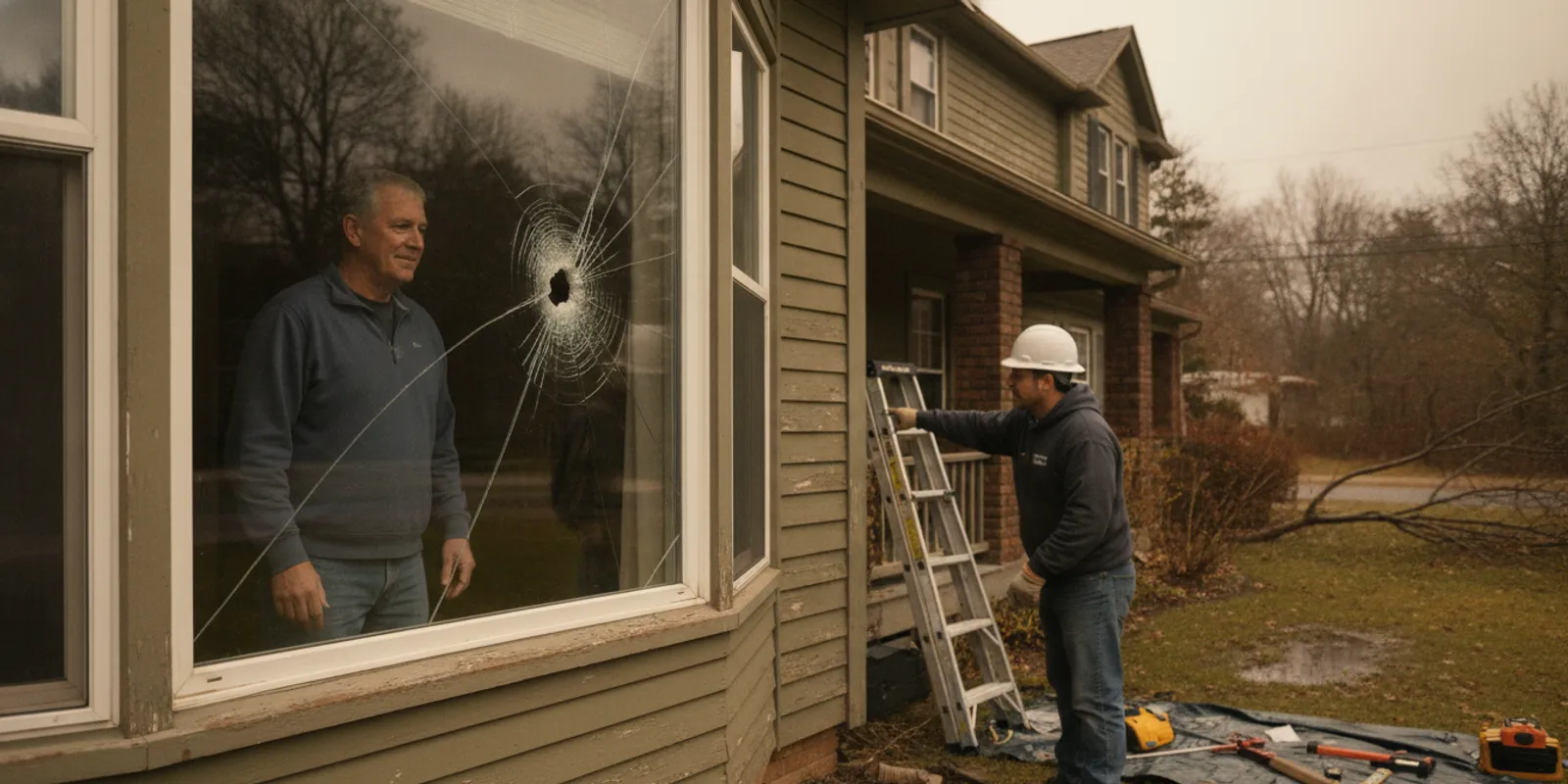
When glass breaks or a storm damages an opening, emergency window repair starts with a few calm decisions: keep people clear, look for immediate danger from a safe position, and get the right help. The next steps depend on what broke, where the damage is, and whether the opening can be left safely until it is assessed. This guide helps South Jersey homeowners act without taking risks or guessing at the scope of work.
Request help with a damaged window
What should you do first after a window breaks?
Begin by protecting people, not by inspecting the glass up close. Move children, pets, and other household members away from the room and the area just outside the window. Keep clear of the opening, the floor beneath it, and any path where fragments may have fallen. Do not touch shards or try to remove glass from the frame. A crack can spread, and pieces that appear stable can shift.
If there is an immediate threat to someone’s safety, a person is injured, or the damage is connected to another urgent hazard, contact the appropriate emergency services. For a window that is damaged but does not present an immediate life-safety emergency, keep the area closed off and arrange an assessment. Do not climb onto a roof, ladder, or exterior ledge to view the damage.
From a safe place, note whether the damage appears limited to the glass or whether the sash, frame, or surrounding wall also looks affected. This is only an initial observation, not a diagnosis. Avoid pressing on the window, testing whether it opens, or pulling on loose pieces. A contractor can determine what can be repaired and what may need replacement after examining the assembly.
How can you reduce risk while you wait?
Keep the room or nearby area off limits. If you can close an interior door without approaching the broken window, do so. Tell everyone in the household which route to avoid. If the opening is near a shared walkway, keep people away from that exterior area too. Do not sweep, vacuum, or pick up broken glass yourself when it is close to the opening or still in the frame.
Do not tape over cracked glass, push on it, or apply a rigid cover directly against it. Those actions can put pressure on weakened glass or make the damage harder to assess. Avoid placing a chair, box, or other object against the opening as a barrier if doing so requires entering the hazard area. If there is a safe way to block access from farther away, use it without touching the damaged window.
Weather can make an open or damaged window more urgent. Rain, wind, or cold air may affect the room and nearby belongings. From a safe position, move portable belongings away only if there is a clear route that does not pass near glass. Do not try to attach plastic or a board from outside, and do not use a ladder or reach through the opening. If you are unsure whether temporary protection is safe, leave it to the person assessing the damage.
For broad household safety information, you can consult the U.S. Consumer Product Safety Commission. That general resource does not replace an on-site assessment of a specific damaged window. Keep the immediate area undisturbed until a qualified person can advise you on safe next steps.
What details should you gather before calling?
You can make the first conversation more useful by collecting information from a safe distance. You do not need to measure the opening or handle the window. Write down what you already know and tell the contractor what remains uncertain.
- Where the window is: Identify the room and floor, and say whether it faces a yard, driveway, street, or shared path.
- What happened: Describe the event as accurately as you can, such as wind-blown debris, impact, a crack noticed during the day, or damage discovered after returning home.
- What looks damaged: From a safe place, say whether you see broken glass, a cracked pane, a loose sash, visible frame damage, or an opening exposed to the weather.
- Whether the area is occupied: Mention if people must pass near the window, or if children or pets are in the home.
- Current conditions: Note rain, strong wind, or other conditions that could affect the opening or access to it.
- Window type, if known: Share whether it is a sliding, double-hung, casement, bay, or another style. Do not operate it to find out.
- Photos, only if safe: A picture from across the room or outside at ground level can help explain the situation. Never move closer, step over glass, or climb for a better view.
Be clear about what you have not checked. For instance, you might say that the glass is visibly cracked but you cannot tell whether the frame is affected. This avoids treating a guess as a confirmed condition. If you are contacting an insurer as well, follow its instructions for documenting damage, but do not delay safety steps or put yourself at risk to take photographs.
Is the damage limited to glass, or does the whole window need attention?
A broken pane does not automatically mean that the full window must be replaced. It also does not guarantee that a glass-only repair will be suitable. The decision depends on the condition and configuration of the glass, sash, frame, seals, and surrounding opening. Those details are difficult to judge from a distance, especially when glass is cracked or pieces are missing.
Ask the contractor to explain what they found and why the proposed scope addresses it. If a repair is possible, ask what component will be repaired, what will remain in place, and what limitations to expect. If replacement is recommended, ask what damage or condition makes it the more appropriate option. A clear explanation should connect the observed problem to the proposed work rather than assume that every broken window needs the same solution.
| What you can observe safely | What it may mean | What to ask the contractor |
|---|---|---|
| Crack or break appears limited to one pane | The glass may be the visible issue, but the sash and frame still need assessment. | Can the glass be addressed on its own, and what needs to be checked first? |
| Sash looks loose, bent, or out of position | More than the pane may be affected, or the window may not be secure. | Which parts are damaged, and can the window be safely left as it is until work begins? |
| Frame or surrounding trim appears damaged | The opening may need a broader review beyond the visible glass. | Does the proposed scope include the affected frame or related components? |
| Water or wind can enter through the opening | Weather exposure and the condition of nearby materials should be discussed promptly. | What safe temporary measures, if any, are appropriate before permanent work? |
| Damage is not visible from a safe position | The extent remains uncertain; avoid moving or operating the window to investigate. | What information or photographs would help plan an assessment without approaching it? |
This comparison is a starting point for a conversation, not a substitute for an inspection. A contractor may need to see the window in person before confirming the scope, materials, or timing. If you are planning broader work on the home, Cosello’s window repair services page explains the relevant service path. For full replacement planning, review the company’s window replacement information as a separate option.
When should you ask about replacement rather than repair?
Ask about replacement when the assessment finds damage beyond the glass, when a repair may not address the condition, or when the existing unit’s overall state is part of the problem. The contractor should explain the reason and outline what the replacement includes. You can also ask whether the issue appears confined to one opening or whether other windows show a similar condition. Do not assume that a single damaged unit means every window needs work.
If more than one window is being considered, discuss the openings individually. Their size, operation, condition, and access can differ. You may choose to address the urgent opening first and plan other work separately. Ask whether the recommended sequence affects the work or coordination, and what the estimate includes for each opening. A written scope helps you compare like with like.
Window style and material may also matter when replacement is under consideration. A guide to window types can help you identify common styles, while a homeowner’s window selection guide covers broader planning choices. These resources are for considered projects; in an urgent situation, first focus on safety and the condition of the damaged opening.
What should you ask when arranging an emergency assessment?
When you contact a contractor, explain the immediate concern and ask what happens next. Avoid relying on a promise about timing or scope until the details are confirmed. A practical conversation should cover the assessment, access, the work being considered, and how the estimate will be presented.
- Can you assess this type of window damage, and what information do you need from me first?
- Should we keep the room or exterior area closed off until someone evaluates the window?
- Can the opening be left as it is for now, or do you recommend a specific temporary measure?
- Will you assess the glass, sash, frame, and surrounding area, as applicable?
- What are the repair and replacement options, if both are suitable?
- What work is included in the written estimate, and what conditions could change the scope?
- What should I do to prepare the area without approaching the damaged glass?
- How should I coordinate access if the opening is on an upper floor or behind a secured area?
Take notes and ask for plain-language explanations. If a proposal includes replacement, find out what happens to the existing unit and what installation work is included. If repair is proposed, ask how the work addresses the cause or extent of the damage. The aim is not to select a technical method before an assessment; it is to understand the recommendation and the choices available.
Homeowners comparing window projects can also review what a window installation process involves and which factors affect a replacement estimate. Exact pricing depends on the project and should be discussed during an estimate visit, rather than inferred from a general article.
How can you prepare for the visit without increasing risk?
Give the contractor a clear route to the room if you can do so without going near the window. Keep children and pets elsewhere, and let the assessor know about any access restrictions, stairs, locked gates, or other relevant conditions. Do not clear glass, detach trim, open or close the sash, or move furniture next to the damaged area. If anything must be moved to create access, ask how to do that safely.
Have your notes and any safely taken photographs ready. If you know the approximate age, manufacturer, or style of the window, share that information, but do not spend time searching near the damaged opening for labels. If the window has been repaired before, mention that history. These details can provide context; they do not replace a direct assessment.
Before work is scheduled, confirm the proposed work area, who needs access, and what preparation is expected from you. Ask whether belongings near the opening should be moved and who will handle any necessary protection or cleanup. Clarify what the estimate includes and how any additional work would be discussed before it proceeds. You can read about Cosello Construction and its background, and explore its completed project gallery for examples of its work.
How should you manage the home while the window is damaged?
Think about who uses the room and how people move through the home. If the damaged window is in a bedroom, kitchen, or a route between frequently used areas, make a simple plan to keep everyone away until it has been assessed. Tell household members which room or hallway is off limits, and choose another route if that can be done safely. Keep pets in a separate part of the home. These small changes can reduce the chance that someone approaches the opening without realizing there is a hazard.
If the damaged opening is near a neighbor’s property, shared walkway, or public-facing area, mention that when you call. Do not go outside to inspect the ground beneath it if fragments may have fallen. If you can view the area safely from indoors or from a clear location at ground level, describe what you observe without stepping into the debris area. If you rent your home or live in a managed community, notify the responsible property contact as required, while continuing to keep people clear of the hazard.
Consider whether the room needs to remain unoccupied because of weather or exposure. Do not use a portable heater, fan, or other device right beside an opening if it could be affected by rain, loose material, or unstable glass. Avoid placing furniture or bedding close to the window. Ask the person assessing the damage whether there are additional precautions for that room until the work is completed. The right advice depends on the opening and the conditions at the home.
Keep a short record of the event and the steps you have taken. Note when you noticed the damage, what you believe caused it, and whom you contacted. Save any safely taken photographs and copies of estimates or written communication. If the damage followed a storm or another event and you plan to contact an insurer, ask the insurer what documentation it needs. Do not delay urgent safety actions while gathering paperwork, and never take a risky photo just to create a record.
What should a repair or replacement estimate explain?
A useful estimate should make it possible to understand the recommended work without requiring you to interpret technical shorthand. Ask the contractor to identify the affected opening, describe the condition observed, and state whether the proposal addresses glass, sash, frame, installation, or other components. If some conditions cannot be confirmed until work begins, ask how that uncertainty will be handled and how you will be informed before any added work proceeds.
Make sure you understand what is included and what is not. Ask whether the estimate covers the materials and labor for the described scope, what preparation is expected from you, and what cleanup or removal is included. If temporary protection is discussed, clarify whether it is a short-term measure or part of the permanent work. The point is not to assume a particular item is included, but to ask directly and get the answer documented.
If you receive more than one proposal, compare the scope line by line rather than looking only at the final amount. One estimate may address a different part of the opening or include a different approach. Ask each contractor to explain differences in plain language. Cosello offers financing information for eligible projects on its window and door financing page; ask directly how that information applies to the work you are considering. Do not assume a financing option changes the technical recommendation or the work needed.
Timing is another item to clarify. Ask when an assessment can happen, what the next step is after the visit, and whether the schedule depends on confirming materials or the full extent of damage. An urgent situation can feel stressful, but a clear discussion of what is known, what remains uncertain, and how the contractor will follow up helps you make an informed decision. Do not rely on a general article or an online estimate to confirm the condition of a damaged opening.
Frequently asked questions
Should I clean up broken window glass before the contractor arrives?
No. Keep people away from the affected area and do not touch glass that is in the frame or near the opening. Tell the contractor what you can see from a safe position and ask for guidance. If anyone is injured or faces immediate danger, contact emergency services.
Can I cover a broken window with plastic or a board?
Do not approach, press on, or attach anything to damaged glass. A temporary cover may require tools, reaching, or exterior access that is not safe. Ask the contractor whether any temporary measure is appropriate and who should handle it.
Does a cracked pane mean I need a new window?
Not necessarily. A contractor needs to assess the glass and the rest of the window before recommending repair or replacement. Ask what was found, which components are included in the proposal, and why the proposed work fits the observed condition.
What if a storm damaged more than one window?
Keep clear of every affected opening and describe each location when you call. If you can document them safely from a distance, note which openings appear exposed to weather or near a path people use. The contractor can assess the openings and explain whether they should be handled together or separately.
Contact Cosello to discuss a damaged window
What is the practical next step?
Keep people away from the damaged opening, avoid handling glass or attempting an unsafe temporary fix, and share clear observations when you request an assessment. For emergency window repair, call Cosello Construction at (856) 317-1770 or use its estimate request form to discuss what happened and determine the next step.