
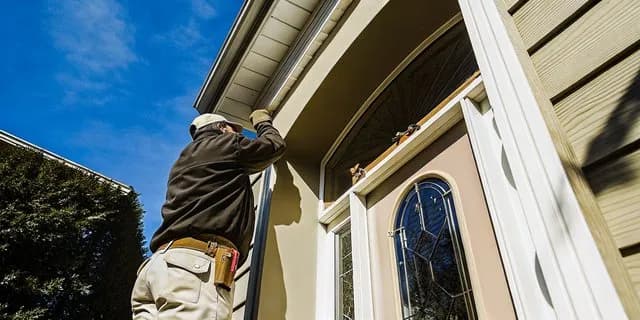
If your entry door sticks, lets in a draft, or no longer closes securely, deciding between front door replacement or repair south jersey homeowners can feel like a judgment call. Start by identifying what is failing: a small adjustment may address an isolated issue, while a worn-out door, damaged frame, or several problems together may point toward replacement. This guide explains what to look for and what to ask before choosing a scope.
Request a free in-home estimate
What should you check before choosing repair or replacement?
Look at the door as a system rather than judging it by one symptom. The door slab, frame, hinges, latch, threshold, weather seals, and the surrounding opening all affect how the entry works. Note when the problem happens and whether it is getting worse. Those details help distinguish an adjustment or hardware issue from broader wear.
Try these basic observations without taking the door apart:
- Check the gaps. With the door closed, look around its edges. A noticeably uneven gap can indicate that the door is out of alignment, the frame has shifted, or the slab has changed shape.
- Test how it moves. Does it drag at one corner, rub along the floor, or swing freely? Note whether the sticking changes with weather or occurs consistently.
- Check the latch. Does the latch meet the strike plate without lifting, pushing, or pulling the door? A latch that misses its opening can be an alignment or hardware issue, but repeated difficulty deserves a closer assessment.
- Look at the edges and surface. Check for splitting, soft or crumbling material, swelling, peeling finishes, or signs of moisture. Do not assume that a cosmetic mark means the door has failed; inspect whether the material around it is sound.
- Notice air and light. A draft, visible light at the edge, or water staining near the threshold may point to a seal, fit, or opening concern. Record where you notice it.
- Assess the frame and nearby wall. Look for loose trim, visible gaps, deteriorated material, or evidence of water around the frame. The condition of the surrounding opening can change the scope of the job.
These observations are useful preparation, not a diagnosis. A door can have more than one cause for a symptom. For example, rubbing could come from hardware alignment, a changed frame, or a slab that no longer fits well. Avoid forcing a stuck door or removing components to test it.
How can you document the problem before an estimate?
A short record can make the assessment more focused, especially if a symptom appears only at certain times. Start with the date and the condition you noticed. Write down whether the door was hard to open, difficult to latch, or drafty, and identify the exact edge or corner involved. If the problem changes during wet or humid weather, note that pattern rather than assuming what caused it.
Take a few clear photos from the inside and outside, including the full doorway and any specific area of concern. Do not remove trim or hardware to get a closer view. A photo can help you point out a stain, visible gap, or damaged finish, but an in-person review is still needed to evaluate fit and condition.
Before the visit, decide what you want the entry to do better. You may want it to latch smoothly, reduce an apparent draft, address visible damage, or change the look of the entrance. Rank those priorities. If an estimate proposes several items, you can ask which ones address a functional issue and which relate to product choices or appearance. This simple distinction can keep the discussion centered on your goals.
When might a limited adjustment be enough?
A limited fix may be worth discussing when the slab and frame appear sound and a single, identifiable component is causing trouble. Examples include a loose handle, a latch that needs attention, a worn seal, or a door that is slightly out of alignment. If correcting that one issue restores smooth movement, an even fit, and reliable latching, replacement may not be necessary for that symptom.
Consider whether the issue is truly isolated. If the door moves poorly and also has significant material deterioration, a new seal alone will not address the underlying condition. If the latch works only when someone lifts the door, the cause may extend beyond the latch. Ask what has failed, what work is proposed, and what result that work should reasonably address.
A useful conversation is specific: “The door catches at the lower corner when it is humid,” or “I can see daylight along the hinge side.” Clear observations help a contractor examine the fit and frame rather than guessing from a broad description such as “the door is bad.”
What signs point toward replacing the front door?
Replacement becomes more compelling when the problem is not confined to one adjustable part. A severely deteriorated or distorted slab, repeated fit problems, damage affecting the frame, or persistent air and water entry can signal that the complete door assembly needs attention. The right scope depends on what an in-person assessment finds around the opening.
- The slab has widespread deterioration. Soft, split, swollen, or badly warped areas can affect fit and function. A finish issue alone is different from damage that reaches the door material or compromises its shape.
- The frame is also affected. If the frame is loose, deteriorated, or no longer holds the door in alignment, replacing only the slab may not solve the problem. Ask whether the frame is included in the proposed scope.
- Several symptoms appear together. For example, recurring drafts, difficult latching, and visible edge gaps may share a broader fit or condition issue. Repeatedly addressing one symptom at a time can leave the main cause untouched.
- The door no longer suits the home's needs. If the existing door's style, operation, or material is not what you want for the entry, a replacement project can address that choice as well as the condition concerns. A change in preference by itself does not mean the old door has failed.
- Past adjustments have not lasted. If the same sticking or closing problem returns after earlier adjustments, ask whether there is an underlying frame or fit issue rather than assuming another small change will be enough.
For older homes, take age and character into account before deciding. The National Park Service says an existing historic door should be retained and repaired, or replaced if it is too deteriorated to repair. That guidance is specific to historic properties, but it is a useful reminder to assess the door's condition and significance rather than assuming every older entry should be discarded. See the National Park Service guidance on replacement doors if your home has a historic door or features you want to preserve.
How do repair and replacement compare?
Use this comparison to frame the estimate discussion. The “best fit” column is a starting point, not a substitute for examining the door and opening.
| Consideration | Limited adjustment or component work | Door replacement | | ------------------------------ | ------------------------------------------------------------------------------------------------- | ----------------------------------------------------------------------------------------------------------- | | Typical starting condition | Door and frame appear sound; one identifiable part or alignment issue is involved. | Door or frame has broader deterioration, repeated fit problems, or several connected symptoms. | | Scope to clarify | Which component is involved, what is being adjusted or changed, and which symptom should improve? | Whether the project covers the slab, frame, threshold, hardware, and work needed at the opening. | | What to inspect | Hardware, latch alignment, hinges, seals, and the door's movement. | Door condition, frame and opening, fit, operation, finish choices, and installation details. | | Best fit when | The problem is isolated and the main door assembly remains in good condition. | The existing assembly no longer meets the home's condition or use needs, and a broader scope is justified. | | What to compare in an estimate | Specific work, expected result, and any condition that could require a different scope. | Included materials and labor, removal and disposal, installation scope, finish details, and warranty terms. |
Neither column guarantees a particular outcome. Ask the estimator to explain why the recommended scope fits the condition they observed. If an estimate recommends replacement, it should make clear what will be replaced and whether the frame or threshold is included. If a limited approach is recommended, ask what signs would mean that it is not enough.
What affects the scope and estimate for a replacement?
An exact price should come from an in-home estimate, because the visible door is only part of the project. Different homes can need different materials, configurations, and amounts of work around the opening. For transparent comparisons, request the same basic information from each estimate and compare scope before comparing totals.
- Door type and material. Material, design, glazing, and hardware choices affect the selected product. Review the options in Cosello's guide to front door materials for New Jersey homes, then ask which options suit your priorities and the opening.
- Existing frame condition. An estimate should identify whether the frame appears suitable to keep or is part of the proposed replacement. Ask how any concealed damage discovered during work would be handled and approved.
- Opening and configuration. The dimensions and layout of the existing entry can affect product selection and installation scope. If you are considering a different configuration, ask how that changes the plan before selecting a door.
- Finish and hardware. Ask which finishes, handles, locks, and other selected components are included. Confirm any choices that are not included in the estimate.
- Removal and installation work. Clarify who removes the old unit, what happens to it, what installation steps are included, and how the work area will be left. Scope should be clear in writing.
- Financing and payment. If spreading project payments matters to you, ask about available financing options and the terms that apply. Do not assume that an offer or payment option applies to every project.
Cosello Construction offers residential door replacement and free in-home estimates. The company is an Andersen Certified Contractor, has more than 20 years of experience, and provides a 2-year labor warranty. Ask which product and warranty terms apply to the specific door being considered. Explore the company's residential door installation options and door and window brands before the estimate if you want to arrive with product questions.
How can you compare estimates on equal terms?
Two proposals may use different wording or include different parts of the work. To compare them fairly, make a simple side-by-side list. Record the product and configuration, whether the old unit is removed, which parts of the frame and threshold are included, what finish and hardware are specified, and what labor warranty applies. Mark any item that is not stated rather than assuming it is included.
Then compare how each proposal addresses the condition you observed. Imagine that your main concern is a recurring gap at the latch side, but one estimate describes only a new slab while another discusses both the slab and frame. Ask each provider to explain the relationship between the finding and the scope. You are not looking for the longest proposal; you are looking for a clear explanation of what is being addressed and what remains outside the work.
Ask how a change would be handled if removal reveals a condition that could not be seen beforehand. A useful answer explains how the contractor will document it, discuss the options, and obtain your approval before the scope changes. Confirm the payment schedule, product selections, and any exclusions in writing. This lets you weigh project scope and terms without relying on assumptions or comparing totals alone.
What should you ask before approving the work?
A good estimate should leave you clear about the problem, the scope, and what happens next. Bring your observations and ask direct questions. The answers can help you understand whether the recommendation addresses the cause you care about.
- What did you find? Ask the estimator to point out the observed issue and explain whether it involves the slab, frame, hardware, seal, or opening.
- Why is this scope recommended? Ask why an adjustment or component-level approach is enough, or why replacing the door is the better fit. The explanation should connect to the condition found.
- What exactly is included? Confirm which parts are being replaced, what installation and removal work is included, and what is excluded. Ask how changes in scope are discussed before additional work proceeds.
- What product choices are available? Discuss material, style, glazing, finish, and hardware. Cosello's front entry door options can help you prepare questions about the replacement itself.
- What warranty applies? Ask for the applicable product and labor warranty details in writing, including what is covered and any conditions.
- How should I prepare? Confirm any steps needed to clear the entry or protect nearby items and ask how the installation will affect access to the home.
- Can I see examples? Review the completed project gallery to get a sense of finished door projects and styles.
For a broader overview of how estimates can vary, see Cosello's guide to door installation estimate factors in New Jersey. It is a planning resource, not a substitute for a written estimate for your home. You can also check whether your address is within the company's listed service area.
How should you think about an older or painted door?
Do not scrape, sand, or remove old painted material just to investigate a door. If the home or door is older and painted surfaces may be disturbed, ask how the project will be assessed and what applicable lead-safety steps are needed. The U.S. Environmental Protection Agency publishes guidance about replacing an old wood door and frame with a new steel entry door and how to determine whether the work qualifies as a minor repair. Read the EPA's door replacement and lead-safety guidance and discuss your specific project with the contractor.
If a door has historic character or is part of a property subject to preservation review, check the relevant local requirements before changing it. The appropriate approach may depend on the property and project. The National Park Service document linked above addresses historic door retention and replacement; it is not a determination of the rules for your particular home.
Frequently asked questions
Can a sticking front door be adjusted instead of replaced?
Sometimes. If the slab and frame are sound and the cause is a limited alignment or hardware issue, an adjustment may address the symptom. If sticking comes with frame damage, widespread deterioration, or recurring fit problems, have the full assembly assessed before deciding.
Does a draft always mean I need a new door?
No. A draft can come from a seal, fit, or opening issue, among other causes. Note where air enters and ask the estimator to identify the source. Replacing a door without addressing the cause may not resolve the concern.
Should I replace the frame when replacing the door?
That depends on the frame's condition and the project plan. Ask whether the estimate includes the frame, why it should be kept or replaced, and how the existing opening will be evaluated. The proposal should state the scope clearly.
Can an old front door be retained?
It may be possible if the door is in suitable condition and retaining it fits your goals. Historic doors deserve particular care; the National Park Service advises retaining and repairing an extant historic door, or replacing it when it is too deteriorated to repair. Have the condition and any applicable preservation requirements reviewed.
How do I get a project estimate?
Gather your observations, identify the outcomes you want, and request an in-home estimate so the door and opening can be assessed. Cosello Construction provides free in-home estimates for residential door replacement. Use the Contact Us form to start a conversation.
When the door's condition, the proposed scope, and the estimate details are clear, you can choose a next step that fits your home rather than reacting to a single symptom.