
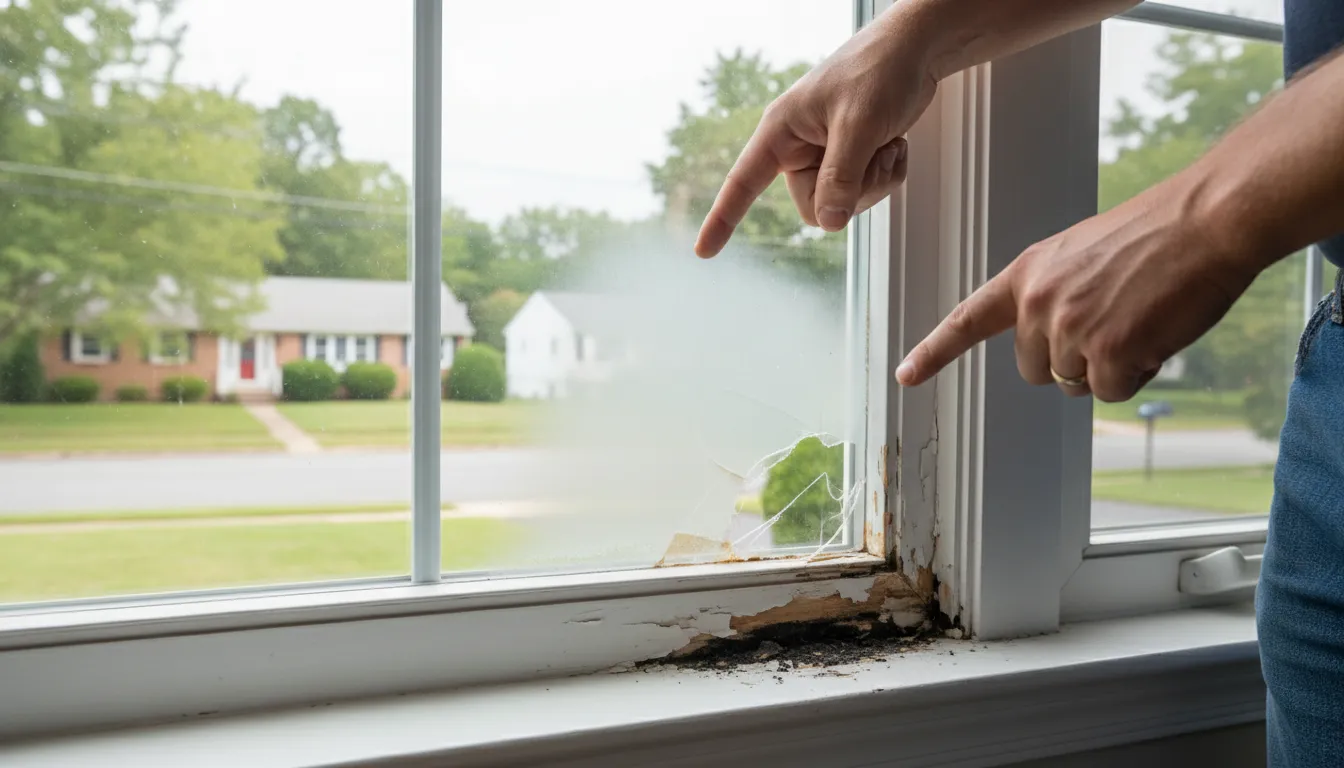
Rotted window sill repair can look like a small fix, but the visible damage may not show how far moisture has traveled. A careful plan helps you identify what needs attention, avoid assuming that surface patching will solve the cause, and prepare useful questions for a qualified installer. Here is how South Jersey and Philadelphia property owners can assess the situation and decide what to do next.

Request a free in-home estimate
What should you check before planning rotted window sill repair?
Start with observations you can make safely from inside and outside the home. Do not pry apart trim or probe a damaged area if doing so could break material or expose a sharp edge. Note the window location, how long you have noticed the issue, and whether the sill feels soft, looks cracked, or has peeling paint.
- Photograph the full window and a closer view of the sill in good light.
- Record whether discoloration, swelling, softness, or flaking appears on the sill, nearby trim, or wall.
- Note when you first noticed the damage and whether it seems to change after rain.
- Look for obvious gaps or failed-looking sealant without treating that observation as a confirmed cause.
- Write down any water staining or musty odor nearby, but do not assume the sill is the only affected area.
These notes help describe the problem. They do not establish how much wood is damaged or where water is entering. A professional assessment may be needed to determine the condition of the sill, frame, and adjoining materials. For background on window condition and repair considerations, the National Park Service's Preservation Brief on historic wooden window repair discusses evaluation and repair planning. Its focus is historic wood windows, so it should not be treated as a diagnosis of every modern window.
How can you distinguish visible damage from the project scope?
The sill is the horizontal ledge at the bottom of the window. It is exposed to weather and can show deterioration before damage is obvious elsewhere. Still, the appearance alone cannot tell you whether the issue is limited to the sill, involves connected frame components, or reflects a moisture path around the window.
Separate what you can see from what remains unknown. For example, “paint is peeling at the outside corner and the wood appears dark after rain” is more useful than “the whole window is rotten.” Avoid committing to a repair method before someone has assessed the condition. The right scope depends on the material, extent of damage, window condition, and what is found around the opening.
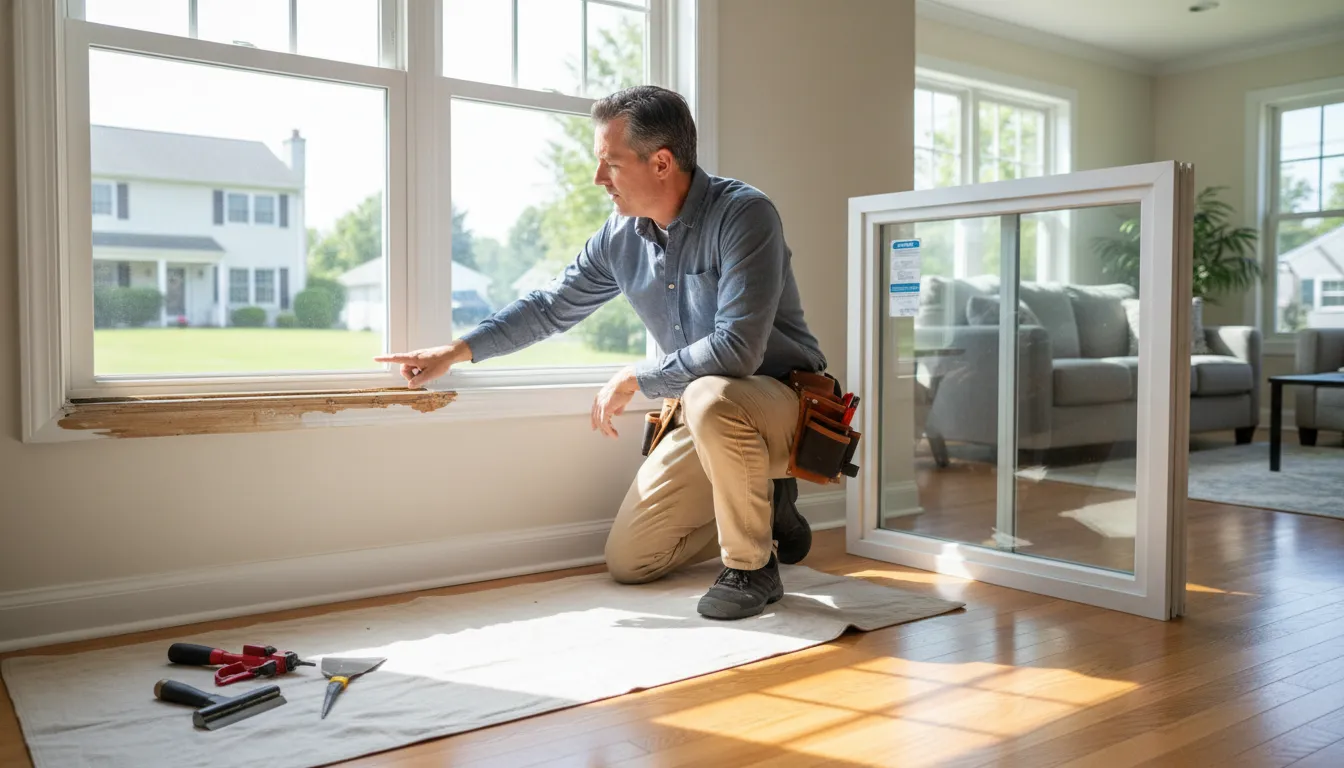
If the window has broader operating or condition concerns, compare your observations with Cosello's information about window repair services and window replacement. Those pages can help you identify the relevant conversation, but an on-site review is needed to determine the work for your specific home.
Which details help explain the source and extent of damage?
A sill can deteriorate for more than one reason, and the visible symptom is not proof of a particular cause. When discussing the opening, describe conditions around it rather than guessing at a leak path. For instance, note whether staining appears above or below the sill, whether paint is peeling on one side, or whether water marks are also visible on nearby wall surfaces. Mention any recent maintenance or prior work if you know about it.
Take photographs from consistent positions and keep dates with them. A wide image shows the window’s relationship to the wall and nearby exterior details. A closer image can show the texture and edges of the damaged material. If the appearance changes after wet weather, document what you observe without waiting in an unsafe place or climbing to reach the opening. Do not use a phone image to make a final judgment about concealed material.
Think of the assessment as a way to answer several separate questions: what is visibly damaged, what connected parts can be evaluated, what remains concealed, and what additional investigation may be needed? A sound explanation distinguishes observations from assumptions. If an installer cannot see a particular area safely, ask how that limitation affects the recommendation and what would resolve the uncertainty.
When might repair or replacement be worth discussing?
There is no reliable one-size-fits-all rule based only on the amount of visible rot. A localized defect may lead to a different discussion than deterioration that continues into the frame or occurs alongside other window problems. Consider the full opening and the result you need, not just the damaged edge.
| What you observe | What to ask about | What it does not prove |
|---|---|---|
| Small area of visible sill deterioration | Can the affected area be addressed while preserving the sound surrounding components? | That damage is limited to the visible spot |
| Softness, cracking, or deterioration across a larger area | How much material is affected, and what would a suitable scope include? | That the full window must be replaced |
| Damage plus operating, glazing, or frame concerns | Would a broader window assessment change the recommendation? | That one symptom identifies the source of moisture |
| Repeated dampness or staining around the opening | What should be investigated to understand how water is reaching the area? | That sealing the visible joint alone will resolve it |
Use the comparison to organize questions, not to diagnose the window yourself. A clear estimate should explain the proposed scope and the basis for it. Ask what components are included, what conditions could change the scope once work begins, and how the contractor will communicate those findings before proceeding.
A repair discussion generally centers on whether the affected part can be addressed while retaining components that are in suitable condition. A replacement discussion considers the broader window and opening, especially if the sill is not the only concern. Neither label alone tells you what work is included. Ask the contractor to describe the intended result in plain language and identify any limits or assumptions.
What information makes an installer’s assessment more useful?
Before arranging a visit, gather the photos and notes you made, and clear access to the window where practical. If the window is on an upper floor or an area that is difficult to reach, do not climb or move heavy items to inspect it. Point out the concerns from a safe location.
- Identify the room and whether the concern is on the interior, exterior, or both.
- Share when the issue first appeared and any changes you have observed.
- Show photographs taken at different times if they help document a change.
- Explain whether the window opens and closes as expected, without forcing it.
- Ask the installer to describe what was inspected and what remains uncertain.
Before the visit, decide what you want the assessment to help you understand. You may want to know whether the sill can be considered separately, whether the window has other condition concerns, or what additional work might be necessary if concealed damage is discovered. A short list helps keep the conversation focused and makes it easier to compare recommendations afterward.
If you are comparing project options, ask for the proposed work in writing. Clarify whether the assessment is for the sill alone or includes the window and surrounding opening. Ask how material condition, access, and any newly discovered damage could affect the final scope. Cosello offers free in-home estimates; the visit is the appropriate place to discuss the property’s condition and exact project details. No online description can determine an exact price for an unseen opening.
How should you compare proposed scopes?
Two proposals may use different language, so compare what each includes rather than looking only at a headline description. Ask each contractor to explain the limits of the work in plain terms. A useful comparison covers the affected components, the intended outcome, and how unexpected conditions will be handled.
- Define the area. Confirm which sill, frame, trim, or other parts are included and which are not.
- Understand the recommendation. Ask why the proposed approach fits the condition observed and what alternatives were considered.
- Clarify assumptions. Find out what the proposal assumes about concealed materials and what could prompt a change.
- Review responsibilities. Confirm how access, protection of nearby finishes, cleanup, and communication are handled.
- Compare like with like. If scopes differ, request clarification before choosing based on cost alone.
Cosello is an Andersen Certified Contractor with more than 20 years of experience and offers a 2-year labor warranty. Ask how the stated warranty applies to the specific work being proposed. You can also review the company's background and completed project gallery as part of your preparation.
For a practical comparison, make a simple record for each estimate: date, observed condition, parts included, stated exclusions, assumptions, expected outcome, and the process for approving changes. If one proposal describes only a sill and another discusses the entire window, ask each provider to clarify the difference. You are not trying to make the proposals identical if the recommendations differ; you are making sure you understand why.
Ask what happens if additional deterioration becomes visible after work begins. Who will explain the finding, how will the revised scope be documented, and will work pause for your decision? Clear answers help prevent a mismatch between what you expected and what the written proposal covers.
What should you do while waiting for an assessment?
Keep the area observable and avoid covering damage in a way that hides changes from the person assessing it. If water is actively entering, focus on immediate safety and protecting belongings without taking risks. Do not apply a cosmetic patch that could obscure the condition before the visit unless a qualified professional has advised you to do so.
Make a short list of priorities: preserving existing materials where appropriate, addressing concerns about water, improving operation, or evaluating replacement. Those priorities help the installer explain options without assuming that every homeowner wants the same outcome. If you are considering broader window work, see the overview of residential window replacement and the company's service areas.
Do not force a window that sticks or handle loose, sharp, or unstable material. If the opening presents an immediate hazard or water is entering near electrical equipment, prioritize safety and seek appropriate help. Keep your notes factual: what happened, when it happened, and what you observed afterward. This is more useful than trying a series of temporary fixes that could hide evidence or create additional damage.
Arrange an in-home window assessment
Frequently asked questions
Can I tell how extensive the rot is from a photo?
A photo can document visible symptoms, but it usually cannot establish the condition of concealed or connected materials. Share images with the installer, then arrange an assessment if the scope is uncertain.
Should I paint over a rotted sill?
Paint may hide visible evidence without resolving the underlying condition. Document the area first and ask a qualified installer to assess it before deciding on a cosmetic treatment.
Does a rotted sill always mean the window must be replaced?
No. The appropriate scope depends on the condition of the sill, frame, and window as a whole. An on-site assessment can help distinguish a limited repair discussion from a broader replacement conversation.
What should I have ready for an estimate?
Have the window location, clear photos, a brief timeline of what you observed, and any questions about scope or materials. Make access safe and explain any related concerns you have noticed.
What if the estimate changes after work begins?
Ask before approving the work how newly discovered conditions will be explained and documented. Confirm that you will have a chance to review and approve a revised scope before proceeding with additional work.
For more context on preserving and evaluating wood windows, consult the National Park Service's historic window guidance. You can also use Cosello's window replacement overview to prepare questions about a broader project.
Arrange an in-home window assessment
Careful observations and a clear scope discussion are the best starting points for deciding how to address a rotted window sill. When the extent or cause is uncertain, have a qualified installer assess the opening before choosing the work.