
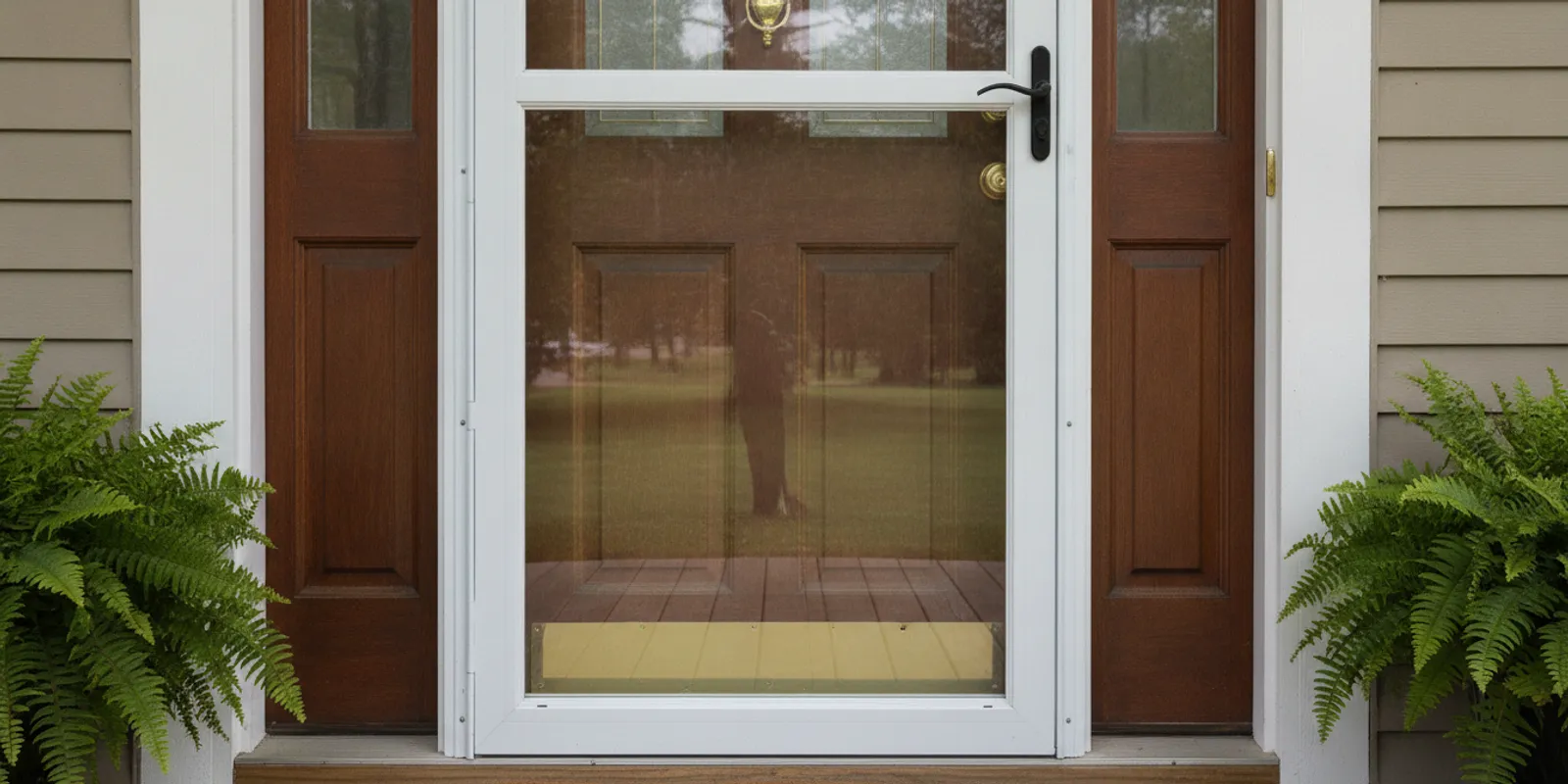
Choosing the best storm doors for security means looking beyond a lock or a heavy-looking panel. The door, frame, hinges, mounting surface, and main entry door all work together. A storm door can add another physical layer and support ventilation, but it is not a substitute for a sound, properly latched entry door. Use this checklist to compare options and prepare useful questions before choosing a model.
Request a free in-home estimate
What role should a storm door play in entry security?
A storm door sits outside the primary entry door. Depending on its construction and installation, it can create an additional barrier and help shield the main door from weather. It may also let you use a screen for airflow while the primary door remains closed. Those are practical benefits, but a storm door is only one part of an entry plan.
Start by checking the main door. Does it close without being pushed or lifted? Does its latch engage fully? Are the hinges, frame, and surrounding trim in sound condition? A new outer door cannot correct a problem with the primary door or a weak mounting surface. If your entry needs broader work, compare storm-door choices with Cosello's front entry door options so both doors can be considered together.
It also helps to name the concern you want to address. You may want a door that stays closed when children or pets move through the entry, a better way to ventilate, a panel that is easier to operate, or a more substantial barrier outside the main door. Different priorities lead to different product questions. Avoid relying on broad labels such as “security door” unless the manufacturer explains the construction and intended use.
Which features are worth comparing?
Product names and marketing descriptions can make similar models sound very different. Compare the parts and how they work together. Ask for the model information and manufacturer documentation, then use a table like this to keep the choices straight.
| Part | What to examine | Question to ask |
|---|---|---|
| Frame and panel | Material, rigidity, joints, and visible flex | How is the panel connected to the frame, and what does the manufacturer say about its intended use? |
| Hinges and mounting | Hinge placement, fasteners, trim condition, and attachment surface | What will the fasteners engage, and how will the frame be secured? |
| Lock and latch | Latch engagement, alignment, handle feel, and operation from inside | Can the latch engage consistently after the door is installed and adjusted? |
| Glass or screen | Panel retention, replacement, and seasonal changeover | How is the panel held in place, and how is it removed or replaced? |
| Closer and threshold | Closing speed, latching, sweep, and bottom gap | Can the door close reliably without slamming or binding? |
Weight alone is not a useful security rating. A heavy panel can still be poorly aligned, attached to weak trim, or difficult to latch. A lighter design may work well for its intended use if the complete assembly fits the opening and operates correctly. Treat each feature as one question in a system, not a stand-alone promise.
How should you assess the frame, hinges, and mounting area?
The lock can only engage reliably when the door remains aligned with its frame. Before selecting a model, inspect the opening and the trim where the storm-door frame would attach. Look for movement, loose pieces, rot, cracking, gaps, or signs that the frame is out of square. If the existing door rubs or sits unevenly, note where that happens.
- Check the mounting surface. Identify whether the proposed attachment is to sound material or only to decorative trim. Ask the installer to explain the intended fastening approach for your opening.
- Look at the hinge side. The door needs clearance to swing fully without hitting siding, a step, a light fixture, or other hardware.
- Review the latch side. Confirm that the frame can sit in position without creating a gap or an obstruction around the handle.
- Check the threshold. Uneven flooring or a raised sill can affect the sweep and the way the door closes.
- Consider the primary door swing. The two doors should not conflict or trap a household member between them during ordinary use.
Older homes may have uneven trim or an opening that is not perfectly square. That does not automatically rule out a storm door, but it makes a fit assessment important. Ask what adjustments are included and what conditions could require additional work. If you are also weighing a new primary door, review Cosello's steel entry door information or its broader residential door replacement options as part of the discussion.
What should you check about locks and everyday operation?
Ask the dealer or installer to demonstrate the lock and handle on the model you are considering. A useful test is simple: close the door from several positions, operate the latch, and repeat the sequence. It should not require an unusual lift, shove, or repeated handle movement to line up. Ask how the closer is adjusted so the door shuts consistently without slamming.
- Can household members reach and operate the handle comfortably?
- Does the lock have a straightforward inside release and a practical key arrangement?
- Does the latch engage when the door closes gently, or only when it is pushed hard?
- Can you open the primary door without the storm door swinging into the path?
- What adjustments or replacement parts are available if the handle, lock, or closer wears?
These are not only convenience questions. A door that is frustrating to use may be left unlatched or propped open. A closer set too forcefully may slam; one set too slowly may not bring the latch into engagement. Have the installer explain how the completed door will be checked and what you should do if the latch later becomes difficult to operate.
Do not assume that a multi-point lock or a particular label is automatically suitable for every storm door. Compatibility depends on the door's design, frame, and installation. Ask for the exact hardware details and the manufacturer's instructions instead of relying on a general description such as “heavy duty.”
How do glass and screen panels affect your choice?
Storm doors use different glass and screen arrangements. A full-view style can provide a broad view through the entry and may have an interchangeable screen. Other styles use smaller glass areas or configurations that are not changed in the same way. Compare how each panel is retained, how you switch between ventilation and a closed setup, and whether the replacement parts are available for the model.
Glass and screens serve different purposes. A screen supports airflow but is not a solid barrier. Glass closes the opening, but its presence does not by itself establish how resistant the complete assembly is to impact or forced entry. Ask what glazing is supplied, whether the manufacturer identifies a particular safety or performance standard, and how the panel is secured in the frame. Do not infer impact resistance from appearance alone.
For product safety questions, consult the manufacturer's instructions and relevant consumer guidance from the U.S. Consumer Product Safety Commission. Keep the product documents after installation so you can refer to care, operation, and panel replacement instructions. If you are comparing the storm door with the main entry's glazing or construction, Cosello's front door planning page can help frame that conversation.
How can ventilation and security work together?
Ventilation is one reason homeowners consider an outer door. A screen can let air move through the entry while the main door stays closed. Before you choose, think about who will use the door and how often panels will change seasonally. A panel that is awkward to remove may not suit a household that expects to switch configurations often.
Picture an ordinary evening: someone opens the main door for airflow, while the storm door remains closed. Will the screen arrangement match that routine? Can everyone in the household latch and unlock the outer door without confusion? Is the closer likely to pull it shut after each use? These small operating details help determine whether the door is used as intended.
Also think about the entry from inside and outside. A storm door should not block a safe, familiar route through the primary door. Keep handles, keys, and any removable panel instructions understandable to household members. If a particular configuration feels awkward during a demonstration, ask to try another style before settling on it.
What should an installation assessment include?
Fit and installation matter as much as the product selection. Ask the installer to review the opening before finalizing the choice and to explain any preparation that may be needed. You do not need to diagnose the frame yourself; the goal is to understand what the estimate includes and how the final operation will be checked.
- Measure the opening. Confirm width and height at more than one point. Note whether the opening is square and whether there are different dimensions near the top, middle, and bottom.
- Inspect the mounting area. Identify loose trim, damaged material, prior holes, or other conditions that could affect attachment.
- Confirm swing and handle side. Check clearance, access, and how the storm door will operate alongside the main door.
- Specify the configuration. Record the glass or screen arrangement, lockset, handle, closer, sweep, and any included accessories.
- Review installation and adjustment. Ask how alignment, closing speed, latch engagement, and clearance will be checked before the work is considered complete.
- Clarify care and support. Request product information and ask where to find instructions for cleaning, seasonal panel changes, and replacement parts.
After installation, test the door several times while the installer is present. Open it partway and allow it to close; then try from a wider opening. Confirm that the latch catches, the handle works, the sweep does not drag excessively, and the door does not hit the main door or surrounding trim. Raise any concern then, while the installer can assess the adjustment.
If you are considering a broader entry update, the door and window brands page is a starting point for discussing product choices. The project photo gallery may also help you describe the style and configuration you have in mind.
How can you compare storm-door options for your home?
Use a short written comparison rather than trying to remember product details from separate conversations. For each model, note its panel layout, frame construction, hardware, fit requirements, maintenance needs, and what the estimate includes. Then rank the priorities that matter most to your household.
For example, a homeowner who mainly wants seasonal ventilation may favor a panel arrangement that is simple to change and store. A household focused on a more substantial outer barrier may ask more about frame rigidity, how the panel is retained, the latch, and the mounting plan. If the entry has uneven trim, fit and preparation questions may take priority over appearance. These are not universal rankings; they are ways to make sure the product suits the actual opening and routine.
Try a simple decision worksheet: give each option a brief note for “fits the opening,” “easy to operate,” “supports ventilation,” “hardware understood,” and “scope clearly stated.” Mark any item that remains unanswered. Resolve those questions before comparing totals. A lower estimate is difficult to evaluate if it describes a different panel configuration or leaves out preparation that another estimate includes.
What should you ask when comparing estimates?
Compare written scopes, not just product names or bottom-line totals. Exact pricing depends on the selected door and the opening, so ask for an in-home estimate rather than treating a generic price as a quote. A clear estimate should make it possible to see what product and work are included, and which conditions could change the scope.
- What model and glass or screen configuration are specified?
- Which lockset, handle, closer, sweep, and other hardware are included?
- Does the scope include removal or disposal of an existing storm door, if applicable?
- What frame preparation and installation steps are included?
- Are repairs to damaged trim or mounting material excluded or listed separately?
- What are the product and labor warranty terms, stated separately?
- How will alignment and latch operation be reviewed at completion?
Cosello Construction provides residential door replacement and installation and offers free in-home estimates. Bring your priority list and ask how the storm door relates to the condition and style of your primary entry. You can use the contact page to request an estimate, review financing information when considering project payment options, or browse customer reviews and testimonials as part of your research.
For a consultation, the about Cosello page provides background on the company. Keep the conversation focused on the opening, the product configuration, and the written scope so you can make a fair comparison.
Frequently asked questions
Does a storm door make a front entry burglar-proof?
No. A storm door may add another layer, but it cannot make an entry burglar-proof. The main door, frame, installation, nearby openings, and household routines all matter. Consider the storm door one element of an overall entry plan.
Is a heavier storm door always more secure?
No. Weight alone does not explain how the hinges, frame, latch, and mounting will perform. Compare construction and installation details, then confirm that the door closes and latches reliably.
Should I choose glass or a screen panel?
That depends on your priorities for visibility, ventilation, and seasonal use. Ask how each panel is retained, changed, and replaced, and consider how the configuration works with your primary door.
Can I add a storm door if the entry opening is uneven?
Possibly, but the opening and mounting surface should be assessed first. Unevenness, damaged trim, or limited clearance can affect fit and operation. Ask how the installer would handle the conditions and whether any preparation is outside the estimate.
What if I am also considering a new front door?
Discuss both doors together so the size, swing, hardware, and appearance work as a system. Review secure storm door options in the context of the primary entry, then request an estimate based on the actual opening.
Schedule a front-entry consultation
What is the practical next step?
Write down your priorities for entry protection, ventilation, and ease of use, then have the opening assessed before choosing a model. A clear estimate and a hands-on operation check can help you compare the storm door and primary entry as one practical plan.