
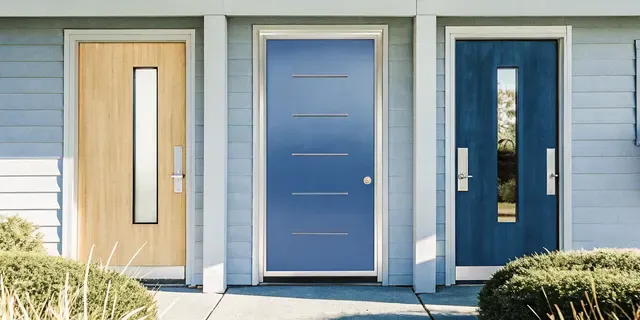
Your entry door has to handle more than curb appeal in South Jersey. Freeze-thaw cycles, humidity, direct sun, security concerns, and everyday traffic all expose weaknesses in the wrong material. The best choice depends on how you weigh maintenance, appearance, insulation, strength, and long-term value.
For most South Jersey homeowners, fiberglass vs steel vs wood entry doors nj comes down to priorities. Fiberglass offers weather resistance and design flexibility. Steel emphasizes strength and security. Wood delivers classic character with more ongoing maintenance.
Fiberglass resists warping, cracking, and rot, while steel is generally stronger and more affordable but can dent or rust. Wood offers a traditional appearance and natural insulation, yet needs more consistent care than composite materials. This residential door installation guide starts by putting those tradeoffs side by side, so you can identify which material fits your home before comparing specific units and hardware.
Ready to compare entry door materials for your South Jersey home? Contact Cosello Construction or call (856) 317-1770 for a free consultation.
The Three Entry Door Materials at a Glance
Wood, fiberglass, and steel are the three most common entry door materials, and each solves a different homeowner priority. The right choice depends on how much maintenance you are willing to perform. How strongly you value security or design flexibility, and how the door fits the home's exposure and budget. This comparison is a useful starting point before reviewing a complete residential door installation guide.
| Material | Durability | Maintenance | Energy efficiency | Typical cost | Best for |
|---|---|---|---|---|---|
| Fiberglass | Resists warping, cracking, and rot | Low; minimal upkeep | Very good when properly insulated and sealed | $500-$3,000 | All-around performance and design flexibility |
| Steel | Strong and secure, but can dent or rust | Moderate; inspect finish and address damage | Good when the unit is properly insulated | $200-$1,500 | Security and lower upfront cost |
| Wood | Solid and repairable, but more sensitive to moisture | High; needs consistent finishing and inspection | Depends heavily on construction and weatherstripping | $500-$5,000 | Classic appearance and custom architectural character |
- Fiberglass: Fiberglass resists warping, cracking, and rotting in varied climates. It also offers more design options than standard steel and can last more than 50 years with minimal maintenance. Those advantages explain its higher upfront cost compared with many steel units. Source
- Steel: Steel is generally the strongest and most security-focused option in this group. It is often more affordable, but dents and rust can become maintenance concerns if the protective finish is damaged. Source
- Wood: Wood provides a traditional, high-end appearance and broad price range. It also demands more consistent maintenance than fiberglass or steel, especially where moisture reaches exposed edges or finish joints. Source
These are material-level differences, not guarantees of performance. Installation quality, the door's core, weatherstripping, threshold, hardware, and exposure all affect the finished result. A professional assessment can identify which combination fits the home's entry conditions.
How Durable Is Each Entry Door Material in NJ Weather?
New Jersey entry doors face freeze-thaw cycles, summer humidity, direct sun, wind-driven rain, and everyday impact. Material choice affects how often a door needs attention, but installation quality and routine inspections matter just as much. Steel, fiberglass, and wood can all perform well when matched to the exposure and maintained correctly.
Steel: Strong, secure, and vulnerable to surface damage
Steel is a practical choice when strength, security, and a lower upfront cost are priorities. Its rigid construction handles frequent use and provides a solid barrier at the entry. However, steel is susceptible to dents, especially around the face, lock area, and lower edge. Once the protective finish is compromised, moisture can begin the rusting process.
South- and west-facing doors receive especially intense afternoon sun. In New Jersey, those exposures may require repainting every 5 to 10 years, according to the supplied regional guidance. Inspect the finish for chips, bubbling, and exposed metal before winter. Prompt touch-up work can help prevent a small coating failure from becoming a larger repair.
Fiberglass: Stable through seasonal changes
Fiberglass is well suited to varied climates because it resists warping, cracking, and rotting. That stability is valuable when outdoor humidity changes quickly or a door repeatedly moves between hot, cold, and damp conditions. Fiberglass is also more resistant to dents and scratches than many standard steel surfaces, although severe impact can still damage the skin or frame.
Maintenance is generally straightforward: keep the threshold clear, inspect weatherstripping, wash the exterior with a suitable mild cleaner, and follow the manufacturer's finish-care instructions. Fiberglass also offers broad design flexibility, so homeowners can select a wood-grain appearance without accepting every maintenance burden associated with natural wood.
Wood: Classic character with a real maintenance commitment
Wood delivers depth, texture, and a traditional appearance that many homeowners prefer for a prominent front entry. It can also provide natural insulating value, but it is more sensitive to moisture than fiberglass or steel. Repeated wetting and drying can contribute to swelling, warping, cracking, or rot, particularly at unprotected edges and joints.
Wood doors need consistent attention to paint, stain, and clear protective finishes. Look for peeling finish, soft spots, sticking, and gaps around the frame. Refinishing should happen before bare wood is exposed for long periods. If a door no longer closes squarely or shows damage near the sill, schedule door repair services before water intrusion or misalignment spreads. For a New Jersey home, the best material is the one the property owner can maintain at the level its exposure requires.
Which Entry Door Material Insulates Best for South Jersey Homes?
Fiberglass is usually the strongest starting point for insulation because its construction resists heat transfer and remains stable through seasonal temperature changes. It can deliver excellent energy efficiency with minimal maintenance and may last more than 50 years when properly installed and cared for. Still, the material alone does not determine comfort. The door slab, frame, weatherstripping, threshold, glass, and installation all affect the finished result.
Why fiberglass performs well in a changing climate
South Jersey homes experience cold winters, humid summers, wind, and repeated freeze-thaw cycles. Fiberglass does not warp, crack, or rot like vulnerable wood components can, which helps the door maintain a consistent fit over time. That stability supports a tighter seal around the perimeter. It also gives homeowners broad design flexibility without giving up the practical insulation benefits associated with a well-built entry system.
Fiberglass is not automatically the most efficient option in every product line. Compare the complete door assembly, including its core, glazing package, frame material, and published performance information. A high-quality fiberglass unit with poor weatherstripping can perform worse than a properly sealed steel door.
Steel can be energy efficient when the assembly is rated
Steel conducts heat more readily than insulated fiberglass, but that does not make every steel entry door inefficient. ENERGY STAR certified residential doors are qualified to deliver energy savings, and the certification applies to the tested product assembly rather than a material label alone. Review the product's certification and performance details instead of assuming that all steel doors perform alike. ENERGY STAR's residential door guidance provides a reliable starting point for comparing qualified products.
Sealing is especially important around steel. A continuous weatherstrip, correctly adjusted threshold, insulated core, and accurate installation help limit drafts. ENERGY STAR identifies product criteria for certified windows and doors, including performance considerations that support an efficient building envelope. The key product criteria page can help homeowners ask better questions before selecting a unit.
Wood offers natural insulation, with more upkeep
Wood has natural insulating properties and remains attractive in historic, traditional, and custom home designs. Its performance depends heavily on finish quality and maintenance. Moisture exposure, swelling, shrinking, and deteriorated seals can create air leakage over time. Wood can be a sound choice when its appearance and repairability justify the additional attention, but it is less forgiving when maintenance is deferred.
The U.S. Department of Energy notes that purchasing energy-efficient residential doors can reduce energy use and improve home comfort. See the Department of Energy purchasing guidance for broader selection principles. For a material-specific recommendation and a properly sealed installation, review Cosello Construction's residential door installation guide before choosing between fiberglass, steel, and wood.
How Do Fiberglass vs Steel vs Wood Entry Doors Compare for NJ Security?
Security starts with more than the slab itself. The door's construction, frame, hinges, lockset, glass, and installation all determine how well an entry resists forced entry and everyday wear. For South Jersey homes, each material brings a different balance of strength, impact resistance, and maintenance responsibility.
Steel delivers a strong security foundation
Steel is often selected when strength and security are the first priorities. A properly installed steel entry door can provide a rigid barrier, and 22- to 24-gauge steel is a practical specification range to discuss when comparing units. Steel doors are also generally more affordable than comparable fiberglass products, which makes reinforced security more accessible for many homeowners.
That strength does not make steel maintenance-free. The surface can dent under impact and may rust if its finish is damaged or moisture reaches exposed metal. South Jersey's weather makes careful finishing, sound weatherstripping, and a correctly fitted frame important. For homes where this material is the right fit, Cosello Construction can coordinate steel entry door installation with the surrounding frame and hardware.
Fiberglass resists common entry-door damage
Fiberglass is a strong security option when homeowners want durability with less concern about dents, warping, cracking, or rot. Its surface resists common forms of damage, helping the door maintain its fit and appearance through changing weather. However, fiberglass should not be treated as automatically more secure than steel. The quality of the core, lock preparation, hinges, frame, and installation still matters.
Wood security depends on construction and upkeep
Wood can provide a substantial, secure entry when paired with a properly built slab, reinforced frame, quality hardware, and professional installation. Its vulnerability is usually maintenance rather than a lack of potential strength. Moisture, finish failure, and seasonal movement can affect fit over time, so homeowners must inspect and maintain the door consistently. A wood door that swells, shrinks, or develops damage may not close and latch as reliably as intended.
For any material, a complete evaluation should include the frame, deadbolt, strike plate, hinges, glass, threshold, and weather seals. Cosello Construction can compare those components with the door material so the final installation supports both household security and dependable daily operation.
Cost Comparison: Which Entry Door Offers the Best Value?
Lowest purchase price does not always mean lowest ownership cost. Compare the door's initial price with expected maintenance, service life, energy performance, and the cost of replacing or refinishing it over the next 10 to 20 years. That longer view helps South Jersey homeowners choose a material that fits both the budget and the property.
Steel usually leads on upfront price
Steel is often the most economical starting point. Published comparisons place typical steel entry doors at approximately $200 to $1,500, while comparable fiberglass units can cost about $500 to $1,500 more. Steel also delivers strength and security at a lower initial investment, which can make it a practical choice for a rental property. A utility entrance, or a homeowner prioritizing impact resistance and budget control.
The tradeoff is maintenance. Steel can dent, and exposed surfaces may rust if the finish is damaged or moisture reaches the metal. In New Jersey's climate, south- and west-facing steel doors may require repainting every 5 to 10 years. Those future maintenance costs should be included in the value calculation, not treated as an afterthought. Review the steel and fiberglass cost comparison for additional context on the upfront difference and repainting cycle.
Fiberglass costs more, but can spread value over time
Fiberglass commonly falls between $500 and $3,000, depending on the design, glass, hardware, and installation requirements. It generally resists warping, cracking, and rotting, and it can provide a wood-like appearance without the same level of ongoing exposure-related maintenance. A documented comparison notes that fiberglass doors can last more than 50 years with minimal maintenance. That longevity can amortize the higher purchase price across a longer ownership period, especially when the door remains attractive and functional without frequent refinishing.
Fiberglass is not automatically the best value for every home. A basic steel door may be the smarter purchase when the opening is secondary or the project has a strict initial budget. Fiberglass becomes more compelling when a homeowner expects to stay in the property, wants a particular finish, or prefers to reduce future maintenance.
Wood rewards appearance, but demands a maintenance budget
Wood offers warmth and a distinctive custom appearance, but its price range is the widest: approximately $500 to $5,000. It also requires more consistent maintenance than fiberglass or steel. Refinishing and careful moisture management matter over a 10- to 20-year period, particularly around exposed thresholds and weather-facing elevations. Wood can be an excellent design investment when its appearance is central to the home's character, but the maintenance commitment belongs in the original budget.
Cosello Construction helps homeowners compare the complete installation, not just the door slab. The company's 2-year labor warranty adds protection for installation-related workmanship after the project is complete. For guidance on sizing, materials, hardware, and long-term ownership costs, explore front entry door replacement services.
Frequently Asked Questions
Which entry door material is most energy-efficient for NJ climates?
Fiberglass is often the strongest choice for a New Jersey home because it resists warping and provides effective insulation. However, the door material is only part of the result. Proper sealing, weatherstripping, glazing, and installation are essential. ENERGY STAR explains that certified residential doors are evaluated against energy-efficiency criteria, while the U.S. Department of Energy notes that efficient exterior doors can reduce energy use and improve comfort (ENERGY STAR; U.S. Department of Energy).
Does fiberglass or steel cost less to install?
Steel generally costs less upfront than a comparable fiberglass door. One comparison places fiberglass units about $500 to $1,500 above comparable steel units. Although the final estimate depends on the slab, frame, glass, hardware, finish, and installation conditions (cost comparison). Choose based on total value, not material price alone. Lower maintenance and longer service life can change the long-term calculation.
Do steel doors rust in New Jersey's climate?
They can, particularly when the finish is damaged or moisture reaches exposed steel. South- and west-facing doors may need repainting every 5 to 10 years in New Jersey's climate, according to a regional door comparison (regional maintenance guidance). Promptly repairing chips, keeping drainage clear, and maintaining the finish helps protect the door.
Should I choose a wood door over fiberglass or steel?
Choose wood when natural grain, traditional character, and a custom architectural look are priorities. Wood can provide a distinctive entrance, but it requires more consistent maintenance and is more vulnerable to swelling, warping, or rot in humid conditions. Fiberglass is usually easier to maintain, while steel is often selected for strength, security, and lower initial cost.
Ready to Choose the Right Entry Door?
Fiberglass, steel, and wood each bring different strengths to a New Jersey home. A clear comparison of your home's style, exposure, maintenance expectations, and security priorities can make the decision easier. Request a free entry door estimate from Cosello Construction. Reach the team at (856) 317-1770 or contact Cosello Construction online to discuss the best fit and next steps.