
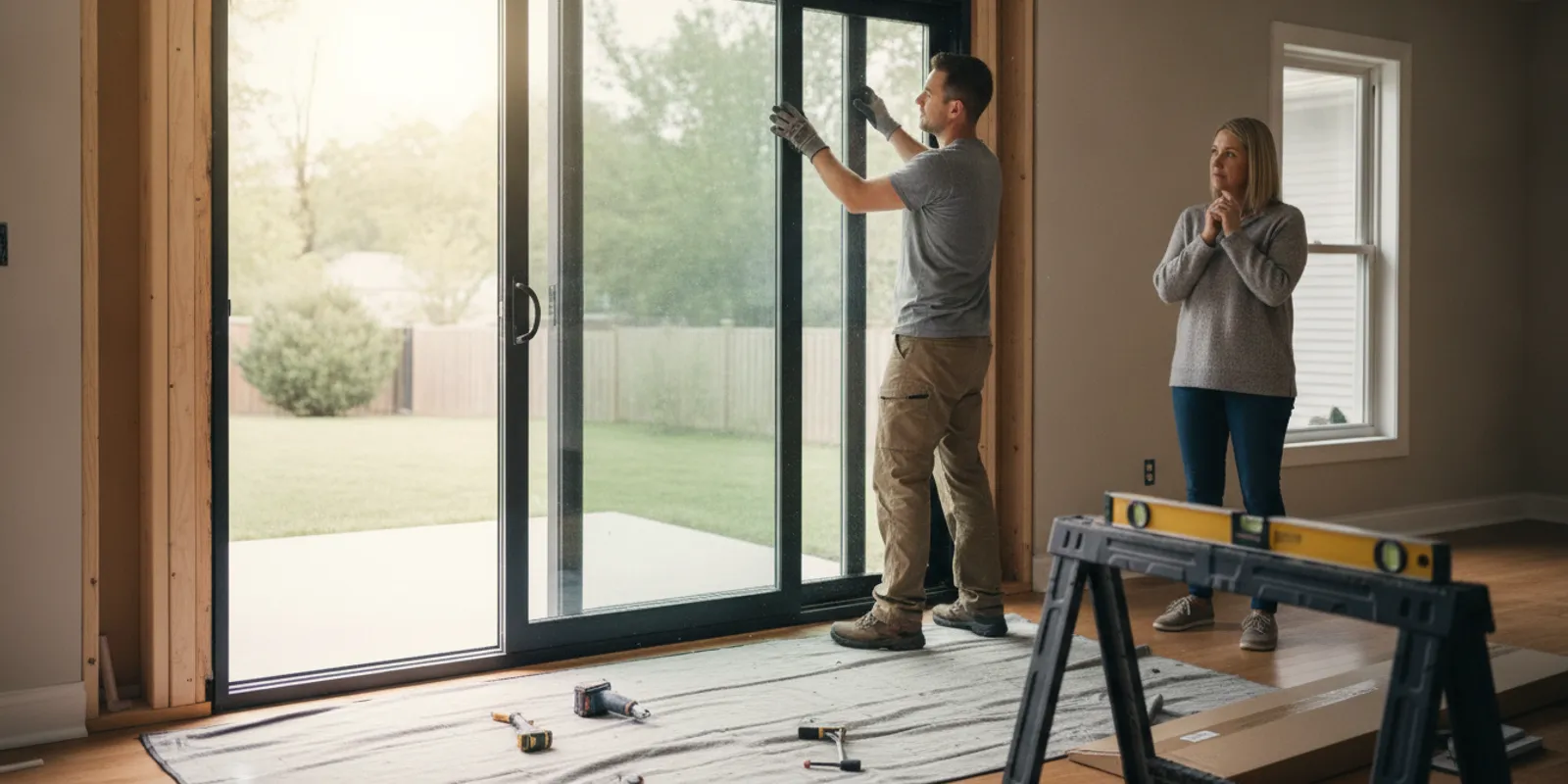
Planning sliding patio door installation involves more than choosing a door that looks right. The opening, existing frame, threshold, access, and how you use the room all affect the scope. This guide explains what to decide, what an installer may assess, and what to confirm before work begins.
Request a free in-home estimate
What should you decide before planning a sliding patio door installation?
Start with the reason you are replacing the door. Is the current unit difficult to operate, visibly damaged, drafty, or simply a poor fit for how you use the room? A clear goal helps an installer understand what matters most and what to evaluate. Describe the problem rather than assuming the door itself is the only issue. Difficulty sliding may relate to rollers, track condition, alignment, or the door unit. An assessment helps distinguish what is visible from what the project may require.
Next, think about everyday use. Note how often people pass through the opening, whether you move furniture or serve food through it, and which side you prefer to remain fixed. Consider pets, children, furniture placement, and nearby walkways. Those details help narrow the operating configuration and handle placement. If people commonly approach from one side of the patio, explain that. The preferred moving panel should make sense both inside and outside, not only in a product picture.
Make a short priority list. You might put easy operation first, then light, view, privacy, or appearance. Priorities can conflict: a larger glazed area may support a brighter room, while curtains or blinds may matter more for privacy. A focused list gives you a practical way to compare recommendations instead of judging solely by finish or appearance. Mark each priority as essential or optional; that distinction can help you make trade-offs if the opening limits available configurations.
- Write down what is not working with the current door and when you notice it.
- Identify which panel you would prefer to move, if you have a preference.
- Take photos of the door from inside and outside, including the threshold and nearby trim.
- Note visible water staining, soft trim, damaged flooring, or unusual gaps.
- List questions about product choices, work scope, timing, and cleanup.
If you are also considering other exterior openings, review options for residential door replacement and the range of window types separately. The right selection depends on the opening and the needs of the room.
Which sliding patio door details should you compare?
Sliding patio doors typically have panels that move along a track, with one or more panels arranged to suit the opening. During planning, ask which panel operates, how it moves, and what clearance is needed near the door. The answer should reflect the actual layout of your room and exterior landing, not just a catalog image. Check whether a nearby wall, cabinet, railing, or furniture could interfere with access to the handle or panel.
Compare glass and frame choices as a complete unit. Ask what product options are available for the opening, what finishes can be selected, and how the proposed configuration affects the view and daylight. If energy performance is a priority, ask the contractor to explain the available glazing and the product information that applies to the model being quoted. The U.S. Department of Energy provides general homeowner information on energy use and improvements at energy.gov; use product-specific documentation and the estimate to understand the particular door under consideration.
Hardware deserves attention because it is used every day. Ask to see or discuss the handle, lock operation, and available options. Think about who will use the door and whether the handle is comfortable to reach. Also ask how the track and operating hardware should be cared for after installation. Simple care instructions help you know what is normal and when a problem needs attention.
Finishes, grids, and glass patterns affect the look of the room from both sides. If the door is visible from a dining area or main living space, compare how the finish works with nearby trim and flooring. Take photos of the room in daylight and review them alongside product samples or specifications. A product that looks appealing in a showroom may appear different next to your home's existing materials.
| Decision | What to compare | Question to ask |
|---|---|---|
| Operating layout | Which panel moves and its direction | Does this match the room and outdoor approach? |
| Glass and frame | Available configuration, finish, and glazing information | Which exact model and options are included? |
| Hardware | Handle, lock operation, and care guidance | Can I see how the proposed lock and handle operate? |
| Scope | Removal, opening assessment, installation, trim, cleanup | What is included, and what conditions could change it? |
For examples of other residential openings, explore sliding patio door replacement or compare with sliding and French patio doors. These are different planning choices; the best fit depends on your opening, circulation, and preferences. For instance, a sliding panel does not swing into the room, while a hinged option needs space for its swing. Consider how that difference would affect a dining table, a narrow walkway, or patio furniture.
What should an installer assess and measure?
An in-home assessment should establish existing conditions and the proposed work. The installer needs to evaluate the opening and take measurements appropriate to the selected door and installation approach. Homeowners can help by clearing access to the interior and exterior sides, moving items away from the threshold, and pointing out concerns noticed during rain or cold weather.
Measurements are not just a matter of checking the visible glass. The installer may need to look at the frame, jambs, sill or threshold, surrounding trim, and how the unit meets the wall. Ask what is being measured and whether the visible opening tells the full story. The final product and work scope should be based on the assessment, not on a rough measurement taken by a homeowner for ordering. If the opening has been altered before, mention that too; a prior repair or added trim can affect what is visible.
Bring attention to signs that could affect the work: staining, soft or damaged material, a floor that feels uneven near the door, water entry, or trim that has shifted. Do not conceal a concern under a rug or by moving furniture only after the assessment starts. Photos of the area after rain or of an intermittent issue can help explain what you have observed. Note when and where the water or draft appears, without trying to diagnose its source.
Ask how the proposed installation addresses the existing threshold and the transition to the interior floor and exterior surface. Door replacement can involve details beyond the unit itself, and the estimate should make clear what work is included. If the assessment uncovers a condition that could not be confirmed beforehand, ask how the installer will explain options and any change to the scope before proceeding. This conversation is especially useful if the interior flooring meets the threshold closely or the exterior landing is uneven.
For a broad overview of how projects are evaluated, the window installation guide offers related planning context. For door-specific questions about cost factors, see what can change a door installation estimate; the details of a sliding patio door project still depend on its particular opening and selections.
What can affect the project scope and estimate?
An estimate reflects the product and work required for the specific home. The size and condition of the opening, selected configuration, finish, glazing, hardware, and any additional work identified during the assessment can influence the proposal. Access and the need to protect nearby surfaces are also useful items to discuss before scheduling. A straightforward replacement and a project requiring additional work around the opening are not necessarily the same scope, even if the doors appear similar.
Rather than asking for a single number without context, request a clear description of the proposed unit and scope. The estimate should help you understand what is included and what assumptions it makes. Exact pricing depends on an in-home assessment, so avoid comparing proposals based only on a headline total if the products or included work differ. A written breakdown also gives you a reference when confirming selections later.
- Confirm the manufacturer and model or product description.
- Check the panel configuration, finish, glass, and hardware selections.
- Ask whether removal and disposal of the existing door are included.
- Clarify whether trim, threshold details, and finishing work are included.
- Ask how concealed conditions or changes in scope will be discussed.
- Confirm what preparation you should complete before installation day.
When reviewing two proposals, make a side-by-side list rather than relying on memory. If one includes removal and finishing while another describes only the replacement unit and installation, the totals do not represent identical work. Ask each contractor to clarify ambiguous terms. If a line is not relevant to your project, ask for that to be stated rather than silently assuming it is included.
If financing is relevant to your planning, ask what options are available and review the terms directly. You can also see Cosello's information about window and door financing. Financing availability does not determine whether a particular product or scope is right for your home, so compare the project details first.
What happens during sliding patio door installation?
The precise sequence varies with the product and opening, but the work generally begins with protecting the nearby area and removing the existing unit as required by the agreed scope. The installer then prepares and checks the opening, positions the replacement unit, and verifies that it is set and operates as intended. Work may include securing the unit, addressing specified perimeter details, and completing the agreed finishing work.
Before the crew arrives, confirm where they will enter and what space needs to be clear. Move breakable items and furniture away from the work zone. Keep children and pets away from tools and the opening while work is underway. If the door connects to a deck or patio, discuss access and any items that should be moved outside beforehand. Protecting access on both sides can reduce avoidable interruptions and help the crew work safely.
Ask the installer what to expect during removal and whether there will be a period when the opening is exposed. Do not assume every project follows the same timetable: the selected product, site conditions, and scope affect the sequence. Your estimate or scheduling conversation is the best place to confirm project-specific expectations. If you need to plan around work calls, meals, or pets, bring those needs up in advance rather than assuming the work area will remain available for normal use.
When the unit is in place, ask for a walkthrough. The door should be demonstrated so you can see how it opens, closes, and locks. Review the threshold and finished areas, and ask which care steps are recommended for the track and hardware. If you notice a concern, raise it before the crew leaves so it can be understood and recorded. Try the operating panel yourself, and make sure you know how to engage the lock without forcing the handle.
How can you compare replacement proposals fairly?
Use the same checklist for each proposal. Confirm that each contractor is describing a door with a comparable configuration and options. A proposal for one finish, glass package, or hardware setup may not be directly comparable to a different selection. Ask questions until you can explain the differences in plain language. It can help to keep a copy of product descriptions next to each estimate and mark any item that is still undecided.
Then compare the work scope. Does each proposal state what happens to the old unit? Are trim and finishing details described? Does it explain how an unexpected condition would be handled? Are the product and labor terms clear? These questions help you identify what is certain and what still needs clarification. Separate confirmed items from assumptions so a later conversation does not turn on differing interpretations.
Check the communication path as well. Know who will answer questions, how you will confirm selections, and what you should do if a concern comes up during the project. A clear process is useful because it lets you make informed decisions without relying on assumptions. Cosello's company background and completed project gallery can provide additional context as you evaluate your next step.
Be cautious about treating a broad promise or an attractive product image as a substitute for a written scope. Ask for the details that matter to your home: exact selection, opening assessment, included work, and how changes will be approved. If anything is unclear, get an explanation before accepting the proposal. A short written question list is often more effective than trying to resolve every detail from memory during a conversation.
How should you prepare for an in-home assessment?
Preparation can make the visit more useful. Clear a path to the patio door and move items from the immediate work area. Make sure the exterior side is accessible too. If a screen, curtain, or furniture arrangement affects access, mention it when scheduling and ask whether you should remove or move it beforehand. Do not remove a fixed component unless the contractor asks you to; the assessment should reveal what needs to be considered.
Gather details that help explain the project: approximate age of the current door if known, when operation became difficult, and whether you have noticed water or air coming through. Share photos of any intermittent issue. You do not need to diagnose the cause; your observations are enough to guide the discussion. If the problem varies with weather or time of day, jot that down so the installer understands when it occurs.
Keep your questions together and ask the installer to explain unfamiliar terms. For example, ask, “Which parts of the existing frame will be evaluated?” or “What exactly is included in the proposed finishing work?” Clear answers are more useful than technical language without a practical explanation. You might also ask how the selected panel configuration affects access, which product choices are still open, and what would trigger a scope change.
Finally, discuss how the door will be used and which features matter most. The assessment is a chance to consider the product and work together. If you are in the service area and ready to discuss replacement, you can check Cosello's service areas and review the estimate request path. Having your priorities and observations ready makes that visit more focused.
Frequently asked questions
Can I choose which panel slides?
There may be configuration choices, but what is available depends on the product and opening. Tell the installer your preference and ask how the proposed layout will work with the room and outdoor approach. Also check that the handle is accessible and the panel does not conflict with nearby features.
Should I measure the opening before requesting an estimate?
You can share approximate dimensions if helpful, but they should not replace an installer's assessment and measurements. The opening, frame, and surrounding conditions all matter when confirming the product and scope. Avoid ordering from a rough measurement alone.
What should I do if I see damage around the existing door?
Point it out during the assessment and provide photos if the issue is hard to see or happens only sometimes. Ask how the condition affects the recommended work and whether it changes the estimate. Mention when you first noticed it and whether it appears to change after rain.
Does a replacement estimate cover every possible repair?
Not necessarily. Ask which work is included, what assumptions the proposal makes, and how additional conditions would be explained and approved before work continues. The written scope should make clear what is known at the time of the assessment.
What should I confirm before installation day?
Confirm the selected product and configuration, the work included, access and preparation needs, scheduling expectations, and who to contact with questions. If anything has changed since the estimate, raise it before the crew arrives.
What is the practical next step?
Make a short list of your priorities, note any concerns around the current opening, and compare the product and scope details in the estimate. A careful assessment is the best starting point for deciding whether a proposed sliding patio door installation fits your home and expectations.
With the opening and project scope clearly discussed, you can make a more informed decision about the door that suits the way you use your home.